Castanea crenata Vigorous, precocious and high yielding. Can cross-pollinate with Chinese, American and hybrid chestnuts. Moderate to high blight resistance. Z4.
Castanea pumila 15-30' x 10-20'. Once an important food for indigenous peoples. Somewhat resistant to chestnut blight. Native to much of central/eastern U.S. Z4.
Corylus spp. 8-12' × same. Hybrid crosses of mixed parentage, including European hazelnut. Nuts will likely be larger than those from other seedlings. Highly resistant or immune to filbert blight. Z3.
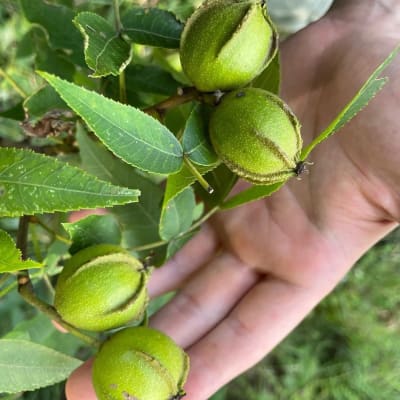
Carya cordiformis 50-80' x 30-50' Also known as Bitternut Hickory. Thin-shelled nuts can be pressed into a mild nutty cooking oil. Closely related to the pecan. Z3.
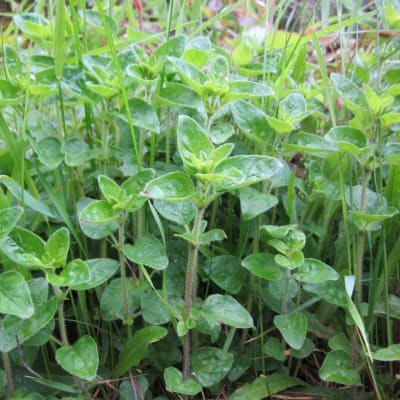
Origanum vulgare 18-20" tall. Fragrant green and purple leaves used for culinary purposes. Given plenty space in full sun, it sprawls and is attractive to pollinators. Z4.
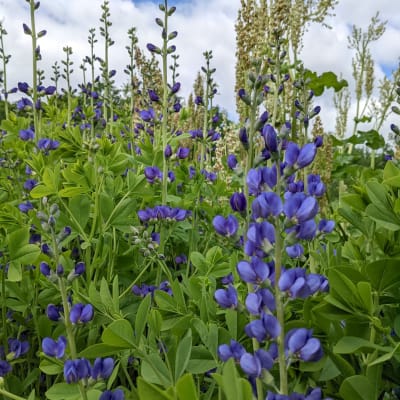
Baptisia australis 3-4' x same. Vibrant blue lupine-like flowers in early summer. Bushy habit and shrub-like structure once mature. Good for erosion control. Z3.
Amsonia tabernaemontana var. salicifolia 24–36" tall. Fine grassy willow-like foliage. Clusters of powder-blue florets in early summer. Best planted en masse. Z3.
Echinops ritro 3–4' tall. Luminous steel-blue spiky spheres on stiff stems with silvery green leaves. Excellent for fresh or dried arrangements. Blooms mid-to-late summer. Z3.
Pulmonaria 9-12" tall and eventually up to 2' wide. Periwinkle-blue buds open to pink flowers in spring. Large slate-green leaves with silver-white splotches. Woodland plant. Z3.
Astrantia 24-28". Clump-forming perennial makes an excellent groundcover when planted en masse. Makes long-lasting cutflowers and is also a great container plant. Z4.
Eryngium yuccifolium 3-6' tall. Globe-thistle-like 1" greenish-white flowerheads. Subtle honey-like scent. North american native. Great for cutflower production. Z3.
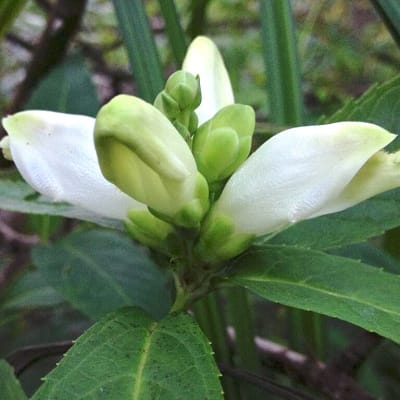
Chelone glabra 2–4' tall. Native wildflower blooms late along with the asters. A final feast for the bumblebees. Prefers moist soil, dappled light. Z4.
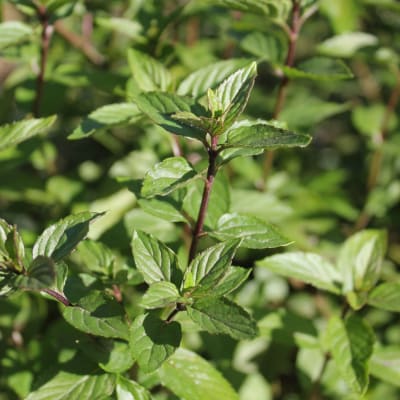
Pycnanthemum virginianum 24-36" tall. Makes a tasty minty tea traditionally used to settle indigestion. Spreads readily. Densely flowered, attractive to pollinators. Native. Z4.
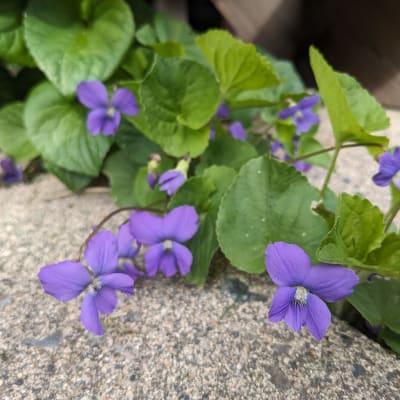
Viola sororia 6-10" tall. North American native with cheery blue-purple flowers and attractive heart-shaped leaves, all edible. Larval host plant for multiple species of butterflies. Z3.
Cornus mas 20-25' x 15-20'. Bright red pear-shaped edible fruit. Each seedling will be unique. Will pollinate each other and any named cornelian cherry cultivar. Z4/5.
Prunus tomentosa 6-10' x same. Broad dense highly ornamental fruiting shrub blooms early. Excellent hedge and edible landscape plant. Plant two or more for pollination. Z2.
Calycanthus floridus 6-10' x 6-12'. Beautiful native shrub with dark burgundy-maroon flowers and shiny leaves. Blooms early, flowers through summer. Highly fragrant. Z4/5.
Myrica pensylvanica Waxy blue skin. 5-10' x same. A common sight along Maine’s rocky shores. Fragrant glossy deep green leaves and small waxy berries. Fixes nitrogen and feeds wildlife. Z2.
Prunus maritima 6' × 5-6'. Rounded dense suckering shrub found along ocean beaches. Showy white blooms in spring. Edible plums in late summer. Plant two for fruit. Z3.
Arctostaphylos uva-ursi 6-10". Low-growing evergreen groundcover. Can sprawl to 15'. Pinkish-white flowers in spring. Small red berries persist into winter. Self-pollinating. Z2.
Cephalanthus occidentalis 6-10' x 8'. Loose rounded branchy shrub with masses of ornamental blooms that appear 4–6 weeks in summer. Attractive to pollinators. Z4.
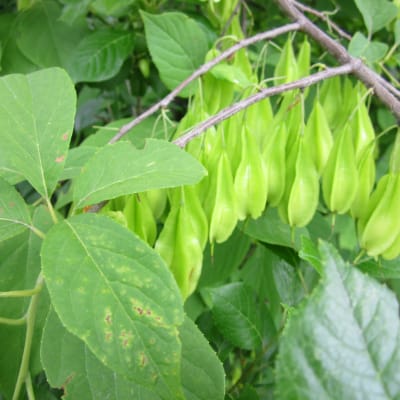
Halesia carolina 20-40' × 15-30'. Small tree or large multi-stemmed shrub. Edible flowers and fruit. Beautiful addition to woodland gardens! Native to Appalachia. Z4.
Prunus glandulosa 5-6' x 3-4'. An early spring spectacle of pink double flowers. Branches are nearly covered with the impressive blooms ranging all shades of pink. Z4.
Rubus odoratus 3-6' x 6-12' Relative of the cultivated raspberry, with fragrant flowers and nutritious fruit. Thornless, long-blooming, attractive to pollinators. Excellent addition to wildlife hedges. Z4.
Diervilla lonicera 2-4' x 2-5'. Clusters of yellow tubular flowers attract pollinators. Lustrous green leaves emerge with a hint of bronze. Good for erosion control. Z3.
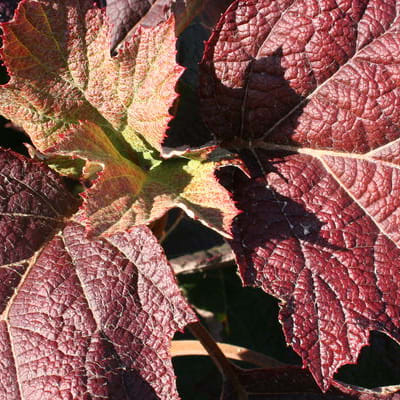
Hydrangea quercifolia 4-6' x 6-8' Spreading multi-stemmed shrub with oak-like leaves and spiked white flowers. Dried flowers turn pink to bronze. Cultivar selected for strong flower stems that won't flop over. Z5.
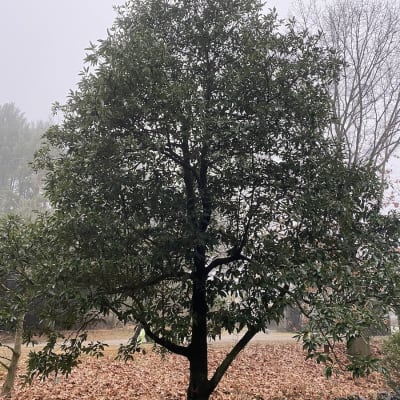
Magnolia virginiana 10-20' x same. Fragrant creamy white 2”3" waxy blossoms in mid-spring sometimes rebloom in mid-summer. Pink fruits adorn the tree in fall. Tolerates clay and air pollution. Z5.
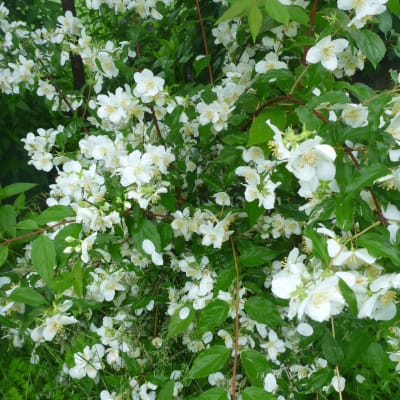
Philadelphus lewisii 4-5' x 3-4' Medium-sized loosely arching ornamental blooming shrub. A “blizzard” of sweet citrusy fragrance from white blossoms in late spring. Z3.
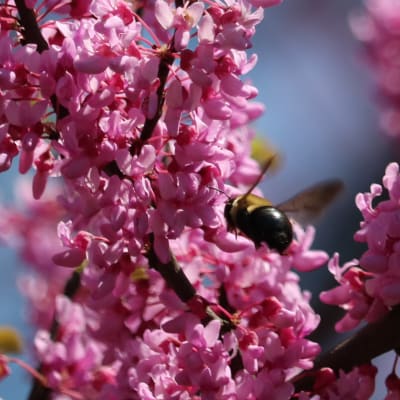
Cercis canadensis 25-30' × same. Small vase-shaped ornamental tree. Clusters of brilliant edible purplish-pink pea-like flowers fill the entire tree in spring. Z4/5.
Lindera benzoin 6-12' x 8-12'. Large rounded multi-stemmed fragrant native shrub suited to moist or wet areas. Soft-yellow flowers. Glossy red edible berries. Z5.
Spiraea tomentosa 2-4' x same. Adorable little plant. Rosy pink steeples emerge as terminal spikes about 4–6" tall. Easy to grow. A must for every butterfly garden. Z3.
 Oregano - OrganicBare-Root Plantssold out