Monarda punctata Open pollinated. A whimsical beauty with complex blossoms and many culinary and medicinal uses. Its oregano-like aroma and flavor is lovely for tea and seasoning.
Monarda fistulosa Open pollinated. 3-5' tall. Native wildflower with aromatic lavender blossoms. This is the variety most commonly used for medicinal purposes.
Eupatorium perfoliatum 5-7' tall. Flat-topped clusters of white to lavender flowerheads. Stimulates the immune system. Fetching addition to the perennial border. Z3.
A must-read for anyone in the cannabis industry. Covers all aspects from soil and seed, to planting, growing and maintaining, through markets and product diversification. Funny and informative.
An approachable botany textbook and herbal field guide to North American plants with colorful illustrations on nearly every page. Regularly updated by the author since its release in 1996.
A gift to a world disoriented by ecological collapse and haunted by the question of what to do, Eisenstein’s book gets to the heart of the predicament of how to heal our planetary wounds.
A soil science book for everyone! Filled with farmer anecdotes, insightful reference charts, and illustrations, this book is both engrossing and practical for anyone who works with soil.
by Kirsten K. Shockey and Christopher Shockey, 440 pages, 8x9, softcover. Since it was first published in 2014, this book has become a trusted... read more
With plenty of scientific detail and practical knowledge about a variety of regenerative practices, Phillips reveals how mycorrhizal fungi are deeply embedded in healthy soils and plant physiology.
Placing emphasis on those with special health and dietary needs, Deppe covers her Golden Rules of Gardening, five essential crops you need to survive and thrive, as well as recipes and seed saving.
by Jennifer Jewell, 392 pages, 6x9, hardcover. Organized by a year in the life of a seed, Jewell weaves in her personal story of observing seeds and... read more
Rubus spp. Midsummer. Moderately large and quite juicy fruit with true blackberry taste. Highly productive. Has survived Maine winters for over a century! Z3/4.
Prunus cerasus Summer, dark red skin. Brought to US from Hungary in the 90s during a search for later blooming cherries. One of the best sour cherries for fresh eating and processing! Z4/5.
These innovative leg gaiters feature a patented mesh-fabric design that slows ticks by 400-800% as they climb up your leg, while exposing them to microencapsulated permethrin to repel them.
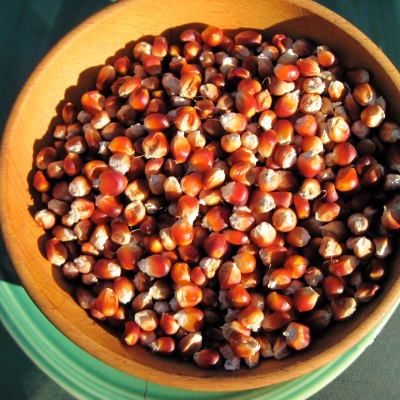
Zea mays var. rostrato (100 days) Open pollinated. Beautiful red pointy kernels are easy to shell and grind. Rich sweet corn flavor good for flour or polenta.
Zea mays (105 days) Open pollinated. 5-8" ears. Kernels are mostly red, yellow, mottled rosy-brown (also brown, purple, blue and white), and larger than most popcorns.
Cornus alternifolia 20' × 30-35'. Small tree or large multi-stemmed shrub with tiers of horizontal branches and fragrant white 2-3" flower clusters. Z3.
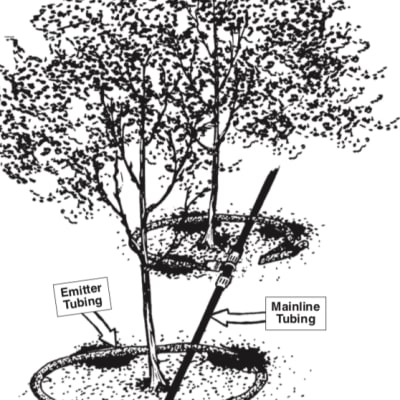
Emitter tubing delivers water where your new trees, canes, and shrubs need it most, while minimizing leaking and clogging. Includes instructions, tubing, couplers, and more!
Sorghum × drummondii Annual grass. Vigorous, competitive, adaptable cover crop or annual forage. Likes heat and high fertility. Grows best in warm weather when other grasses slow down.