Lathyrus latifolius Open pollinated. The traditional English cottage sweet pea. Shades of rose, white and pink in big clusters. Good cutflowers. Climbs 6'.
Rumex acetosa (60 days) Open pollinated. Thick sword-shaped lemony-flavored leaves picked when young and tender. A special treat in early spring. Perennial hardy to Z3.
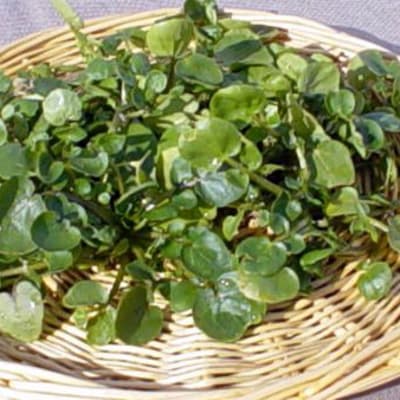
Hablitzia tamnoides (45 days) Open pollinated. Perennial spinach-like green. Hardy vine from the Caucasus grows 6-9' long for 2-3 months beginning very early spring. Heart-shaped attractive leaves.
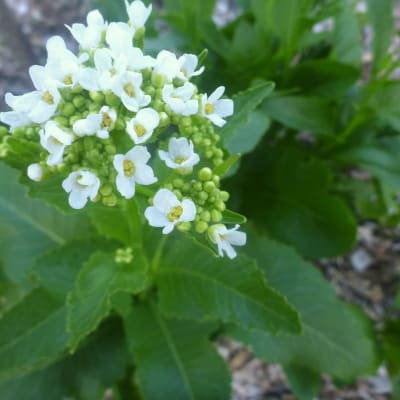
Bunias orientalis Open pollinated. Perennial, Zones 4-8. Tender spicy mustard greens and florets for stir-frying. Drought-tolerant with a deep taproot.
Lolium perenne Short-lived perennial grass. Extremely palatable forage grass, popular in grazing mixes. Germinates quickly and grows rapidly, suppressing weeds. Holds up under heavy traffic. Good pest resistance.
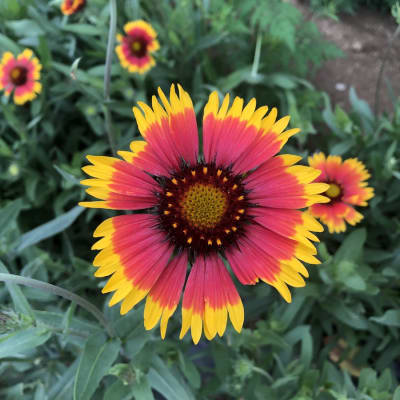
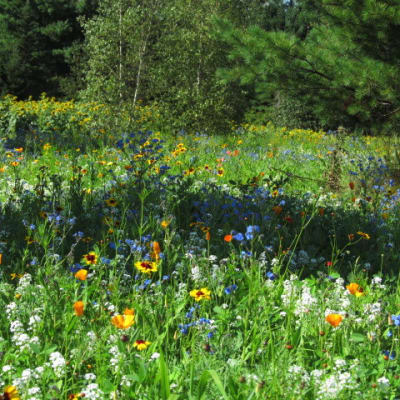
Gaillardia aristata (90 days) Open pollinated. Sun-loving native wildflower of the American Southwest is a favorite of butterflies and of gardeners who make bouquets. Perennial.
Lobelia cardinalis Open pollinated. This gorgeous wetland native wildflower and hummingbird magnet can be grown in moist garden soils or meadows. 2–4' tall
Asclepias syriaca Open pollinated. Perennial to Zone 4. These 5' tall showy native wildflowers are an important member of the wild habitat. Buds open to large balls of sweetly fragrant pink flowers.
Urtica dioica Open pollinated. Perennial. Grows 3-6'. Young shoots and leaves are delicious steamed as spring greens, very high in minerals and protein.
Origanum heracleoticum Open pollinated. Perennial to Zone 4, but survives some winters in Zone 3. The true culinary herb for Greek and Italian cooking. Low-growing with fragrant dull green and purple leaves and white flowers.
Campanula carpatica Open pollinated. Perennial. Also known as Bellflower or Carpathian Harebell. Masses of dark periwinkle bellflowers above a tidy mound of foliage. Pelleted for ease of sowing.
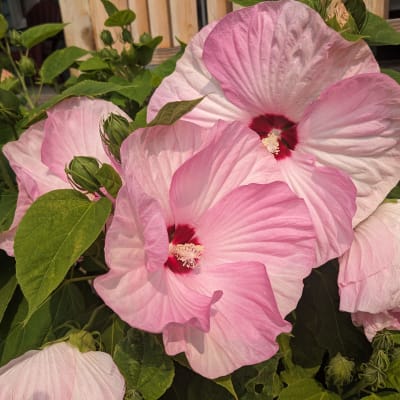
Hibiscus moscheutos Open pollinated. Perennial, Zones 5-9. 6-8" saucer-shaped flowers in a mix of pinks, red and white, with contrasting red eyes where a contrast is to be had.
Saponaria officinalis Open pollinated. Not a dye plant; saponin-rich roots and leaves used to gently wash wool. Sweetly clove-scented pink perennial attracts pollinators. 3' plant.
Agastache foeniculum Open pollinated. Perennial can grow 3' tall, 2' wide. Vigorous self-sower. Anise-scented foliage and purple flowers delightful as a tea or culinary seasoning, or filler in mixed bouquets.
Agastache foeniculum Open pollinated. Perennial can grow 3' tall, 2' wide. Vigorous self-sower. Anise-scented foliage and purple flowers are delightful as a tea or culinary seasoning, or filler in mixed bouquets.
Codonopsis pilosula Open pollinated. Perennial to Zone 4. Used in Chinese medicine like ginseng, but considerably easier to grow than true Panax ginseng.
Hyssopus officinalis Open pollinated. Perennial. Normally hardy to Zone 3. Beautiful aromatic perennial border plant that produces spikes of indigo flowers.
Alchemilla mollis Open pollinated. Perennial. 12-18" Bears large loose sprays of tiny greenish-yellow flowers from early summer onward. Makes a good border and ground cover in shady locations.
Levisticum officinale Open pollinated. Perennial. Umbelliferous, attracts beneficial insects, grows 3-6' and makes a dramatic architectural element in a decorative border.
Leonurus cardiaca Open pollinated. Perennial 2–4' plant with dull green leaves and tiny white to purple blooms. Bees love the flowering tops, which are used for tea or herbal tincture.
Scutellaria lateriflora Open pollinated. Native spreading 1–2' perennial with numerous small blue flowers. Also known as Virginia Skullcap. Herbalists use it for headaches and insomnia.
Verbena hastata Open pollinated. Perennial. 5-6' plant grows naturally in moist thickets and meadows does well in similar garden conditions, sending up many terminal spikes of bristly blue-violet flower clusters the entire season.
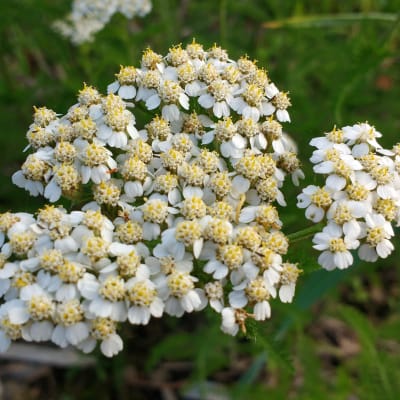
Achillea millefolium Open pollinated. Perennial grows 1-2', spreads slowly, preferring lean soil. Rich garden soil may produce lush 3' plants that need staking. Zone 2.