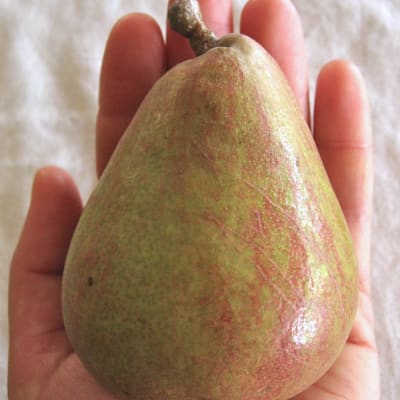
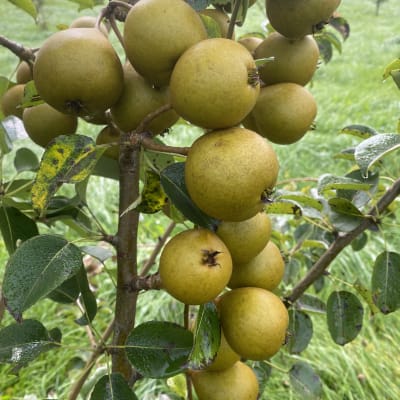
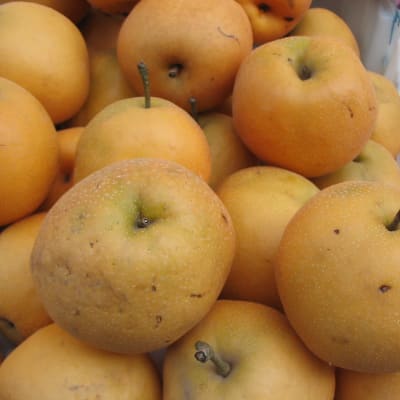
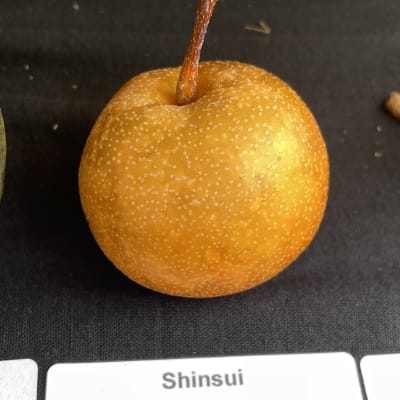
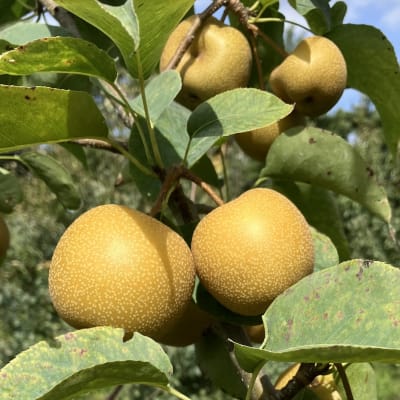
Pyrus pyrifolia Fall. Very large sweet juicy golden-brown pear. One fruit grown in Japan made it into the The Guinness Book of World Records. Will develop sweetness even in cooler summer weather. Z5.
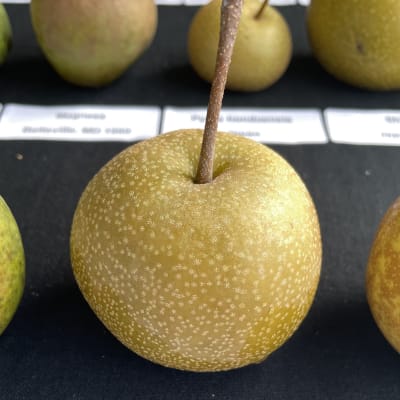
Pyrus pyrifolia Late summer. Sweet and rich with a distinctive butterscotch flavor. Short picking period. Stores for several months. Very productive. Z4/5.
Pyrus pyrifolia Late summer. Crisp sweet juicy white flesh. No russeting. Keeps about 3 months. Precocious and productive tree. Disease resistant. Z4/5.
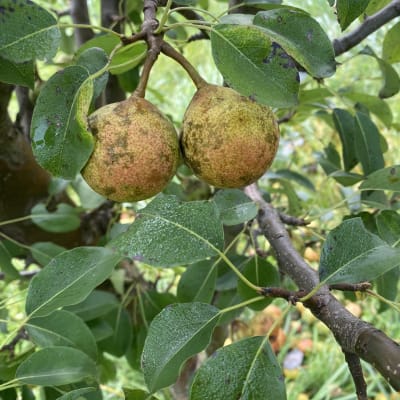
Pyrus communis Late summer, greenish yellow skin. For that classic pear look and taste! Adaptable to many climates and soils. Full reliable annual crops. Z4.
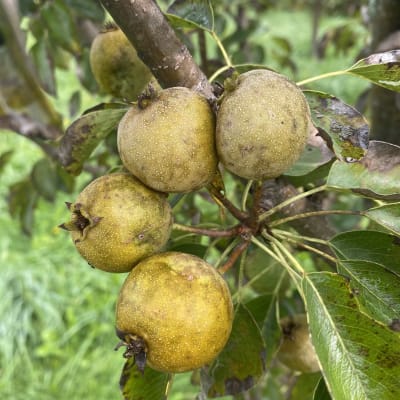
Pyrus communis Fall, russeted dark yellow skin. Distinctive sweet rich spicy buttery flavor. Melting juicy tender white flesh. Bears huge crops annually. Good pollinator for other varieties. Z4.
Pyrus communisThis is a twig for grafting. Fall, russeted dark yellow skin, white flesh. Distinctive sweet rich spicy buttery flavor. Melting juicy tender white flesh. Bears huge crops annually. Good pollinator for other varieties. Z4.
Pyrus communisThis is a twig for grafting. Summer, yellow-green skin. Very old delectable dessert pear with buttery aromatic juicy flesh. Keeps for a month. Z4.
Pyrus communis Winter, russeted golden-yellow skin. Intensely sweet highly aromatic tender storage pear; possibly the best eating of all winter pears. Similar to Seckel. Keeps extremely well. Z4.
Pyrus communis Late summer, yellow skin. Firm with few grit cells and a good balance of sweetness and acid. Holds shape when canned. Stores 2 months. Z4.
Pyrus communis Early fall, yellow-green skin. Great for fresh eating or cooking. Flesh is amazing: rich, sweet and melting—everything you could want in a pear. Very pest resistant. Z4/5.
Pyrus communis Late fall-winter, mottled blushed green skin. Frankendorf, Germany. Coarse flesh, good flavor. Great storage pear. Can keep until April in the root cellar. Z4.
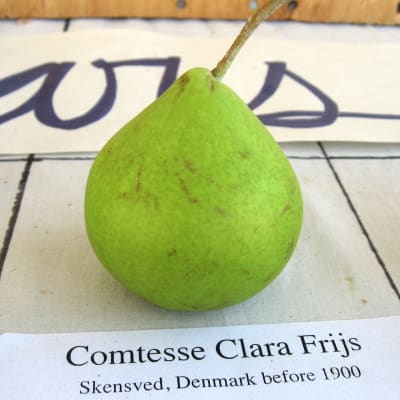
Pyrus communis Late summer, green skin. Large dessert pear with melting juicy flesh, smooth creamy texture and thin skin. Wonderful dessert pear. Great for canning. Z3.
Pyrus communis Summer, pink-blushed yellow skin. Very large fruit with melting flesh and few grit cells. Good fresh eating, drying and canning. Late blooming, but early ripening. Z4.
Pyrus communis Late summer, red-blushed greenish yellow skin. The best-quality large hardy pear available. Very good fresh eating with sweet “high flavor.” Good canning. Z3.
Pyrus communis Late summer, red-blushed yellow skin. Often considered the best-flavored of all pears. Juicy, spicy, aromatic. Good fresh and cooked. Z4.
Pyrus communisThis is a twig for grafting. Late summer, red-blushed yellow skin. Small obovate yellowish-brown russeted pear with slight red blush. Often considered the best-flavored of all pears. Good fresh and cooked. Z4.
Pyrus communis Midsummer, red-blushed green skin. Sweet dessert and canning pear. Eat them fresh, can them in quarters, and juice the rest. Fireblight resistant. Z3.
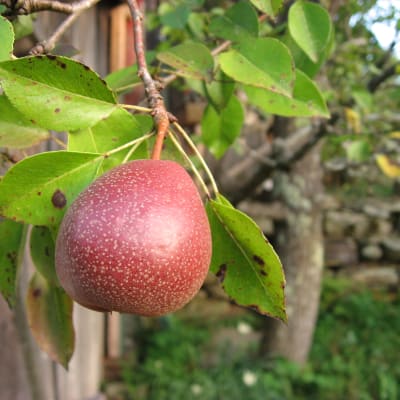
Pyrus communis Fall, red-blushed yellow skin. Medium-sharp perry pear. Too bitter for fresh eating but very good for making a strong aromatic perry, and suitable for cooking. Z4.
Pyrus communis Fall. Ancient English perry pear. Small oval yellow-green russeted pear under 2" in diameter. Used for alcohol production; not for fresh eating. Z4.
Loading...
Pears Pyrusspp.
European Pears Pyrus communis
Native to temperate Europe and Asia, pears can grow up to 100' tall in the wild. Many pear varieties are hardy in New England but tend to take longer to come into bearing than apples and might not bear every year. Farther south, pears tend to bear annually. Pick fruit when green and ripen it on the shelf. Or, for optimal eating, try this method, from Ed Fackler of Rocky Mountain Orchard: “…when fruits exhibit slight color changes, begin to test pressure (using your thumb) near the stem. When there is a slight ‘give,’ pick all the fruit, store at or near 35° for 7 or more days. Then remove them as needed, allow them to sit at room temps for 2–4 days which allows them to ripen to peak flavor.” Susceptible to fireblight and apple borers. Pears are on OHxF97 and will reach 25' or taller at maturity. (2½–6' trees)
Perry Pears Perry is fermented pear juice—the pear equivalent of hard cider. While you can ferment any pear juice, the best perry is made from small dry astringent varieties selected over the centuries just for that purpose. Most of these perry pears are not suitable for fresh eating or cooking. These trees are a good investment—they should live to be about 300 years old.
Asian Pears Pyrus pyrifolia
There are thousands of named Asian pear cultivars in China, where they have been grown for more than 2000 years. They bear young and are long-lived. Asian pears differ from European pears: they are crisper and very juicy, sweet and mild with a nutty background, and are roundish in shape. Because they set heavily, thin the crop once or even twice during the first two months after bloom to ensure large fruit. Leave about one fruit per spur. Unlike European pears, they should be tree-ripened. When the seeds are black, the pears are ready. They ripen in late summer and keep for several weeks with refrigeration.
Asian pears reach 15–20' at maturity.
Growing Pears
Soil: Prefers well-drained fertile soil.
Sun: Full.
Pollination:
European Pears We recommend planting a second variety for pollination, though some European pears may be self-pollinating. Bloom times are similar for all varieties we offer.
Asian Pears We recommend planting a second variety for pollination, though some Asian pears may be self-pollinating. Some European pears, notably Bartlett, will also act as pollinators.