Rosa 3-4' × same. Small lightly fragrant red blooms are fringed like carnations. Very unusual and attractive with a long bloom season, often going until frost. Upright arching yet compact form. Z3.
Rosa 3×3'. Faint lilac-purple blooms are practically white. Semi-double, recurrent and fragrant. Tough, low-growing, salt-tolerant and can handle partial shade. Disease resistant. Z3.
Ginkgo biloba 50-80'. Slow-growing, long-lived tree with unique fan-shaped foliage. Leaf tea used medicinally. Very adaptable and tolerant. Minimal maintenance required. Z5.
Quercus rubra 60-75' × 45'. The most common oak in northern New England. Magnificent open rounded crown. Fast growing. Tolerant of different conditions. Z4.
Solanum lycopersicum Red skin. (64 days) F-1 hybrid. Red small fruit, with bomb-proof resistance against late blight lineage US 23. Great taste, highly productive, great look at market.
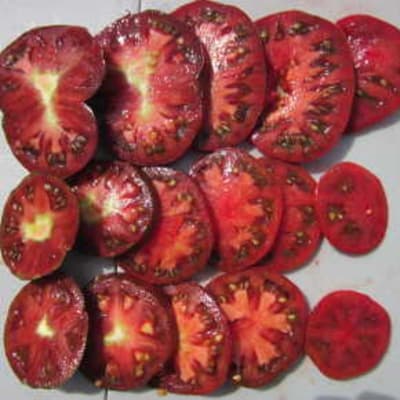
Solanum lycopersicum Dusky brownish purple skin. (77 days) Open pollinated. Dusky brownish-purple with green shoulders, 10-13 oz, round to slightly oblate. Brick-red flesh. One of the best-tasting heirlooms.
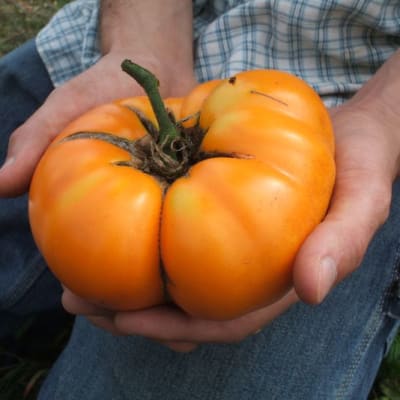
Solanum lycopersicum Yellow skin. (82 days) Open pollinated. Yellow large slightly ribbed 1 lb fruit with ring-scar at blossom end. Variable quality; eat the pretty ones, compost the rest. Potato-leaf foliage.
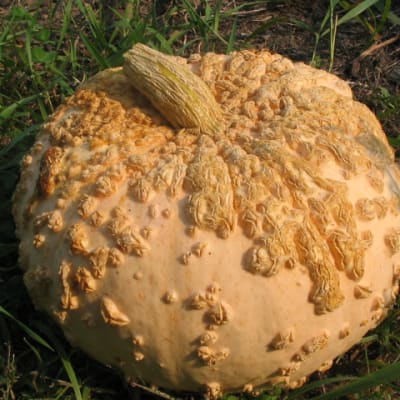
Cucurbita maxima Salmon pink skin. (98 days) Open pollinated. Unique French heirloom. Round slightly flattened 15 lb fruit has salmon-peach skin covered in peanut-like warts. Lovely, or ugly?
Solanum tuberosum Early to mid-season, blue skin, yellow flesh. Round sapphire exterior creates a striking contrast with stunning gold flesh. High yielding. Also known as Peter Wilcox.
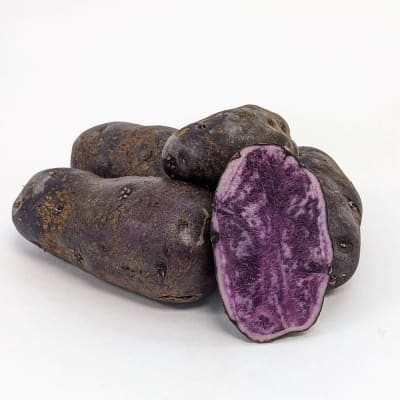
Solanum tuberosum Late season, rose skin, yellow flesh. Large and long oval tubers have distinct flavor, with satiny rose-red skin and creamy yellow flesh. Rugged plants are high yielding in fertile soil.
Solanum tuberosum Mid-season, bright red skin, white flesh. Flesh is firm, sweet and moist, with good storage. Generally good yields of medium-to-large tubers. Developed specifically for blight and scab resistance.
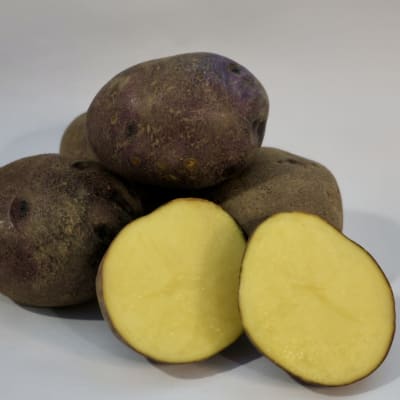
Solanum tuberosum Mid-season, yellow skin, yellow flesh. These potatoes are rarely uniform but have that charming old-fashioned potato look. Firm and waxy, with flavor loved by all.
Solanum tuberosum Mid-season, yellow skin, deep yellow flesh. Medium-large oblong potatoes are on the waxy side and hold their shape in potato salad. Fabulous new potatoes. Said to have the lowest glycemic index of any potato.
Solanum tuberosum Early season, yellow skin, yellow flesh. A modern take on Yukon Gold, with higher yields and better PVY and scab resistances. Matures about 10 days later than Yukon Gold, but worth the wait.
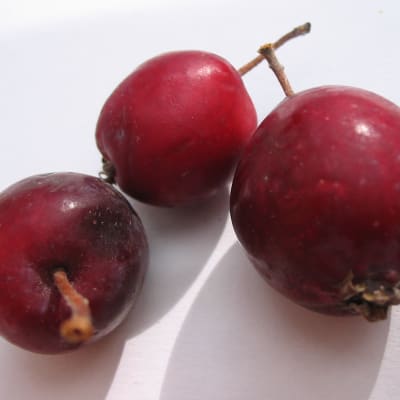
Malus spp. Fall, deep red skin, yellowish flesh. A popular historic variety from the South. Great for fresh eating, cider and cooking. Reaches peak flavor in storage. Natural resistance to many pests and diseases. Z4.
Malus spp. Fall-winter, russeted purplish red skin. Medium to very large apple has a good balance of sweet and tart with hints of pear. All-purpose. Keeps until midwinter. Z4.
Malus spp.This is a twig for grafting. Fall-winter, russeted purplish red skin. Medium to very large apple has a good balance of sweet and tart with hints of pear. All-purpose. Keeps until midwinter. Z4.
Malus spp.This is a twig for grafting. Fall-winter, purple-blushed red skin, white flesh. Medium-large size, fine-grained, crisp, tender, juicy. All-purpose. Annual producer of heavy crops. Bears young. Z4.
Malus spp. Late fall, red-striped skin. Medium-bittersweet cider apple. One of the most popular cider varieties. Not for eating fresh. Annual bearer. Z4.
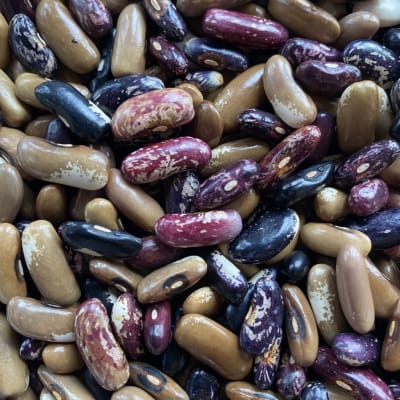
Phaseolus vulgaris (60 days) Open pollinated. Dubbed “weirdo beans,” by the student seed keepers at Troy Howard Middle School, these glorious mutts spin out a ragtag rainbow of patterns, habits and ancestral forms.
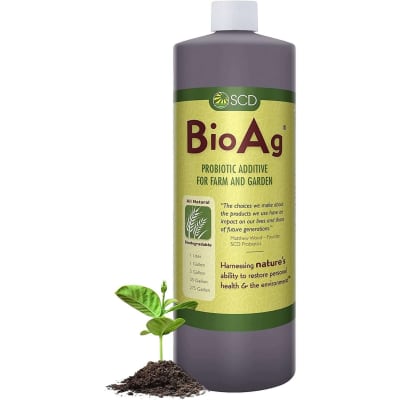
A ready-to-dilute microbial inoculant that unlocks nutrients, strengthens roots, and builds resilient soil and plants. No brewing required. Replaces EM-1.
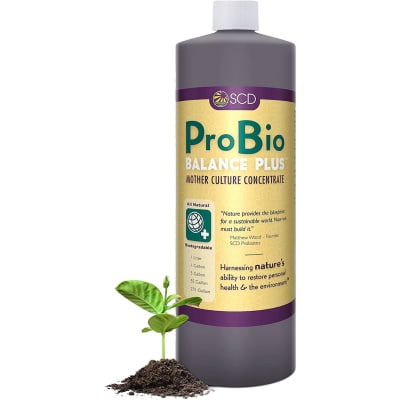
A mother culture microbial inoculant that unlocks nutrients, strengthens roots, and builds resilient soil and plants. Activates into 20× more product. Replaces EM-1.
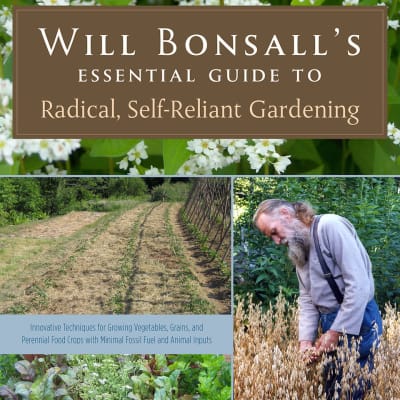
by Will Bonsall, 400 pages, 8x10, softcover. As a former apprentice of Will’s, I assumed his book would be a nostalgic journey but not especially... read more
Crew-neck straight-cut tee shirt featuring the irresistible cottagecore garden gnomes from our 2020 Bulbs catalog cover. White graphic on black cotton. Made in the U.S. from organic cotton.
Vitis spp. Early season. Loose clusters of golden-green grapes suited for single varietal and blended wines. Fruity, crisp, mineral, hints of apple and pear. Z4/5.
Bunias orientalis Open pollinated. Perennial, Zones 4-8. Tender spicy mustard greens and florets for stir-frying. Drought-tolerant with a deep taproot.
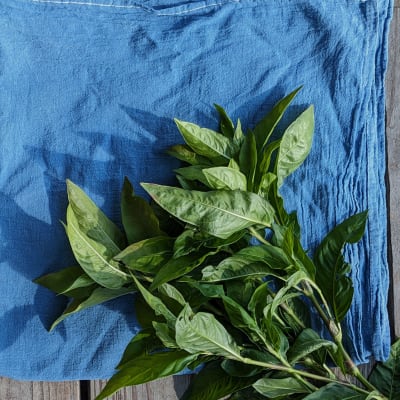
Persicaria tinctoria Open pollinated. Japanese indigo preferred by dyers in Maine. A tender annual, indigo thrives in fertile soil and likes heat and humidity.
Ageratina altissima Open pollinated. Flat-topped fuzzy clusters of small pure white disk flowers bloom August through October, attracting multiple species of bees, moths and butterflies.
Rich in several bitter flavonoids that stimulate plant immune function. Shown to prevent many pests from feeding and laying eggs. Also shown to kill pests such as mites, aphids and leafminer larvae.
Tiny particles of kaolin clay prevent insects from recognizing their targets, and, if they land, inhibit their access to the plant’s surface and cause irritation and excessive grooming.
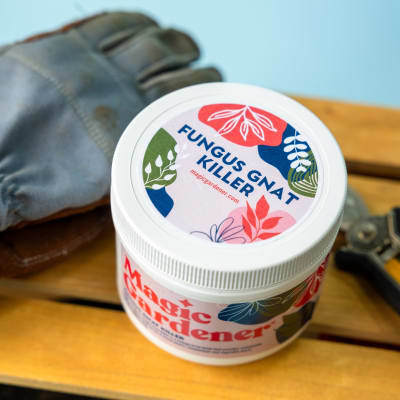
If you’ve noticed tiny flies hovering around your houseplants or greenhouse containers, and your plants are looking sick, fungus gnats are likely... read more
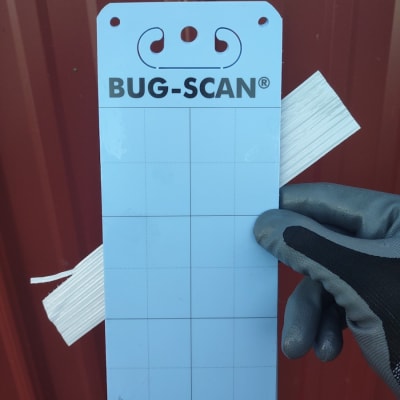
Can be used to monitor the presence and population level of insect pests or as a control measure (when used in high density on small plantings). For thrips and leafminers.

 Turkish Rocket Perennial Greens - ECOSeedsnot available yet, check back later