Nepeta × faassenii 24-36" tall. Aromatic grey-green foliage with long arching stems topped by lavender-blue flowers. Rugged. Attractive to pollinators. Z3.
read more
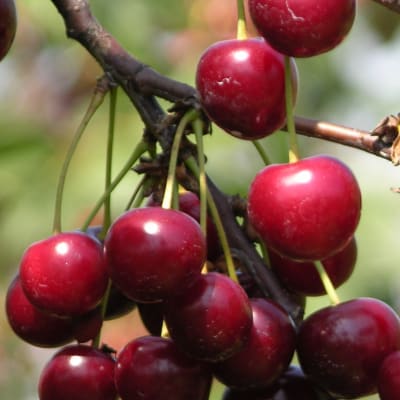
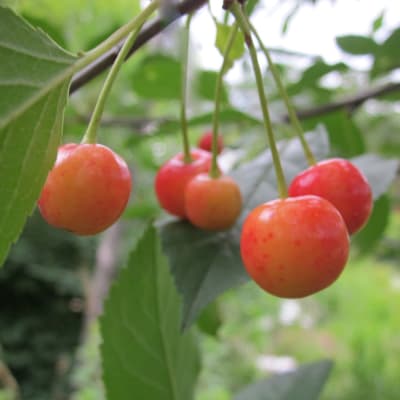
Prunus cerasus Summer. Brought to US from Hungary in the 90s during a search for later blooming cherries. One of the best sour cherries for fresh eating and processing! Z4/5.
read more
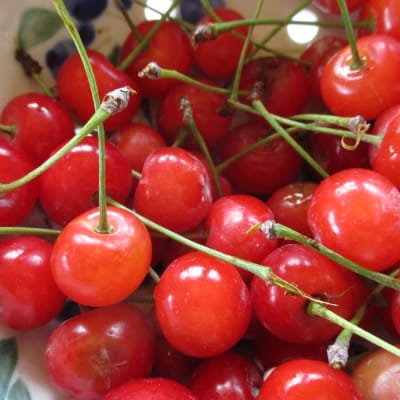
Prunus cerasus Summer. Heirloom pie cherry grows successfully in Aroostook County. Similar to Montmorency. Hardy, productive, long-lived, disease resistant. Z3.
read more
Prunus cerasus Summer. French heirloom. Most famous of all pie cherries. Aromatic firm-fleshed bright red fruit makes a clear light pink juice. Great for processing. Z3/4.
read more
Prunus avium Summer. Large sweet fruit. Vigorous, productive, upright; bears consistently in central Maine. Self-pollinating, but benefits from second variety. Z4/5.
read more
Prunus avium Summer. Good-quality dark red fruit. Survived –30° with minimal winterkill in central Maine. Vigorous. Requires second variety for pollination. Z4.
read more
Prunus avium Summer. Classic dessert cherry. Very large. Good fresh or canned. One of the hardiest sweet cherries. Requires second variety for pollination. Z5.
read more
Prunus avium Summer. All-around excellent sweet cherry for the Northeast. Sweet light-colored flesh. Good size, great flavor and heavy cropping. Disease and crack resistant. Self-pollinating. Z4.
read more
Aronia melanocarpa 5-10' x same. Cultivar selected for use in windbreaks and wildlife conservation plantings. Fruits abundantly. Medicinal and edible. Z3/4.
read more
Aquilegia canadensis 12-24" tall. This eastern North American native features delicate red-spurred sepals with yellow petaled skirts. Blooms late May to early June. Irresistible to hummingbirds! Z3.
read more
Symphytum officinale 24-48" tall. Clusters of pinkish purple flowers above bristled foliage. Known for skin-soothing properties. Recommended as an orchard companion. Z3.
read more
Metasequoia glyptostroboides 100'. A spectacular ornamental tree! Wide trunk with iridescent golden-orange bark and bright green deciduous needles turn orange in the fall. Highly adaptable. Z4.
read more
Thuja occidentalis 20-60'. Narrow and tall with twiggy branches, soft fibrous orange-brown bark, and distinct flat foliage. Good for screens and hedges. Z2.
read more
Abies balsamea 45-75'. Native conifers with fragrant boughs used for wreaths. The best Christmas tree! Semi-shade tolerant. Good hedge tree. Z3.
read more
Pinus strobus 100'+. Magnificent and massive when mature. Smooth bark becomes rough, deeply furrowed with age. Makes a beautiful hedge. Shade tolerant. Z3.
read more
Picea pungens var. glauca 30-60'. Very popular specimen tree with frosty blue needles. Excellent for privacy screens, as it is fast growing after 3'. Native to western U.S. Z2.
read more
Picea abies 80-100'. Fast-growing wide-spreading upright picturesque tree with graceful long pendulous branches that often reach the ground. Showy cones. Z2.
read more
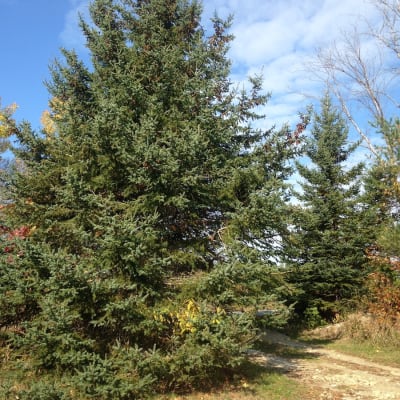
Picea glauca 60-80'. Native conifer, one of the best trees for wind blocks and privacy screens. Adaptable and tolerant to wind, drought and cold. Z2.
read more
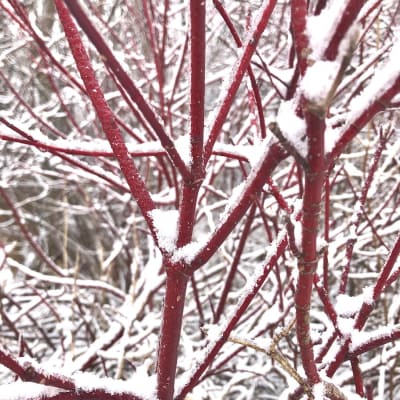
Cornus sericea 8-10'. Multi-stemmed spreading shrub excellent for hedges and borders. Red stems admirable in the winter. Valuable native wildlife plant. Z2.
read more
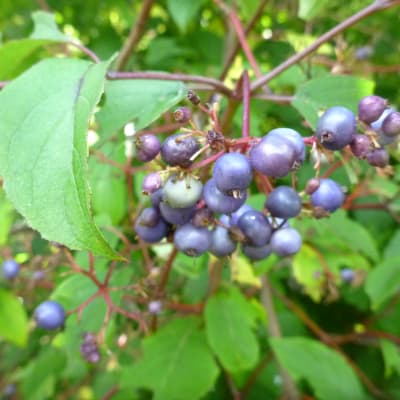
Cornus amomum 8-12' x same. Large rounded long-limbed shrub. Effective for erosion control, wildlife or pollinator habitat. Maroon bark visible in winter. Suckers and spreads. Native to eastern U.S. Z4.
read more
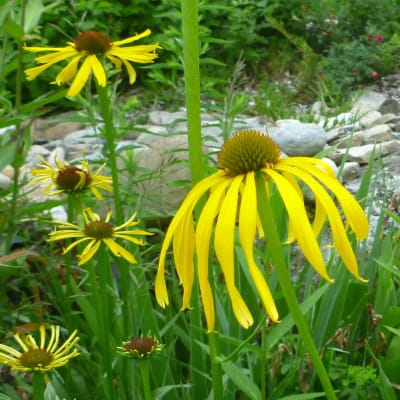
Echinacea paradoxa 3-5' tall. Bright pure-yellow flowers with drooping petals surround spiky dark brown seed cones—irresistible to gobbling goldfinches! Z3.
read more
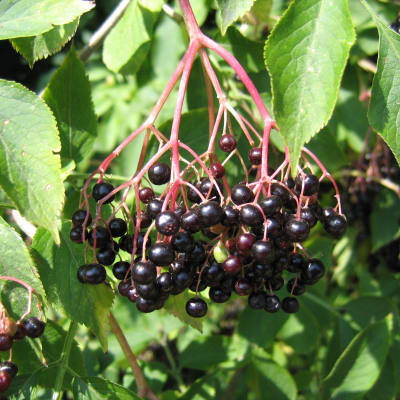
Sambucus nigra 5-8' x 2-5'. Selected for juice production based on very high anthocyanin content and sweet flavor. Strong upright shoots. Z4/5.
read more
Lolium multiflorum Annual or winter annual grass. Extremely frost hardy. Widely adaptable. Will establish quickly in cool wet spring weather, providing a dense cover crop and outcompeting weeds. Good erosion control.
read more
Lolium multiflorum Annual or winter annual grass. Extremely frost hardy. Widely adaptable. Will establish quickly in cool wet spring weather, providing a dense cover crop and outcompeting weeds. Good erosion control.
read more
Echinochloa frumentacea Annual grass. Vigorous and versatile! Good for hay, forage, weed-smothering, building soil, and controlling erosion. Tolerates waterlogged soils, low fertility and cool conditions.
read more
Dryopteris marginalis 20-30" tall. Strong stems and slightly glossy leathery grey-green fronds make this one of the best ferns for floral arrangements. Evergreen leaves in winter. Z3.
read more
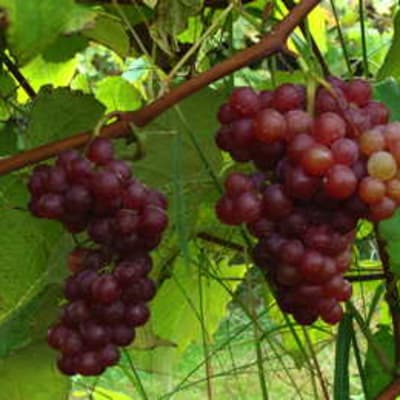
Vitis spp. Very Early. Large loose clusters of tender sweet pinkish-red grapes with a strawberry-like flavor. Good for fresh eating or juice. Stores well. Z4/5.
read more
Hablitzia tamnoides (45 days) Open pollinated. Perennial spinach-like green. Hardy vine from the Caucasus grows 6-9' long for 2-3 months beginning very early spring. Heart-shaped attractive leaves.
read more
Helenium autumnale 4-5' tall. Rich and blazing yellow lends itself to a vibrant end-of-summer display. Easy to grow, excellent cutflower. Z3.
read more
Hosta Very large oval blue-green leaves, up to 16" long and 12" wide! Pale lavender flowers bloom midsummer. Foliage develops best blue color in light shade. Z3.
read more
Hosta 18" tall and 36" wide. Rounded heavily corrugated blue leaves with wide chartreuse margins. White flowers smoked with lavender. Holds its margin color well through the season. Z3.
read more
Iris versicolor 30-36" tall. Northeastern native species with gorgeous blue-violet flowers with bold purple veining and a white and lemon-yellow blaze. Early. Z2.
read more
Iris sibirica 32" tall. Bred by legendary Maine hybridizer Currier McEwen in shades of creamy white with accents of yellow-green and buttery yellow. Early midseason to late. Z3.
read more
Eutrochium fistulosum 4-6' tall. Dusky-rose flowers are held on beautiful wine-red stems dusted with a light purplish bloom. Adaptable to wet soils. Z4.
read more