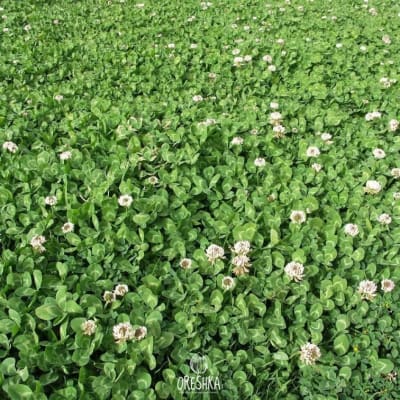
Trifolium repens Perennial legume. Up to 9". Small-leafed perennial clover establishes quickly and withstands traffic and close mowing. Our favorite clover for organic pasture.
read more
Melilotus officinalis Biennial legume. Up to 6'. Vigorous clover for cover cropping, bee forage and green manure. Long thick taproots are very effective at breaking up subsoils and improving soil aeration.
read more
Pisum sativum var. arvense Annual legume. Also called Forage Peas. Great as weed-smothering workhorse soil builder, or a tasty and highly digestible forage. Likes cool moist conditions. Will grow in most soil types.
read more
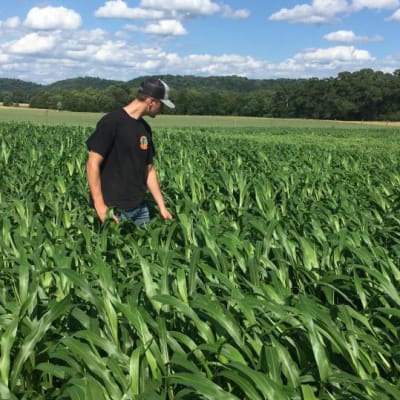
Sorghum × drummondii Annual grass. Vigorous, competitive, adaptable cover crop or annual forage. Likes heat and high fertility. Grows best in warm weather when other grasses slow down.
read more
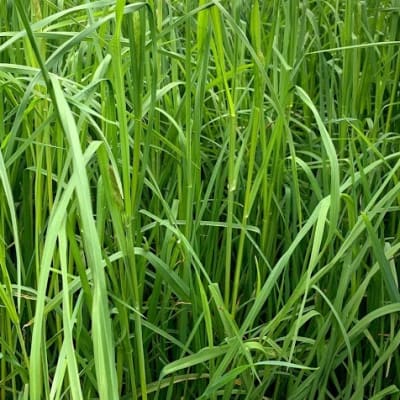
Echinochloa frumentacea Annual grass. Vigorous and versatile! Good for hay, forage, weed-smothering, building soil, and controlling erosion. Tolerates waterlogged soils, low fertility and cool conditions.
read more
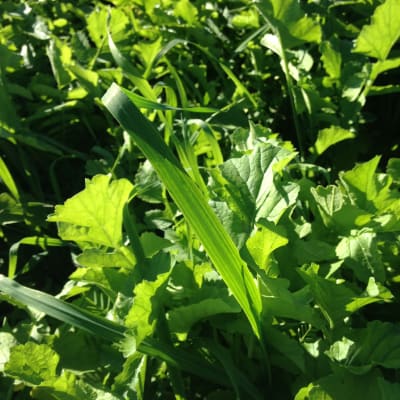
Dactylis glomerata Perennial grass. Long-lived vigorous grass. Tall leafy plants grow rapidly even in poor soils, tolerates moderately drained soils. Can be established in spring, summer, or even late winter.
read more
With annuals and biennials, grasses and legumes and broadleafs, and roots of all shapes and sizes, this blend mimics natural diversity and encourages a flourishing and balanced microbial population.
read more
All-purpose lawn blend for the Northeast. Good for a range of conditions, full sun to partial shade. Makes a great understory for orchards and other perennial woody crops.
read more
Diverse multispecies clover-heavy mix is great as a soil-building living mulch under tall-growing competitive crops, like cannabis. Suitable in raised beds, containers and high tunnels.
read more
This mix offers organic matter production, nitrogen fixation, nutrient scavenging, erosion control, and weed suppression. Perfect for no-till growers and gardeners who work with hand tools only.
read more
Perennial pasture mix of grasses and clover, well suited to Maine and other areas with similarly variable weather and temperatures. Provides season-long regrowth and good grazing.
read more
This dynamic cover crop duo has become a favorite of growers who value its vigorous growth and soil-building prowess, along with the assurance that it will winterkill up North.
read more
A superior soil-building cover crop mix. The oats come up first and are pulled down by the peas, which are then pulled down by the smothering vetch. Weeds don’t stand a chance in that jungle!
read more
Brassica juncea or Sinapis alba Annual broadleaf. Great cover crop to retain nutrients, suppress weeds and improve water penetration. Breaks down into compounds toxic to nematodes and soil-borne pathogens.
read more
Avena sativa Annual grass. A solid all-purpose oat. Generates biomass and smothers weeds. Tolerates bad weather and soil conditions. Excellent feed for cows and horses.
read more
Avena sativa Annual grass. Vigorous, lush foliage. Significantly more biomass production than common oats, making them superior for cover-cropping/soil-building, and for feeding livestock. Organic seed.
read more
Avena nuda Annual grass. Great for food or feed. The hull sheds easily during the normal threshing process—industrial-grade milling not required!
read more
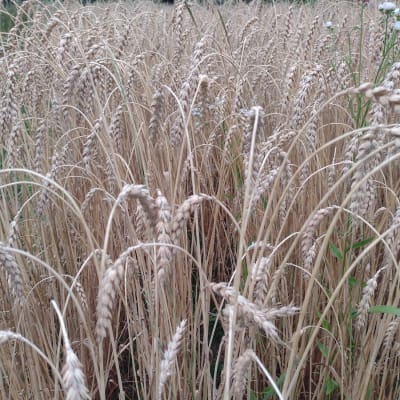
Triticum aestivum Winter annual grain. Extremely cold hardy hard red wheat. Flour has great flavor and texture, and sturdy plants make great straw. Good for small spaces. Well adapted to New England. Will Bonsall fave!
read more
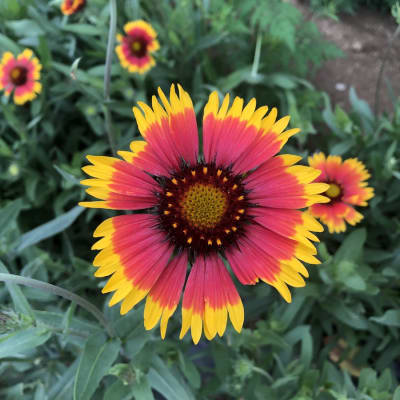
Gaillardia aristata (90 days) Open pollinated. Sun-loving native wildflower of the American Southwest is a favorite of butterflies and of gardeners who make bouquets. Perennial.
read more
Gaillardia pulchella Open pollinated. Daisy-type flowers in reds, yellow, rust and orange with a prominent colored center. Free flowering, low maintenance and easy to grow. Attracts butterflies. Good cutflower.
read more
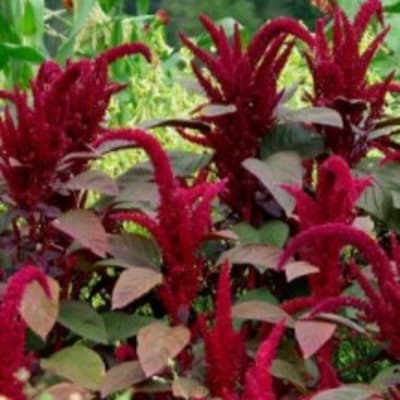
Amaranthus hybridus (65 days to flower, 125 days to seed) Open pollinated. Is it a green vegetable? An ornamental? A gluten-free grain? Why, yes! No wonder Amaranth was sacred in pre-Columbian Mexico.
read more
Oryza sativa (115 days) Open pollinated. Upland variety from Japan. This great-tasting short-grained brown rice is much easier to hull and process with human-powered equipment than other varieties. Does not require flooding.
read more
Triticum aestivum Open pollinated. Extremely cold hardy hard red wheat good for small spaces and well adapted to New England. Flour has great flavor and texture, and sturdy plants make great straw.
read more
Vitis spp. Mid. Large bright firm seedless deep red grapes with a fruity flavor. Makes the best raisins. Excellent fresh eating. Vigorous vines. Z4/5.
read more
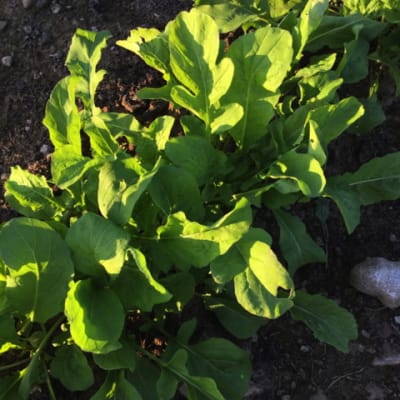
Eruca sativa (47 days) Open pollinated. Great-tasting musky greens. Bolt resistant strain. Cold tolerant, great for early spring, late fall, over-wintering.
read more
Eruca sativa (47 days) Open pollinated. Musky, cold tolerant greens, great for early spring, late fall, over-wintering. Eat the flowers if you miss some of the greens.
read more
Diplotaxis erucoides (21 days baby, 50 days mature) Open pollinated. Wild Arugula. Deeply lobed dark green narrow leaves. Excellent for cold-season salads, but also shows good summer endurance.
read more
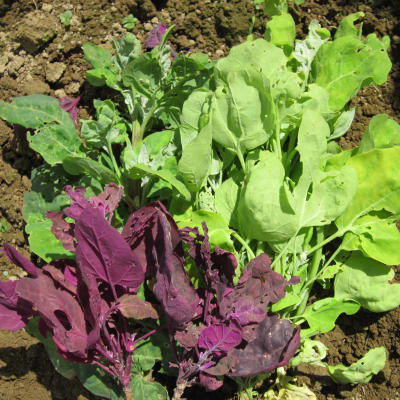
Hablitzia tamnoides (45 days) Open pollinated. Perennial spinach-like green. Hardy vine from the Caucasus grows 6-9' long for 2-3 months beginning very early spring. Heart-shaped attractive leaves.
read more
Crambe maritima Open pollinated. Perennial hardy to Zone 5, native to seashores of British Isles. Blanch the tender shoots for spring and winter.
read more
Montia perfoliata (40 days) Open pollinated. Small, heart-shaped leaves with a mild but succulent flavor. Use in mesclun and cut-and-come-again culture.
read more
Valerianella locusta (45 days) Open pollinated. Very cold-hardy small-seeded small-leaved strain of this winter staple salad green. Can be overwintered.
read more
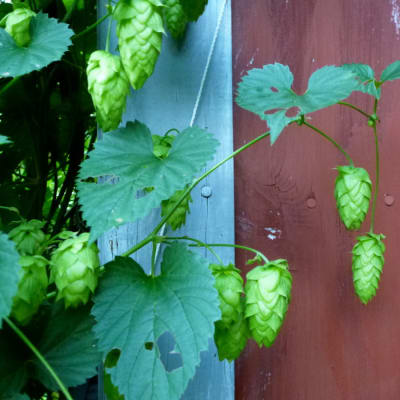
Humulus lupulus Late summer. Fragrantly aromatic hops, low bittering value. Very productive with large cones, ready to harvest mid-late August in central Maine. Z3.
read more
Humulus lupulus Excellent all-purpose hop. Low bittering. Spicy aroma. Good finishing hop for brewing English ales and stouts. Vigorous. Good disease resistance. Z3.
read more
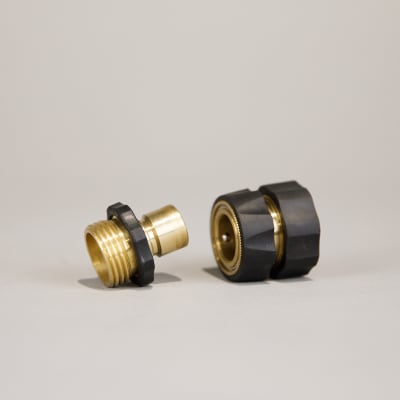
A lifesaver for anyone who changes or moves hoses on a regular basis. Fittings simply snap together for a watertight seal. Allows you to switch hoses without even turning the water off!
read more
Hosta 18" tall and 36" wide. Rounded heavily corrugated blue leaves with wide chartreuse margins. White flowers smoked with lavender. Holds its margin color well through the season. Z3.
read more
Brassica oleracea (acephala group) (60 days) Open pollinated. Smooth glossy “greasy” greens are delicious steamed. Most delectable early in the season, or late after a nip of frost.
read more
Brassica oleracea (acephala group) (30 days baby, 56 days mature) Open pollinated. The most commonly grown kale. Dense finely curled blue-green leaves on upright hardy plants. Best as a fall crop, planted July or August.
read more
Brassica napus (pabularia group) (60 days) Open pollinated. Serrated silvery-green flat-leaf Siberian-type kale with white veining. Sweetens after frost. Extremely cold hardy.
read more