NPK: 2.5-0.4-3.3 avg. Gives plants a noticeable boost and feeds soil organisms. Excellent vegan alternative to blood meal as a nitrogen source. Hands-down the best-smelling fertilizer out there.
NPK: 4-4-0 avg. 18% Ca avg. A macronutrient-rich byproduct of crab processing. Will help you grow massive specimens of field-grown cannabis. Improves lodging resistance and reduces branch breakage.
NPK: 13-0-0(apx). Provides a strong and quick release of nitrogen. Apply in the row at planting time for sweet corn, melons, brassicas and other heavy feeders. Not water-soluble.
NPK: 0-16-0. Provides large amounts of readily available phosphorus. A most economical source of P for deficient soils. May be applied without restrictions to organically certified fields.
NPK: 5-4-3 (with 9% Ca). Composted and processed poultry litter provides a good balance of major plant nutrients and other essential elements. Pasteurized to neutralize weed seeds and pathogens.
NPK: 7-1.5-1 avg. Effective and economical nitrogen fertilizer for Northeast soils. High levels of nitrogen and potassium are released as soybean meal breaks down, providing fertility over time.
Natural phosphorus source. Adequate phosphorus results in more vigorous early root formation, better flower and seed production, better growth in cold temperatures, and better water use efficiency.
NPK: 6.9-11.9-0.8 avg. Excellent source of nitrogen and phosphorus. Use as a sidedressing or mix into compost to provide added nitrogen and a bacterial boost. A byproduct of wild-caught fish.
Recommended by soil gurus Phil Callahan and Mark Fulford. Lowest concentration of heavy metals of any phosphate source. Concentrations of available phosphate were regularly over 6% when tested.
A good source of immediate potassium for depleted soil and of magnesium where calcium is abundant. Alliums like its sulfur and potatoes like its quick boost of potassium.
NPK: 2-2-2. 16% Chitin. Nourishes chitin-feeding bacteria and fungi, which in turn devour gnat eggs and root-feeding nematodes. Also fortifies plants’ cell walls, and fosters healthy blooms.
Malus spp.This is a twig for grafting. Fall-winter, rich yellow skin, yellow flesh. One of the most popular apples in the world. All-purpose apple great for fresh eating, baking and sauce. Z4.
A liquid combination of yeasts, actinomycetes, and bacteria. Promotes plant health and growth, and improves nutrient absorption and soil fertility. Our cannabis-growing friends can't do without it.
A granulated blend of 7 beneficial mycorrhizal fungi for mixing into soil. Add to seedbeds or work into the soil around your trees and shrubs to boost root growth, nutrient uptake and soil health.
by Robert Kourik, 486 pages, 8½x11, softcover. Don’t fear the thickness of this tome—it’s saving you from reading a 3-foot-tall stack of papers, 200... read more
Medicago sativa Perennial legume, up to 3' high. This fragrant plant has beautiful purple flowers and is great for hay and as a cover crop. Herbalists consider it a valuable nutritive tonic.
Hordeum vulgare Annual spring grain. Truly hulless variety, which makes for quick, easy, low-tech processing. Fast-growing, and competes well with weeds. Tolerates drought and heavy soils.
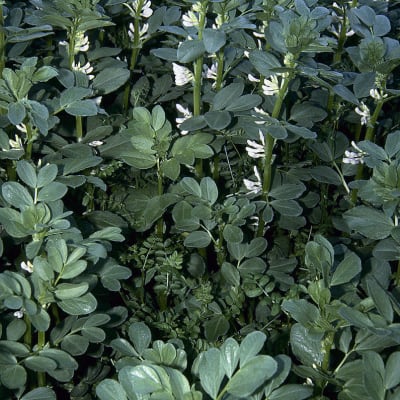
Vicia faba Annual or winter annual legume. Great for fixing nitrogen, and building large amounts of biomass. Bell beans will happily sprout in half-frozen soil, and tolerate a wide range of soil conditions.
Fagopyrum esculentum Annual broadleaf. Excellent cover crop for outcompeting summer weeds. Makes tasty flour for pancakes or baked goods. Bees like its abundant nectar.
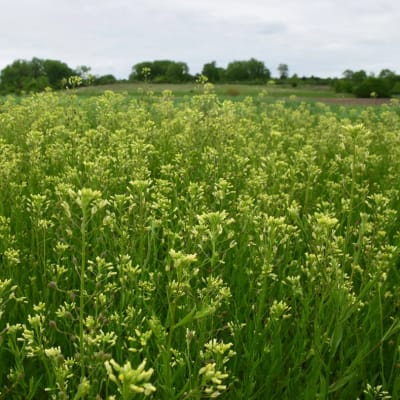
Camelina sativa Annual brassica. Widely adaptable and versatile winter-hardy cover crop and oilseed plant; tolerates poor conditions. Excellent nutrient scavenger. Sow when you would for winter rye.
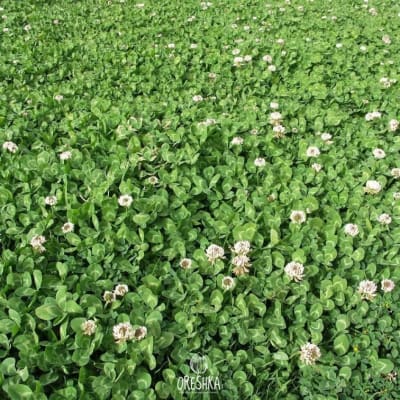
Trifolium repens Perennial legume. Up to 12". Vigorous large-leafed white clover. Readily self-seeds. Excellent for perennial grazing pasture and improving soil quality in areas transitioning from woody growth.
Trifolium incarnatum Tender biennial legume. Up to 18". Rapid growth in cool weather makes this vigorous clover great for cover cropping and green manure. Crimson blooms attract bees and make good cutflowers.
Trifolium repens Perennial legume. The lowest-growing clover. This shade- and traffic-tolerant perennial makes nice garden paths and living mulch. Our most popular clover.
Trifolium pratense Short-lived perennial legume. Up to 24". A high-yielding red hay clover with glabrous stems for fast dry-down. Excellent winter hardiness and persistence. Good for acidic or wet soils.
Trifolium repens Perennial legume. 8–12" tall. Fantastic nitrogen fixer with great protein and digestibility. Tall enough to be harvested for hay, silage, and green chop. Good choice for poorly drained soil.
Trifolium pratense Biennial legume. Up to 36". Vigorous red clover for cover cropping or grazing. Deep taproot. Tolerates shade, so a good choice for overseeding into standing crops. Blossoms make a lovely tea.
Trifolium pratense Short-lived perennial legume. Up to 24". Vigorous and high-yielding clover suitable for pastures, underseeding and cover-cropping. More drought-tolerant than white clover.
Trifolium repens Perennial legume. Up to 9". Small-leafed perennial clover establishes quickly and withstands traffic and close mowing. Our favorite clover for organic pasture.
Melilotus officinalis Biennial legume. Up to 6'. Vigorous clover for cover cropping, bee forage and green manure. Long thick taproots are very effective at breaking up subsoils and improving soil aeration.
Raphanus sativus var. niger Broadleaf annual. Roots penetrate hardpans and loosen soil down to 30" or beyond. Takes up available soil nutrients and prevents losses to leaching or runoff. Suppresses weeds if planted thickly.
Raphanus sativus var. niger Broadleaf annual. Roots penetrate hardpans and loosen soil down to 30" or beyond. Takes up available soil nutrients and prevents losses to leaching or runoff. Suppresses weeds if planted thickly.
Cichorium intybus Perennial broadleaf, up to 18". Very high digestibility. Protein levels up to 50% higher than alfalfa. Stands may live 5 years or longer, but it’s also valuable for pasture or green chop.
Lolium multiflorum Annual or winter annual grass. Extremely frost hardy. Widely adaptable. Will establish quickly in cool wet spring weather, providing a dense cover crop and outcompeting weeds. Good erosion control.
Lolium multiflorum Annual or winter annual grass. Extremely frost hardy. Widely adaptable. Will establish quickly in cool wet spring weather, providing a dense cover crop and outcompeting weeds. Good erosion control.
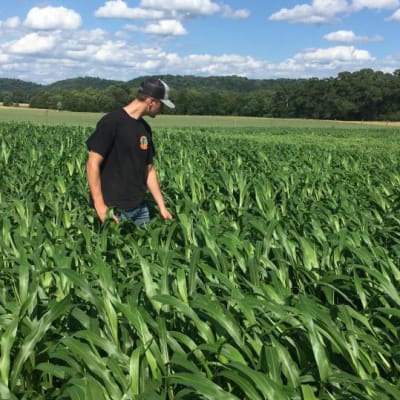
Sorghum × drummondii Annual grass. Vigorous, competitive, adaptable cover crop or annual forage. Likes heat and high fertility. Grows best in warm weather when other grasses slow down.
Echinochloa frumentacea Annual grass. Vigorous and versatile! Good for hay, forage, weed-smothering, building soil, and controlling erosion. Tolerates waterlogged soils, low fertility and cool conditions.
Dactylis glomerata Perennial grass. Long-lived vigorous grass. Tall leafy plants grow rapidly even in poor soils, tolerates moderately drained soils. Can be established in spring, summer, or even late winter.
Lolium perenne Short-lived perennial grass. Extremely palatable forage grass, popular in grazing mixes. Germinates quickly and grows rapidly, suppressing weeds. Holds up under heavy traffic. Good pest resistance.
Lolium arundinaceum Perennial grass. Long-lived, versatile and low-maintenance grass good for pasture, lawn, or hay. Deep and extensive root system protects against erosion. Tolerates most adverse conditions.
Phleum pratense Perennial grass. A popular perennial hay species that produces good yields, resists lodging and is easily cut and cured. Very winter hardy. Does not tolerate heat or drought.
A cover crop blend of 40% buckwheat, 40% BMR sorghum/sudangrass, and 20% Sunn Hemp for nitrogen fixation. Loves heat. First-rate smother crop and biomass builder formulated to reliably winter-kill.
With annuals and biennials, grasses and legumes and broadleafs, and roots of all shapes and sizes, this blend mimics natural diversity and encourages a flourishing and balanced microbial population.
Diverse multispecies clover-heavy mix is great as a soil-building living mulch under tall-growing competitive crops, like cannabis. Suitable in raised beds, containers and high tunnels.
This mix offers organic matter production, nitrogen fixation, nutrient scavenging, erosion control, and weed suppression. Perfect for no-till growers and gardeners who work with hand tools only.
Perennial pasture mix of grasses and clover, well suited to Maine and other areas with similarly variable weather and temperatures. Provides season-long regrowth and good grazing.
A superior soil-building cover crop mix. The oats come up first and are pulled down by the peas, which are then pulled down by the smothering vetch. Weeds don’t stand a chance in that jungle!
For years customers have requested a wildlife forage mix—your wish is our command! This recipe comes from a longtime partner in the seed business;... read more