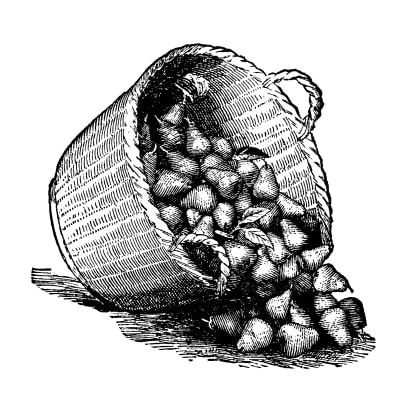
Coix lacryma-jobi (100 days) Open pollinated. Sets pendulous sprays of globular pearly purple-grey seeds, which may be strung as beads for necklaces. Spiky 2–3' stalks good for planters or as filler in dried fall arrangements.
read more
Lavatera trimestris Open pollinated. Mix contains mostly pink shades and some white. Explosion of funnel-shaped blossoms on 2' tall bushy plants.
read more
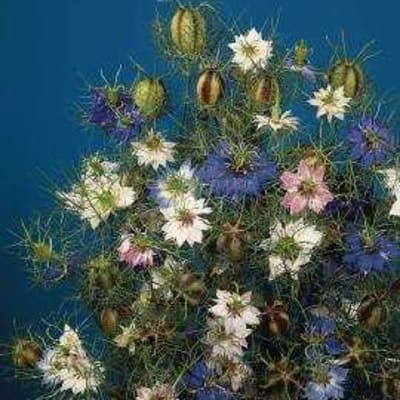
Nigella damascena (70 days) Open pollinated. Mix of pink, blue and white flowers. Spiky decorative seed pods used in dried arrangements. 18".
read more
Rubia tinctorum Open pollinated. Ancient and excellent source of red dye. Harvest roots after three years and grind to yield a wash- and light-fast red dye par excellence. 4' plants.
read more
Reseda odorata Open pollinated. Insignificant yellow-green blossoms grown for their enticing raspberry scent. Once common in Paris. Compact plants.
read more
Chasmanthium latifolium Open pollinated. Perennial. Strong 2' arching stems with airy flattened seedheads are beautiful for dried arrangements. Native ornamental grass.
read more
Ageratina altissima Open pollinated. Flat-topped fuzzy clusters of small pure white disk flowers bloom August through October, attracting multiple species of bees, moths and butterflies.
read more
Withania somnifera Open pollinated. Upright shrub 2' with green-to-yellow flowers ripening to red berries. Roots are dried at the end of the growing season and used internally powdered or tinctured.
read more
Codonopsis pilosula Open pollinated. Perennial to Zone 4. Used in Chinese medicine like ginseng, but considerably easier to grow than true Panax ginseng.
read more
Cuminum cyminum (100-115 days) Open pollinated. Foliage is fragrant and ferny, somewhat like dill; but unlike dill, plants grow only 1-2'. Annual, takes a long time to mature so start indoors in cold climates.
read more
Dysphania ambrosioides (55 days) Open pollinated. Culinary herb native to Central America, often added to beans to deepen flavor and to mitigate flatulence. Sharp and pungent.
read more
Trigonella foenum-graecum (30 days leaf, 120 days seed) Open pollinated. Leaf and seeds are used culinarily, imparting a sweet nutty flavor reminiscent of maple syrup. If not pinched back, the plant will
read more
Hyssopus officinalis Open pollinated. Perennial. Normally hardy to Zone 3. Beautiful aromatic perennial border plant that produces spikes of indigo flowers.
read more
Alchemilla mollis Open pollinated. Perennial. 12-18" Bears large loose sprays of tiny greenish-yellow flowers from early summer onward. Makes a good border and ground cover in shady locations.
read more
Levisticum officinale Open pollinated. Perennial. Umbelliferous, attracts beneficial insects, grows 3-6' and makes a dramatic architectural element in a decorative border.
read more
Althaea officinalis Open pollinated. Cousin to the hollyhock, this showy 4–6' plant is used to soothe and soften irritated skin and membranes.
read more
Silybum marianum Open pollinated. Named for the bold white splashes on its glossy leaves, said to be from Mary’s milk. Fast-growing 3-5' annual with leaves up to 8x24".
read more
Leonurus cardiaca Open pollinated. Perennial 2–4' plant with dull green leaves and tiny white to purple blooms. Bees love the flowering tops, which are used for tea or herbal tincture.
read more
Mentha pulegium Open pollinated. Perennial. Hardy aromatic ground cover; plants creep with only the lavender flower stalks rising above the ground.
read more
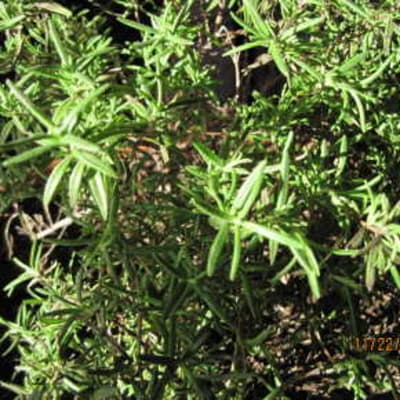
Rosmarinus officinalis Open pollinated. Beloved tender perennial growing to 3-4'. Cannot withstand temperatures below 17°, may be overwintered indoors if kept cool and moist.
read more
Stevia rebaudiana (100-120 days) Open pollinated. Stevia is several hundred times sweeter than sugar, and is used fresh, dried, powdered or in a liquid as a sugar substitute.
read more
Origanum majorana (80-95 days) Open pollinated. Grown as an annual in the North. 1' plant with grey-green rounded leaves of enchanting sweet fragrance.
read more
Hypericum perforatum Open pollinated. 1-3' perennial hardy to Zone 3. Pretty yellow flower of fields and meadows turns tinctures and oils deep red.
read more
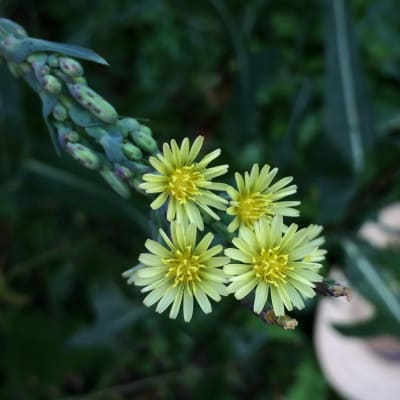
Lactuca serriola (60 days) Open pollinated. Readily grows as a spring-sown annual.Young leaves are edible, and the plant can be milked for its medicinal latex.
read more
Matricaria recutita Open pollinated. One of the most widely known herbs, powerful yet gentle, long used to promote relaxation. Perhaps a tad less sweet than others.
read more
Gaylussacia baccata 1-3' x 2-4'. Cousin of the blueberry. Less acidic, more mildly sweet flavor. Flowers in June, fruits in August. Full sun to part shade but fruits best in sun. Native to eastern U.S. and Canada. Z3/4.
read more
Arctostaphylos uva-ursi 6-10". Low-growing evergreen groundcover. Can sprawl to 15'. Pinkish-white flowers in spring. Small red berries persist into winter. Self-pollinating. Z2.
read more
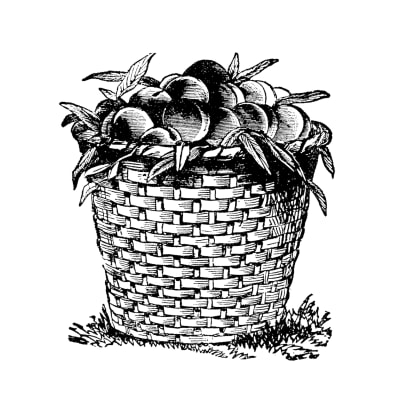
Prunus persica Mid. Large fruit with yellow flesh is sweet and juicy. An overall great all-purpose peach for fresh eating, canning or baking. Freestone. Z5.
read more
Prunus persica Early-Mid. Peento-type peach is flat, semi-freestone with sugary white flesh. Great for drying. Heavy yields on vigorous tree. Z4.
read more
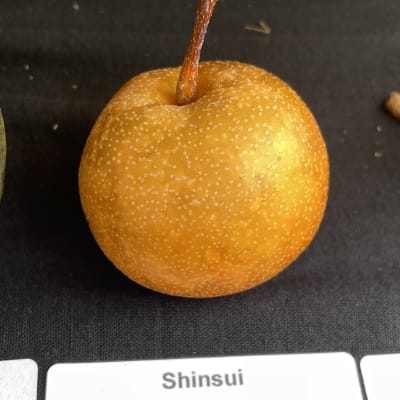
Pyrus communisThis is a twig for grafting. Mid-late summer. Very juicy melting sweet fruit. The perfect pear for fresh eating. Makes great pear wine. Z4.
read more