Trifolium pratense Short-lived perennial legume. Up to 24". A high-yielding red hay clover with glabrous stems for fast dry-down. Excellent winter hardiness and persistence. Good for acidic or wet soils.
read more
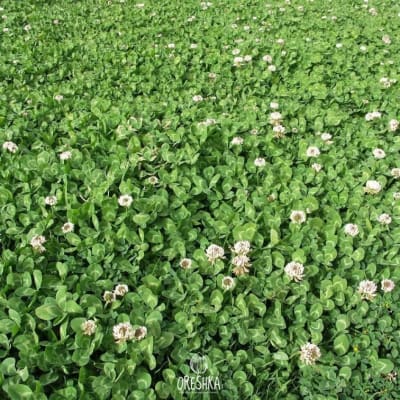
Trifolium repens Perennial legume. 8–12" tall. Fantastic nitrogen fixer with great protein and digestibility. Tall enough to be harvested for hay, silage, and green chop. Good choice for poorly drained soil.
read more
Trifolium pratense Biennial legume. Up to 36". Vigorous red clover for cover cropping or grazing. Deep taproot. Tolerates shade, so a good choice for overseeding into standing crops. Blossoms make a lovely tea.
read more
Trifolium repens Perennial legume. Up to 9". Small-leafed perennial clover establishes quickly and withstands traffic and close mowing. Our favorite clover for organic pasture.
read more
Raphanus sativus var. niger Broadleaf annual. Roots penetrate hardpans and loosen soil down to 30" or beyond. Takes up available soil nutrients and prevents losses to leaching or runoff. Suppresses weeds if planted thickly.
read more
Pisum sativum var. arvense Annual legume. Also called Forage Peas. Great as weed-smothering workhorse soil builder, or a tasty and highly digestible forage. Likes cool moist conditions. Will grow in most soil types.
read more
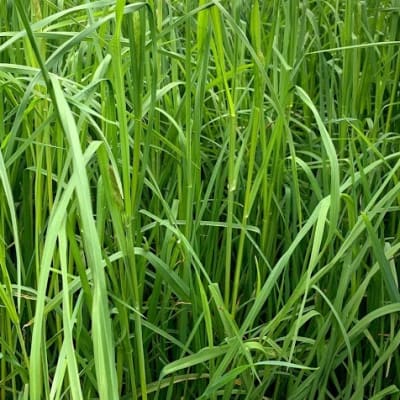
Echinochloa frumentacea Annual grass. Vigorous and versatile! Good for hay, forage, weed-smothering, building soil, and controlling erosion. Tolerates waterlogged soils, low fertility and cool conditions.
read more
Dactylis glomerata Perennial grass. Long-lived vigorous grass. Tall leafy plants grow rapidly even in poor soils, tolerates moderately drained soils. Can be established in spring, summer, or even late winter.
read more
Triticosecale var. ‘FORAGE FX 1001’ Triticale is a hybrid of wheat and rye, and boasts many advantages over plain winter rye. This variety was selected for winter hardiness and consistently high yields of both forage and seed yields.
read more
All-purpose lawn blend for the Northeast. Good for a range of conditions, full sun to partial shade. Makes a great understory for orchards and other perennial woody crops.
read more
A superior soil-building cover crop mix. The oats come up first and are pulled down by the peas, which are then pulled down by the smothering vetch. Weeds don’t stand a chance in that jungle!
read more
Brassica juncea or Sinapis alba Annual broadleaf. Great cover crop to retain nutrients, suppress weeds and improve water penetration. Breaks down into compounds toxic to nematodes and soil-borne pathogens.
read more
Avena sativa Annual grass. A solid all-purpose oat. Generates biomass and smothers weeds. Tolerates bad weather and soil conditions. Excellent feed for cows and horses.
read more
Secale cereale Winter annual grass. Extremely frost hardy, adaptable and competitive. For cover crop or grain. Deep extensive roots help prevent compaction and improve soil tilth. Vigorous spring regrowth.
read more
Foeniculum vulgare (65 days) Open pollinated. Slow grower with very thin stems valued for its striking feathery bronze foliage. Delicious and decorative.
read more
Gaillardia pulchella Open pollinated. Daisy-type flowers in reds, yellow, rust and orange with a prominent colored center. Free flowering, low maintenance and easy to grow. Attracts butterflies. Good cutflower.
read more
Cucurbita pepo var. ovifera (100 days) Open pollinated. A vivid mix of greens, yellows, creams and whites on straight and curved necks, all with double sets of wings and fins.
read more
Sorghum bicolor (105 days) Open pollinated. Sprays of ornamental seedheads in gold, bronze, brown, black, burgundy, red and cream are great for making natural straw brooms and classic autumnal displays. Small shiny seeds are beloved by birds.
read more
Triticum aestivum Open pollinated. Extremely cold hardy hard red wheat good for small spaces and well adapted to New England. Flour has great flavor and texture, and sturdy plants make great straw.
read more
Vitis spp. Mid. Clusters of medium-sized dark grapes with a heavy blue bloom. Our most popular seeded grape. Excellent for fresh eating, jelly and juice. Z3.
read more
Hablitzia tamnoides (45 days) Open pollinated. Perennial spinach-like green. Hardy vine from the Caucasus grows 6-9' long for 2-3 months beginning very early spring. Heart-shaped attractive leaves.
read more
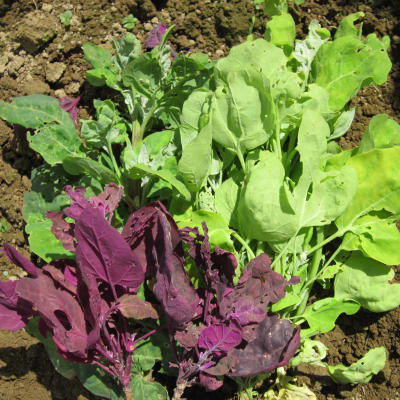
Blitum bonus-henricus Open pollinated. Heirloom perennial green and ancient European potherb. Eat shoots like asparagus; use leaves like spinach.
read more
Lonicera sempervirens 6–10' long. Scarlet-red and yellow flowers. Straight species. Selected for excellent blossom set and outstanding resistance to powdery mildew. Z3.
read more
Eutrochium purpureum 4-6' tall. Massive vanilla-scented pinkish-purple domed flowers in midsummer. Often found in average to dry woodland edges. Z3.
read more
Brassica oleracea (acephala group) (65 days) F-1 hybrid. Crinkly and very curly, of the Dutch borecole type. Upright uniform productive plants hold well in the field in all weather conditions and continue to grow.
read more
Brassica oleracea (acephala group) (30 days baby, 56 days mature) Open pollinated. The most commonly grown kale. Dense finely curled blue-green leaves on upright hardy plants. Best as a fall crop, planted July or August.
read more
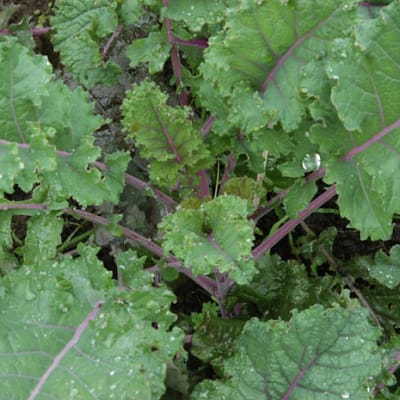
Brassica oleracea (acephala group) (61 days) Open pollinated. Lacinato crossed with Redbor. Curly edges, red veins, purple or blue-green leaves, diverse shapes and colors. Productive and cold-hardy.
read more
Brassica oleracea (acephala group) (60 days) F-1 hybrid. Tall plants with ruffled red leaves; color intensifies in cool weather. Very cold hardy ornamental edible.
read more
Brassica oleracea (acephala group) (60 days) Open pollinated. Vigorous upright lacinato-leaved kale in a range of bluish-green shades, all with a dramatic pink mid-rib.
read more
Actinidia arguta Female. Also called Ananasnaya. Tangy and sweet pineapple-like taste. Heavy yields are late to ripen. Requires Meader male for pollination. Z4.
read more
Actinidia arguta Female. Medium-sized bright green fruits with excellent flavor. Very productive and reliably hardy. Requires Meader male for pollination. Z4.
read more
Actinidia arguta Female. Sweet and luscious kiwi, a combination of sweet and sour. Larger than other varieties. Requires Meader male for pollination. Z4.
read more