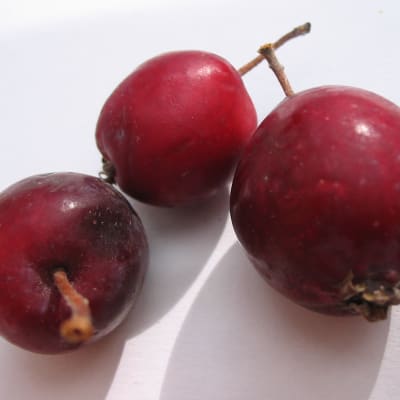
Malus spp. Late summer. Medium-sized, highly-flavored fruit. Good balance of acid/sweet. Crisp and juicy fresh-eating. Stores up to seven weeks. Z3.
read more
Malus spp. Fall. Excellent bittersweet for blending in hard cider. Juicy firm quite bitter very astringent flesh has a very high sugar content. Rare. Z4.
read more
Malus spp. Fall. Full bittersweet cider apple. Very bitter yellow fruit with spots of pink and orange when fully ripe in mid-October. Intense tannins. Some specimens measured 21 brix. Heavy annual crops. Z4.
read more
Malus spp. Fall. High-quality bittersweet variety recommended for blending with other fall varieties. Soft astringent tannins. Narrow upright tree form. Becoming popular commercially in New England. Z4.
read more
Malus spp. Fall. Bittersharp cider apple high in tannin and acidity. Makes a full-bodied vintage cider with nice blend of acid, tannins and sugar. Decent fresh-eating. Z4.
read more
Malus spp. Fall. Bittersharp cider apple. Small astringent very juicy fruit. The most bitter apple you’ll ever taste. Not for eating fresh! Z4.
read more
Malus spp. Late fall. Full bittersweet cider apple. Low acidity and a nice astringency. If you’ve been looking for late-ripening bittersweets, try this one. Z4.
read more
Malus spp. Classic culinary crab. Still found in old Maine dooryards. Apricot-pink buds, large fragrant pure white single flowers. Great for canning, pickling, delicious sauce and flavorful ruby-red jelly. Z2.
read more
Brassica rapa (37 days) Open pollinated. Produces many pencil-thick deep purple flowering shoots with pleasing mild mustard flavor. Grows best in cool weather.
read more
Phaseolus vulgaris (55 days) Open pollinated. 7–9' vines bear long stringless round-podded very dark green fresh beans, coming early. 2017 AAS.
read more
Phaseolus vulgaris (60 days shell, 85 days dry) Open pollinated. Plump shiny black beans! Can be harvested as a shell or dry bean. Dry pods resist shattering, yet are easy to shell.
read more
Beta vulgaris (54 days) Open pollinated. Gene pool based on 3 heirlooms. Expect 3 colors: pink-red with orange, bright gold and vivid orange. 3.5 x 7-8" tapered form.
read more
Beta vulgaris (48 days) Open pollinated. From 1911, beloved by commercial growers and home gardeners. Early beet greens and bunching beets. Quick cold soil emergence. Attractive purple tops.
read more
Mycorrhizae form beneficial relationships with the roots of most plant species: they boost plant growth by improving the roots’ ability to take up nutrients, water and oxygen.
read more
Vaccinium corymbosum Early-Midseason. 4-6' Large firm high dessert quality berries are considered the best-tasting by nearly everyone who grows highbush blueberries. Very vigorous and consistently productive. Z4.
read more
A poignant and galvanizing collection of essays and conversations with respected Black leaders, brilliantly woven together by Leah Penniman of Soul Fire Farm, author of Farming While Black.
read more
An approachable botany textbook and herbal field guide to North American plants with colorful illustrations on nearly every page. Regularly updated by the author since its release in 1996.
read more
A soil science book for everyone! Filled with farmer anecdotes, insightful reference charts, and illustrations, this book is both engrossing and practical for anyone who works with soil.
read more
A standout among the many no-till books. Frost provides a deep look into the living nature of soil while broadening our practical understanding of how to grow crops in a regenerative way.
read more
With plenty of scientific detail and practical knowledge about a variety of regenerative practices, Phillips reveals how mycorrhizal fungi are deeply embedded in healthy soils and plant physiology.
read more
Daucus carota (68 days) Open pollinated. Uniform cylindrical 7" roots with unusually good interior color, crisp texture and fine flavor. Holds well; an excellent keeper too.
read more