-
ships year-round
 Beedy’s Camden Curly Kale - OrganicSeedsunavailable,
 -
ships year-round
-
ships year-round
-
ships year-round
-
ships year-round
-
ships year-round
-
ships year-round
-
ships year-round
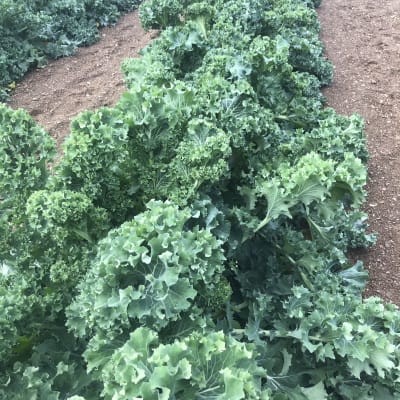


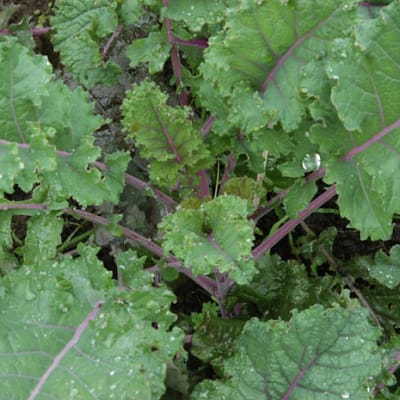

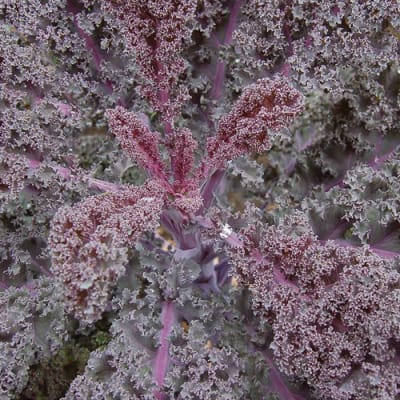

Kale and Collards
- About 175–280 seeds/g and 4,200–9,800 seeds/oz.
- Days to maturity are from emergence after direct sowing. For transplants, subtract 20 days.
Scientists say kale descends from wild cabbage, a plant found primarily on the lime cliffs of coastal Europe. Originating in Greece, kale was enjoyed for thousands of years throughout Europe where it was the most common green vegetable until the Middle Ages when cabbage became more popular.
One cup provides more Vitamin C than a glass of orange juice, more calcium than a cup of milk, more potassium than a banana and, per calorie, more iron than beef. Kale may be used in textured salads, steamed or braised as a side dish, mixed in omelettes, lasagna and stews, and made into chips.
Culture: Start indoors March-May for setting out May-July, or direct-seed in May. Minimum germination soil temperature 40°, optimal range 45-85°. To enjoy it at its best and to avoid the worst of the flea beetle season, direct seed in July or August for late-season maturity. Use wire hoops and row cover to keep flea beetles out at early stages. Important crop in colder climates owing to its natural resistance to frost, kale is sweeter after exposure to cold. Excellent for microgreens.
Diseases:
- BL=Blackleg
- BR=Black Rot
Note: We cannot ship packets greater than ½ oz. (14 grams) of radishes into the Willamette Valley. The State of Oregon prohibits shipping any commercial quantity of untreated Brassica, Raphanus or Sinapis due to quarantine