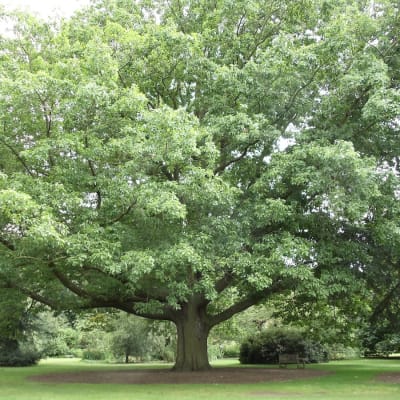
Quercus macrocarpa 70-80' x same. Hardiest of the white oaks with a deeply grooved massive trunk and a wide-spreading crown. Dark green foliage. Large fringed acorns. Z3.
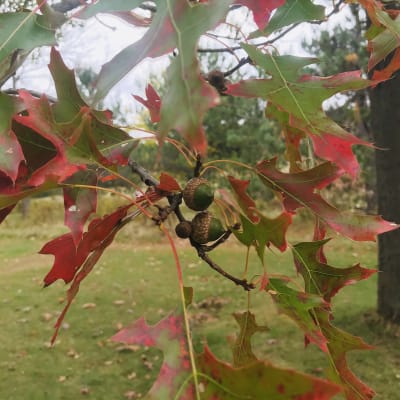
Quercus rubra 60-75' x 45'. The most common oak in northern New England. Magnificent open rounded crown. Fast growing. Tolerant of different conditions. Z4.
Quercus bicolor 50-60' x same. Massive rounded shade tree with short deeply ridged trunk and fan of branches. Yellow to reddish-purple fall foliage. Native. Z3.
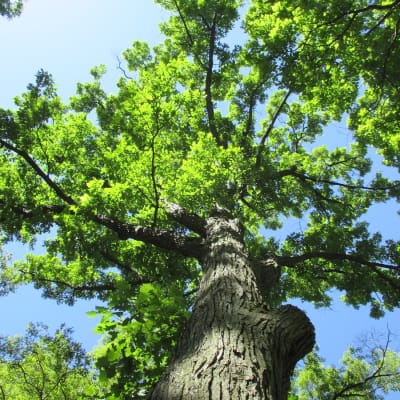
Quercus alba 50-80' x same. Spectacular broad irregularly rounded oak. Wood valued for lumber and firewood. Slow growing and long-lived. Z3.
Loading...
Oaks Quercus spp.
Many oaks are native to New England. They are generally divided into two groups: the reds and the whites. The reds have pointier leaves and the whites have rounder ones. Most of them make absolutely breathtaking shade trees, creating a major presence in almost any landscape and providing bountiful forage for wildlife and for humans. The strongly astringent inner bark, foliage and acorn caps are all medicinal, and acorns were an extremely important human food source for thousands of years. Contrary to much of the literature, all acorns are edible, both reds and whites. (For detailed instructions on acorn processing, see Samuel Thayer’s book, Nature’s Garden.) The tannins from a handful of oak leaves added to homemade half-sours will keep pickles crisp for months. Oaks are monoecious so you need only one to get fruit.