Aronia arbutifolia 6-10' × 3-6'. Each one is genetically unique. Beautiful in mass plantings and borders. Plant several in a hedge and make the birds happy! Native. Z3/4.
Thuja occidentalis 20-60'. Narrow and tall with twiggy branches, soft fibrous orange-brown bark, and distinct flat foliage. Good for screens and hedges. Z2.
Pinus strobus 100'+. Magnificent and massive when mature. Smooth bark becomes rough, deeply furrowed with age. Makes a beautiful hedge. Shade tolerant. Z3.
Pinus banksiana 50-60'. Native. Northernmost growing of all the American pines. useful in windbreaks and shelter belts. Grows in sandy shallow acidic soils. Z2.
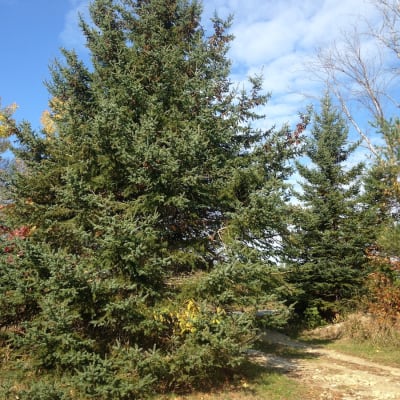
Picea pungens var. glauca 30-60'. Very popular specimen tree with frosty blue needles. Excellent for privacy screens, as it is fast growing after 3'. Native to western U.S. Z2.
Cornus racemosa 3-8' × 10-15'. Native multi-stemmed thickly branched suckering shrub with rounded domes of small 4-petaled white flowers that bloom in early summer. White berries on bright red fruit stalks. Z4.
Cornus alternifolia 20' × 30-35'. Small tree or large multi-stemmed shrub with tiers of horizontal branches and fragrant white 2-3" flower clusters. Z3.
Cornus sericea 8-10'. Multi-stemmed spreading shrub excellent for hedges and borders. Red stems admirable in the winter. Valuable native wildlife plant. Z2.
Cornus amomum 8-12' × same. Creamy blooms followed by blue berries. Large rounded shrub is good for erosion control, wildlife or pollinator habitat. Native. Z4.
Hydrangea quercifolia 3-4' × 3-5' Giant panicles mature to deep rose and dry to red in fall. Broad lobed leaves. Low maintenance. Species native to N. America. Z5
Hydrangea quercifolia 4-6' × 3-5' Spreading native hydrangea with large oak-like leaves and spiked whitish-pink double flowers July-Aug. Dried flowers turn pink to bronze. Purple, red and orange fall folliage. Z5.
Castanea dentata Up to 100'. Once common in the eastern US. Important food source for people and wildlife. Not immune to blight but likely to thrive 10-30 years. Fast growing and precocious. Z4.
Corylus americana 12-18' × 10-15'. Multi-stemmed native shrub with sweet nuts. Showy catkins in spring. Patchwork of colors in autumn. Can bear in 3-5 years. Z4.
Myrica pensylvanica Waxy blue skin. 5-10' × same. A common sight along Maine’s rocky shores. Fragrant glossy deep green leaves and small waxy berries. Fixes nitrogen and feeds wildlife. Z2.
Myrica pensylvanica Waxy blue skin. 5-10' × same. A common sight along Maine’s rocky shores. Fragrant glossy deep green leaves and small waxy berries. Fixes nitrogen and feeds wildlife. Z2.
Arctostaphylos uva-ursi 6-10". Low-growing evergreen native groundcover. Can sprawl to 15'. Pinkish-white flowers in spring. Small red berries persist into winter. Z2.
Cephalanthus occidentalis 6-10' × 8'. Loose rounded branchy shrub with masses of ornamental blooms that appear 4–6 weeks in summer. Attractive to pollinators. Z4.
Halesia carolina 20-40' × 15-30'. Small tree or large multi-stemmed shrub. Edible flowers and fruit. Beautiful addition to woodland gardens! Native to Appalachia. Z4.
Rubus odoratus 3-6' × 6-12' Native relative of the cultivated raspberry, with fragrant flowers and nutritious fruit. Thornless, long-blooming, attractive to pollinators and wildlife. Z4.
Diervilla lonicera 2-4' × 2-5'. Clusters of yellow tubular flowers attract pollinators. Lustrous green leaves emerge with a hint of bronze. Good for erosion control. Z3.
Rhododendron groenlandicum 1-2' × 2-3' Low-growing native evergreen twiggy shrub with leathery leaves and fuzzy white flower clusters. A must-have for Zone 2 plant enthusiasts.
Magnolia virginiana 10-20' × same. Fragrant creamy white 2”3" waxy blossoms in mid-spring sometimes rebloom in mid-summer. Pink fruits adorn the tree in fall. Tolerates clay and air pollution. Z5.
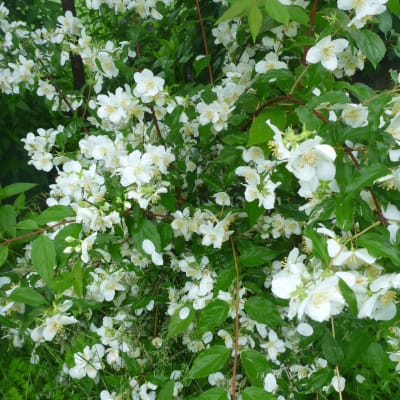
Philadelphus lewisii 4-5' × 3-4' Medium-sized loosely arching ornamental blooming shrub. A “blizzard” of sweet citrusy fragrance from white blossoms in late spring. Z3.
Ceanothus americanus Small compact shrub fixes nitrogen and attracts pollinators. Leaves historically used as tea and medicine. Grows in poor soils. Native to N. America. Z4.
Cercis canadensis 25-30' × same. Small vase-shaped ornamental tree. Clusters of brilliant edible purplish-pink pea-like flowers fill the entire tree in spring. Z4/5.
Amelanchier laevis 15-25'. Leaves of this understory tree unfold purplish-orange bronzed color in spring. Pendulous white blossoms. Berries ripen midsummer. Z2.
Clethra alnifolia 4-5' × same. Red buds and beautiful spires of heavenly scented deep-pink flowers appear for 6 weeks in midsummer. Erect oval habit. Z3.
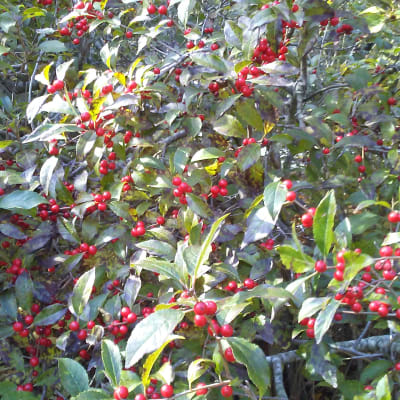
Ilex verticillata Bright-red berries stand out through the winter, providing late-spring forage for birds. A staple of the Maine landscape. Unsexed seedlings, plant several for berries. Z4.
Gaultheria procumbens 6-10". Aromatic evergreen native groundcover. Glossy dark green leaves. Bell-shaped white flowers in June. Vivid red berries. Self-pollinating. Z3.
Hamamelis vernalis 6-10' × 6-15'. Late-winter bloomer. Similar medicinal properties to fall-blooming Witch Hazel. Great for forcing indoors. Native to the Midwest. Z4/5.