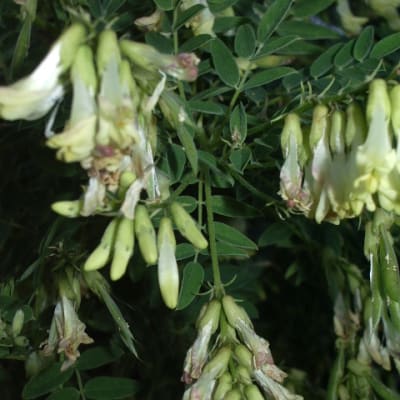
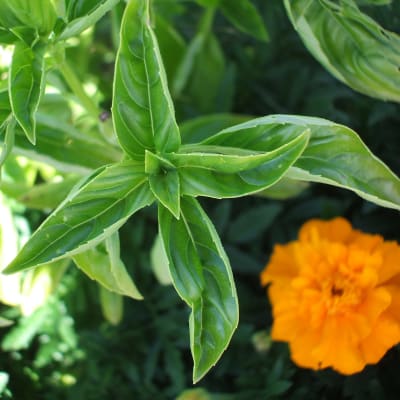
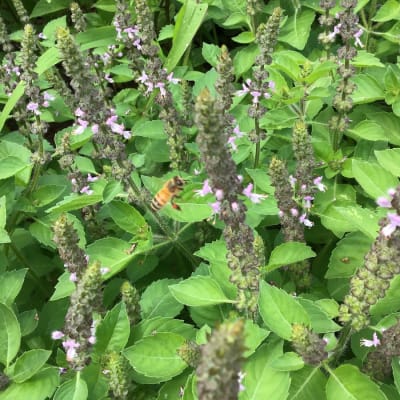
Matricaria recutita Open pollinated. One of the most widely known herbs, powerful yet gentle, long used to promote relaxation. Perhaps a tad less sweet than others.
read more
Dysphania ambrosioides (55 days) Open pollinated. Culinary herb native to Central America, often added to beans to deepen flavor and to mitigate flatulence. Sharp and pungent.
read more
Levisticum officinale Open pollinated. Perennial. Umbelliferous, attracts beneficial insects, grows 3-6' and makes a dramatic architectural element in a decorative border.
read more
Withania somnifera Open pollinated. Upright shrub 2' with green-to-yellow flowers ripening to red berries. Roots are dried at the end of the growing season and used internally powdered or tinctured.
read more
Hyssopus officinalis Open pollinated. Perennial. Normally hardy to Zone 3. Beautiful aromatic perennial border plant that produces spikes of indigo flowers.
read more
Leonurus cardiaca Open pollinated. Perennial 2–4' plant with dull green leaves and tiny white to purple blooms. Bees love the flowering tops, which are used for tea or herbal tincture.
read more
Spilanthes oleracea Open pollinated. Used as a ground cover in the south, it adds unusual beauty with its low growth habit and its cute yellow flowers with rayless red-orange centers.
read more
Spilanthes oleracea Open pollinated. Used as a ground cover in the south, it adds unusual beauty with its low growth habit and its cute yellow flowers with rayless red-orange centers.
read more
Pimpinella anisum (130 days) Open pollinated. White umbel flowers in July have delicate ornamental value. Seed ripens in August and September—wait until the tips of the fruits turn grey, and collect seeds before they turn black.
read more
Codonopsis pilosula Open pollinated. Perennial to Zone 4. Used in Chinese medicine like ginseng, but considerably easier to grow than true Panax ginseng.
read more
Cuminum cyminum (100-115 days) Open pollinated. Foliage is fragrant and ferny, somewhat like dill; but unlike dill, plants grow only 1-2'. Annual, takes a long time to mature so start indoors in cold climates.
read more
Trigonella foenum-graecum (30 days leaf, 120 days seed) Open pollinated. Leaf and seeds are used culinarily, imparting a sweet nutty flavor reminiscent of maple syrup. If not pinched back, the plant will
read more
Alchemilla mollis Open pollinated. Perennial. 12-18" Bears large loose sprays of tiny greenish-yellow flowers from early summer onward. Makes a good border and ground cover in shady locations.
read more
Althaea officinalis Open pollinated. Cousin to the hollyhock, this showy 4–6' plant is used to soothe and soften irritated skin and membranes.
read more
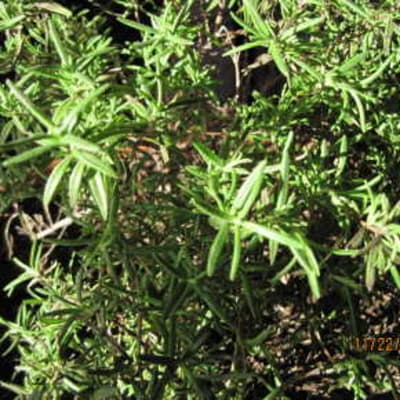
Rosmarinus officinalis Open pollinated. Beloved tender perennial growing to 3-4'. Cannot withstand temperatures below 17°, may be overwintered indoors if kept cool and moist.
read more
Stevia rebaudiana (100-120 days) Open pollinated. Stevia is several hundred times sweeter than sugar, and is used fresh, dried, powdered or in a liquid as a sugar substitute.
read more
Origanum majorana (80-95 days) Open pollinated. Grown as an annual in the North. 1' plant with grey-green rounded leaves of enchanting sweet fragrance.
read more
Hypericum perforatum Open pollinated. 1-3' perennial hardy to Zone 3. Pretty yellow flower of fields and meadows turns tinctures and oils deep red.
read more
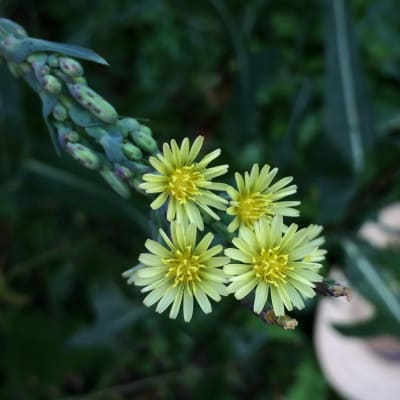
Lactuca serriola (60 days) Open pollinated. Readily grows as a spring-sown annual.Young leaves are edible, and the plant can be milked for its medicinal latex.
read more
Sinapis alba (70-85 days) Open pollinated. As easy to grow as the leafy mustards. The variety of mustard most familiar to American palates, but pallid without the addition of turmeric.
read more
Origanum heracleoticum Open pollinated. Perennial to Zone 4, but survives some winters in Zone 3. The true culinary herb for Greek and Italian cooking. Low-growing with fragrant dull green and purple leaves and white flowers.
read more
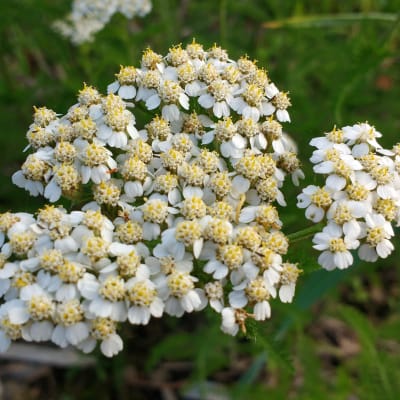
Achillea millefolium Open pollinated. Perennial grows 1-2', spreads slowly, preferring lean soil. Rich garden soil may produce lush 3' plants that need staking. Zone 2.
read more
Scutellaria lateriflora Open pollinated. Native spreading 1–2' perennial with numerous small blue flowers. Also known as Virginia Skullcap. Herbalists use it for headaches and insomnia.
read more
Verbena hastata Open pollinated. Perennial. 5-6' plant grows naturally in moist thickets and meadows does well in similar garden conditions, sending up many terminal spikes of bristly blue-violet flower clusters the entire season.
read more
Arnica chamissonis Open pollinated. 20" perennial yields well with multiple stalks with yellow flowers blooming for most of the early season.
read more
Perilla frutescens var. crispa (85 days) Open pollinated. Japanese heirloom. Ornamental and edible purplish-red anise-scented leaves. Used in sushi, sauces, garnishes, pickles, stir-fries, and to color umeboshi plums red.
read more
Ocimum basilicum Open pollinated. Vigorous mulberry-tinted basil with anise fragrance makes a highly decorative tall bushy plant. Slow to bolt.
read more
Ocimum basilicum (70 days) Open pollinated. Impressive yields from shapely plants well suited to pots or the field. Classic sweet Genovese flavor and a marvelously potent aroma. Resists powdery mildew.
read more
Ocimum basilicum (60 days) Open pollinated. Purple stems and flowers of standard Thai, but displayed upon a strong bushy umbrella form with wide and beautifully ample flowers.
read more
Ocimum basilicum (70 days) Open pollinated. The choice of many connoisseurs for making pesto. Leaves are slightly smaller and finer than Sweet Basil with more aroma and potency.
read more
Ocimum basilicum (70 days) Open pollinated. The choice of many connoisseurs for making pesto. Leaves are slightly smaller and finer than Sweet Basil with more aroma and potency.
read more
Ocimum tenuiflorum (100 days) Open pollinated. A superior strain of Tulsi or Sacred basil, with a more compact growth habit and more pungent sweet flavor.
read more
Ocimum basilicum Open pollinated. Lettuce-leaf type has very large ruffled leaves suitable for rolling or stuffing. Flavor similar to sweet basil.
read more
Ocimum basilicum minimum (70 days) Open pollinated. 8" and maintains a compact mound of light green leaves and white flowers. Its leaves are small, thin and strongly scented.
read more
Ocimum basilicum (70 days) Open pollinated. The heaviest-yielding variety, recommended for drying, all-around great eating, and large-scale pesto production.
read more
Ocimum basilicum (70 days) Open pollinated. The heaviest-yielding variety, recommended for drying, all-around great eating, and large-scale pesto production.
read more