Urtica dioica 3-6' tall. Young shoots are high in minerals and leaves are delicious steamed as early spring greens. Cooking removes the sting. Spreads readily; choose your site carefully. Z2.
Nicotiana sylvestris Open pollinated. Clusters of drooping tubular white blossoms that perfume the garden day and night. Full powerful scent. 4–5' tall.
Abelmoschus esculentus Green skin. (85 days) Open pollinated. Big fluted tender green pods on sturdy plants. Will produce in central Maine, but better suited to farther south.
Abelmoschus esculentus Burgundy skin. (75 days) Open pollinated. Edible and ornamental. Slender burgundy pods best harvested at 4". Green leaves and burgundy stems and pods.
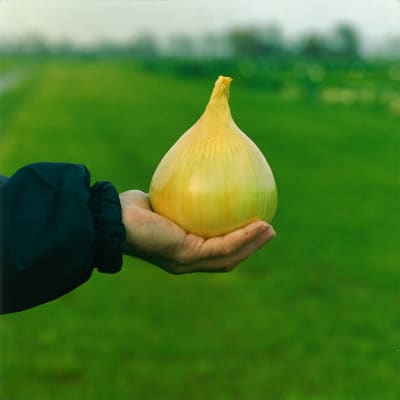
Allium cepa Red skin. (114 days) Open pollinated. Red storage onion. Flat square-shouldered top tapering like a barrel to a narrower flat bottom. Tops slow to go down.
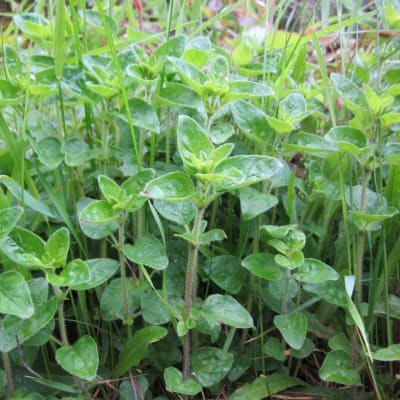
Origanum vulgare 18-20" tall. Fragrant green and purple leaves used for culinary purposes. Given plenty space in full sun, it sprawls and is attractive to pollinators. Z4.
Baptisia australis 3-4' x same. Vibrant blue lupine-like flowers in early summer. Bushy habit and shrub-like structure once mature. Good for erosion control. Z3.
Amsonia tabernaemontana var. salicifolia 24–36" tall. Fine grassy willow-like foliage. Clusters of powder-blue florets in early summer. Best planted en masse. Z3.
Echinops ritro 3–4' tall. Luminous steel-blue spiky spheres on stiff stems with silvery green leaves. Excellent for fresh or dried arrangements. Blooms mid-to-late summer. Z3.
Clarkia amoena (90 days) Open pollinated. 3" “satin flowers” blooms in red, pink, salmon, lavender and white, and with a bright red patch in the heart of the four petals. Best for cutting.
Coix lacryma-jobi (100 days) Open pollinated. Sets pendulous sprays of globular pearly purple-grey seeds, which may be strung as beads for necklaces. Spiky 2–3' stalks good for planters or as filler in dried fall arrangements.
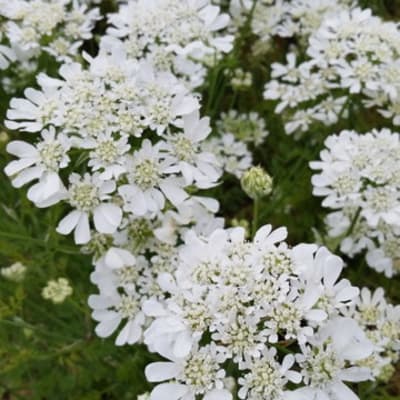
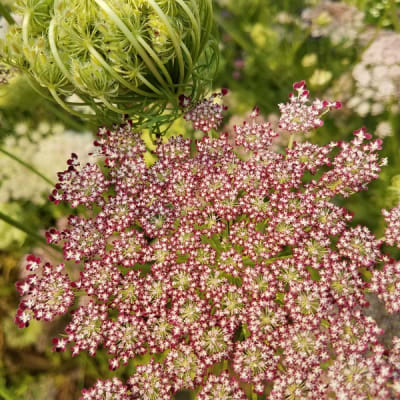
Orlaya grandiflora (65-70 days) Open pollinated. 2-3' with ferny foliage and sturdy stems, dainty delicacy resembling lace-cap hydrangea, with the central florets of a flat-topped cluster surrounded by a ring of larger flowers.
Rubia tinctorum Open pollinated. Ancient and excellent source of red dye. Harvest roots after three years and grind to yield a wash- and light-fast red dye par excellence. 4' plants.
Eryngium yuccifolium 3-6' tall. Globe-thistle-like 1" greenish-white flowerheads. Subtle honey-like scent. North american native. Great for cutflower production. Z3.
Artemisia annua (120 days) Open pollinated. The scent of the Common Ground Fair. Light green leaves valued for wreaths, flower crowns and other dried arrangements. Grows up to 5'.
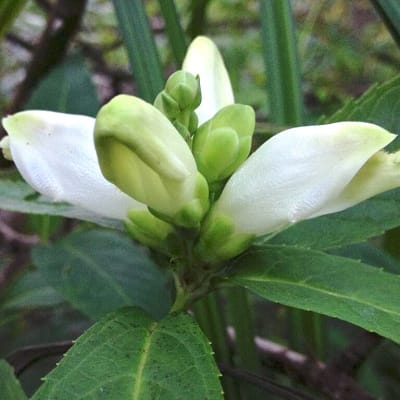
Chelone glabra 2–4' tall. Native wildflower blooms late along with the asters. A final feast for the bumblebees. Prefers moist soil, dappled light. Z4.
Agastache foeniculum Open pollinated. Perennial can grow 3' tall, 2' wide. Vigorous self-sower. Anise-scented foliage and purple flowers are delightful as a tea or culinary seasoning, or filler in mixed bouquets.
Withania somnifera Open pollinated. Upright shrub 2' with green-to-yellow flowers ripening to red berries. Roots are dried at the end of the growing season and used internally powdered or tinctured.
Codonopsis pilosula Open pollinated. Perennial to Zone 4. Used in Chinese medicine like ginseng, but considerably easier to grow than true Panax ginseng.
Dysphania ambrosioides (55 days) Open pollinated. Culinary herb native to Central America, often added to beans to deepen flavor and to mitigate flatulence. Sharp and pungent.
Trigonella foenum-graecum (30 days leaf, 120 days seed) Open pollinated. Leaf and seeds are used culinarily, imparting a sweet nutty flavor reminiscent of maple syrup.
Leonurus cardiaca Open pollinated. Perennial 2–4' plant with dull green leaves and tiny white to purple blooms. Bees love the flowering tops, which are used for tea or herbal tincture.
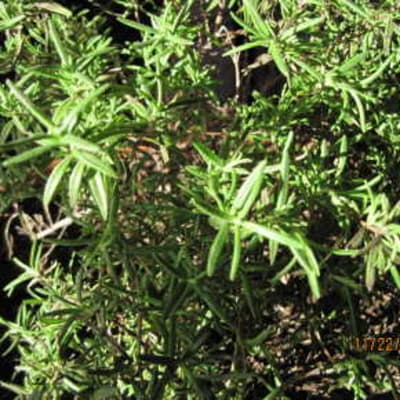
Rosmarinus officinalis Open pollinated. Beloved tender perennial growing to 3-4'. Cannot withstand temperatures below 17°, may be overwintered indoors if kept cool and moist.
Spilanthes oleracea Open pollinated. Used as a ground cover in the south, it adds unusual beauty with its low growth habit and its cute yellow flowers with rayless red-orange centers.
Pycnanthemum virginianum 24-36" tall. Makes a tasty minty tea traditionally used to settle indigestion. Spreads readily. Densely flowered, attractive to pollinators. Native. Z4.
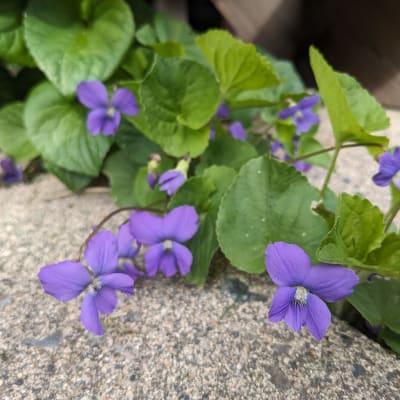
Viola sororia 6-10" tall. North American native with cheery blue-purple flowers and attractive heart-shaped leaves, all edible. Larval host plant for multiple species of butterflies. Z3.
Petroselinum crispum (70 days) Open pollinated. Italian heirloom. Flat-leaved parsley with good early seedling vigor and rich sweet flavor. Grows to 1' tall.
 Stinging Nettle - OrganicBare-Root PlantsCheck for new listings in early August