Allium schoenoprasum (80 days) Open pollinated. Hardy perennial. 1-2' dark blue-green leaves are medium-fine, long and slender. Lilac-colored flowers bloom in June and July.
Medicago sativa Perennial legume, up to 3' high. This fragrant plant has beautiful purple flowers and is great for hay and as a cover crop. Herbalists consider it a valuable nutritive tonic.
Trifolium repens Perennial legume. Up to 12". Vigorous large-leafed white clover. Readily self-seeds. Excellent for perennial grazing pasture and improving soil quality in areas transitioning from woody growth.
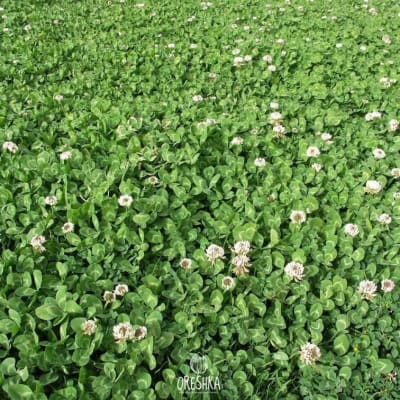
Trifolium repens Perennial legume. The lowest-growing clover. This shade- and traffic-tolerant perennial makes nice garden paths and living mulch. Our most popular clover.
Trifolium pratense Short-lived perennial legume. Up to 24". A high-yielding red hay clover with glabrous stems for fast dry-down. Excellent winter hardiness and persistence. Good for acidic or wet soils.
Trifolium repens Perennial legume. 8–12" tall. Fantastic nitrogen fixer with great protein and digestibility. Tall enough to be harvested for hay, silage, and green chop. Good choice for poorly drained soil.
Trifolium repens Perennial legume. Up to 9". Small-leafed perennial clover establishes quickly and withstands traffic and close mowing. Our favorite clover for organic pasture.
Cichorium intybus Perennial broadleaf, up to 18". Very high digestibility. Protein levels up to 50% higher than alfalfa. Stands may live 5 years or longer, but it’s also valuable for pasture or green chop.
Dactylis glomerata Perennial grass. Long-lived vigorous grass. Tall leafy plants grow rapidly even in poor soils, tolerates moderately drained soils. Can be established in spring, summer, or even late winter.
Lolium arundinaceum Perennial grass. Long-lived, versatile and low-maintenance grass good for pasture, lawn, or hay. Deep and extensive root system protects against erosion. Tolerates most adverse conditions.
Phleum pratense Perennial grass. A popular perennial hay species that produces good yields, resists lodging and is easily cut and cured. Very winter hardy. Does not tolerate heat or drought.
All-purpose lawn blend for the Northeast. Good for a range of conditions, full sun to partial shade. Makes a great understory for orchards and other perennial woody crops.
Perennial pasture mix of grasses and clover, well suited to Maine and other areas with similarly variable weather and temperatures. Provides season-long regrowth and good grazing.
Lupinus perennis Open pollinated. Perennial. 18-24" tall. Native to eastern North America, where it is an important pollinator plant. Early summer blooms. Z3.
Allium tricoccum Open pollinated. Also called Wild Leeks. Bulb-forming perennial is a spring ephemeral. Delectable pungent flavor, a mix of garlic and onion, is true wildwood fare—worth the long wait.
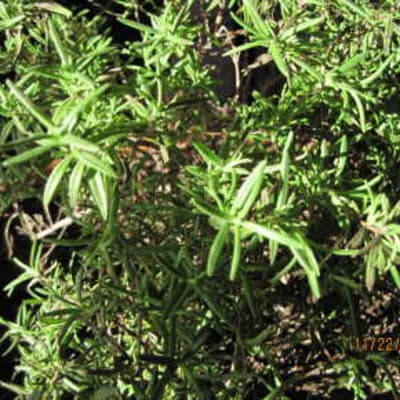
Rosmarinus officinalis Open pollinated. Beloved tender perennial growing to 3-4'. Cannot withstand temperatures below 17°, may be overwintered indoors if kept cool and moist.
Viola × wittrockiana Open pollinated. Perennial to Zone 6. Heart-shaped leaves on mounded 4-6" plants covered with 3" mostly bicolor flowers, with darker whiskers and yellow eyes.
Scabiosa caucasica (90 days) Open pollinated. Perennial scabiosa can bloom the first year with an early start. Blue flowers develop into pincushion pods for everlasting arrangements.
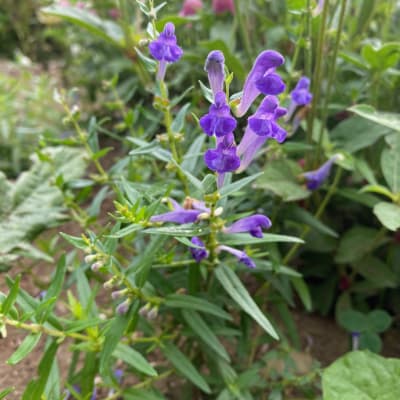
Scutellaria baicalensis Open pollinated. Perennial. Beautiful medicinal perennial with myriad small violet monkshood-shaped blooms on a 1–2' subshrub. Tolerates drought and grows best in light well-drained soil.
Molasses is a source of important nutrients, including manganese, magnesium, copper, potassium and calcium. Food grade, shelf stable. Plants and beneficial microbes have a sweet tooth, too!