Allium cepa (110 days) F-1 hybrid. Uniform blocky globes, 2 lbs each, with tall tops. Best for storage; keeps until mid-May. Flavor a balance of sweet and tang. Long-day northern type.
read more
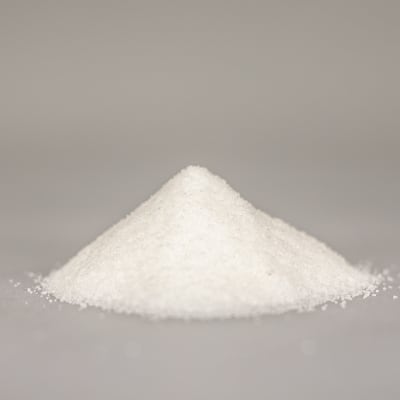
Safe, nontoxic, easy to use hydrogel formulation absorbs and holds water. The swollen crystals adhere to plant roots, reducing transplant shock. Useful for garden seedlings as well as woody plants.
read more
Very stretchy ½" tape holds graft union firmly together. Unlike PVC, Parafilm, a low-molecular-weight polyethylene product, is relatively benign in the environment.
read more
Cerinthe major var. purpurescens Open pollinated. Annual. Features coin-shaped grey-green foliage and profuse blue shrimp-like bracts with purple flowers. Beloved by bumblebees. 12-30" tall.
read more
Agastache foeniculum Open pollinated. Perennial can grow 3' tall, 2' wide. Vigorous self-sower. Anise-scented foliage and purple flowers delightful as a tea or culinary seasoning, or filler in mixed bouquets.
read more
Agastache foeniculum Open pollinated. Perennial can grow 3' tall, 2' wide. Vigorous self-sower. Anise-scented foliage and purple flowers are delightful as a tea or culinary seasoning, or filler in mixed bouquets.
read more
Pycnanthemum incanum Open pollinated. A culinary herb, excellent cutflower and pollinator fave! “Mintier than mint” and less likely to spread.
read more
Althaea officinalis Open pollinated. Cousin to the hollyhock, this showy 4–6' plant is used to soothe and soften irritated skin and membranes.
read more
Stevia rebaudiana (100-120 days) Open pollinated. Stevia is several hundred times sweeter than sugar, and is used fresh, dried, powdered or in a liquid as a sugar substitute.
read more
Sinapis alba (70-85 days) Open pollinated. As easy to grow as the leafy mustards. The variety of mustard most familiar to American palates, but pallid without the addition of turmeric.
read more
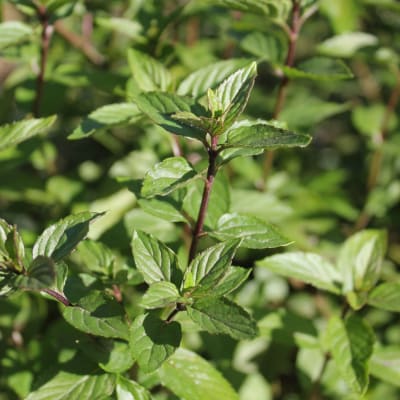
Mentha piperita 18-24" tall. Our favorite mint! Bright refreshing peppermint-patty flavor. Freshen your breath, settle your stomach and scent soaps and salves. Z4.
read more
Gaylussacia baccata 1-3' x 2-4'. Cousin of the blueberry. Less acidic, more mildly sweet flavor. Flowers in June, fruits in August. Full sun to part shade but fruits best in sun. Native to eastern U.S. and Canada. Z3/4.
read more
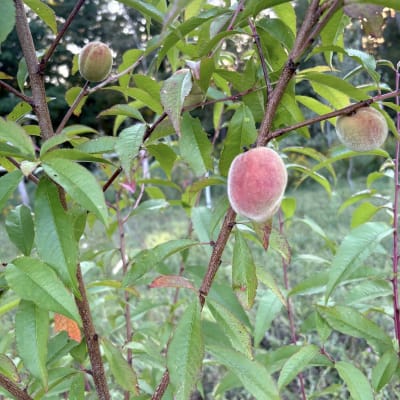
Prunus persica Commonly grown as hardy disease-resistant rootstock. Known to grow relatively true to type. Fruit best for processing, decent for fresh eating. Plant for fruit or grafting. Z4.
read more
Prunus persica Early-Mid. Peento-type peach is flat, semi-freestone with sugary white flesh. Great for drying. Heavy yields on vigorous tree. Z4.
read more
Prunus persica Very late-ripening fruits are white-fleshed, sweet and tart, best for juicing and drying. Long prized as a cold-resistant dwarfing rootstock and gaining popularity for it tasty fruit. Z3.
read more
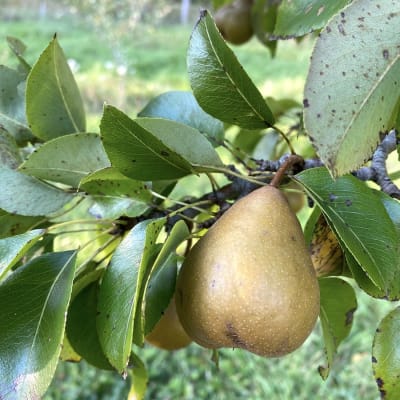
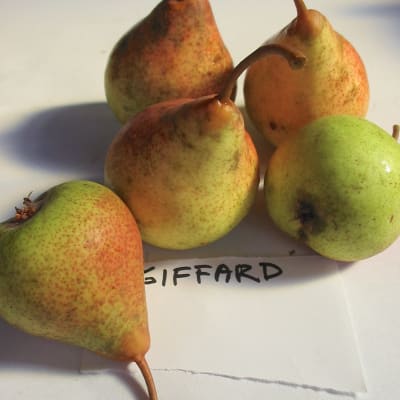
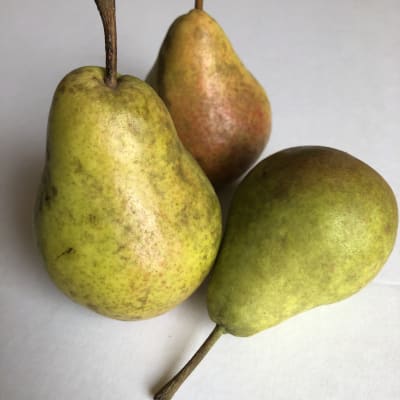
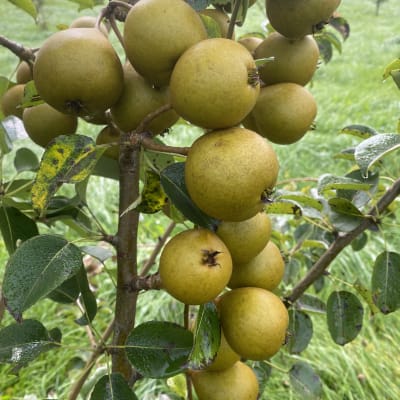
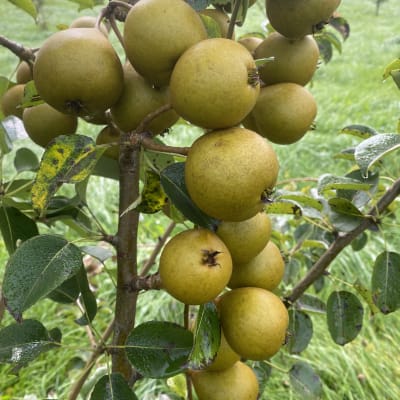
Pyrus communis Winter. Intensely sweet highly aromatic tender storage pear; possibly the best eating of all winter pears. Similar to Seckel. Keeps extremely well. Z4.
read more
Pyrus communisThis is a twig for grafting. Late summer. Rare! Good fresh and cooked. Precocious, productive, vigorous. Disease resistant. Z3.
read more
Pyrus communis Fall. Mild-bittersweet perry pear. Fruits easily shaken from tree when ripe. Low in acid and tannin and a great sweet addition to perry blends. Not for fresh eating. Z4.
read more
Pyrus communisThis is a twig for grafting. Fall. Mild-bittersweet perry pear. Fruits easily shaken from tree when ripe in early/mid-fall. Low in acid and tannin and a great sweet addition to perry blends. Not for fresh eating. Z4.
read more
Pisum sativum (58 days) Open pollinated. Earliest snap pea, on 2' vines. Use to start the season, and allow extra space between rows if you do not stake.
read more
Capsicum annuum (65 days) Open pollinated. Also known as Golden Delicious Apple Pepper. Heirloom from Hungary forms delicious flattened thick-walled fruits that ripen through yellow to red.
read more
Capsicum annuum (88 days) Open pollinated. This rare Pennsylvania Dutch heirloom packs considerable heat. Rarely eaten raw, the peppers were traditionally used for pickling and pepper vinegar.
read more
Capsicum chinense (90 days) Open pollinated. A Scotch Bonnet–type infamous for its extreme heat, their distinctive flavor makes them a key ingredient in West Indian jerk sauces.
read more
Capsicum annuum (80 days) Open pollinated. Early and prolific even in bad years, with a rich fruity taste. Maine-grown seed continues its cold-climate adaptation.
read more
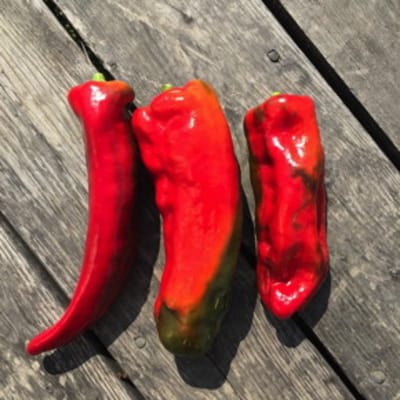
Capsicum annuum (60 days) F-1 hybrid. Red thin-walled bell peppers, not consistently blocky. Easy to grow. Consistently early. Good for home gardens.
read more
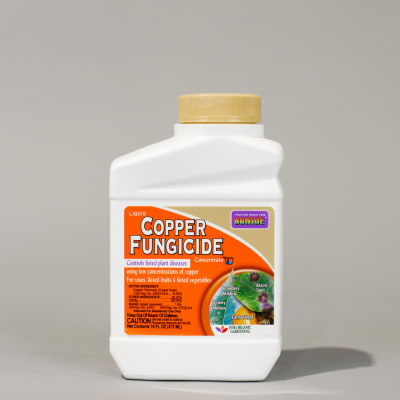
A copper fungicide for the home gardener. Copper is a very effective fungicide, but regular use may result in problematic concentrations in the soil or plant tissue: we advise regular soil testing!
read more
A broad-spectrum preventative product made with Bacillus subtilis for the control or suppression of many important plant diseases. May be used as a drench or foliar spray.
read more
Made with thyme oil and corn oil, greenhouse tests show CannControl to prevent and eliminate powdery mildew, gray mold, mites, aphids, whiteflies, thrips and fungus gnats.
read more
Used to control scab, powdery mildew and leaf spot. Sulfur is not water soluble; but small particles like these are better able to stay in suspension. Can also be applied as a powder.
read more
Broad-spectrum control of bacterial and fungal diseases on vegetables, fruits, nuts, ornamental trees, shrubs, flowering plants, houseplants and tropical plants grown in home gardens or greenhouses.
read more