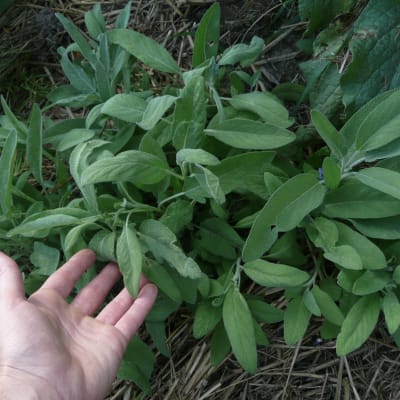
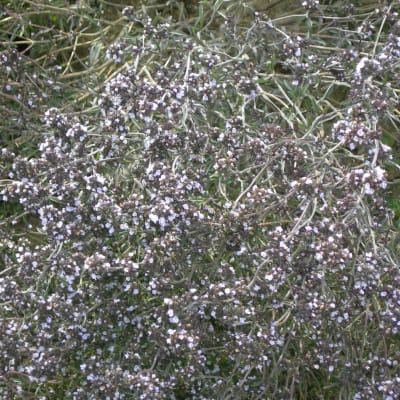
Origanum heracleoticum Open pollinated. Perennial to Zone 4, but survives some winters in Zone 3. The true culinary herb for Greek and Italian cooking. Low-growing with fragrant dull green and purple leaves and white flowers.
Limonium sinuatum (115 days) Open pollinated. Mix includes lavender, rose, purple, white, yellow. Especially suited for dried arrangements, also good in fresh. 2-2½' tall.
Silybum marianum Open pollinated. Named for the bold white splashes on its glossy leaves, said to be from Mary’s milk. Fast-growing 3-5' annual with leaves up to 8x24".
Leonurus cardiaca Open pollinated. Perennial 2–4' plant with dull green leaves and tiny white to purple blooms. Bees love the flowering tops, which are used for tea or herbal tincture.
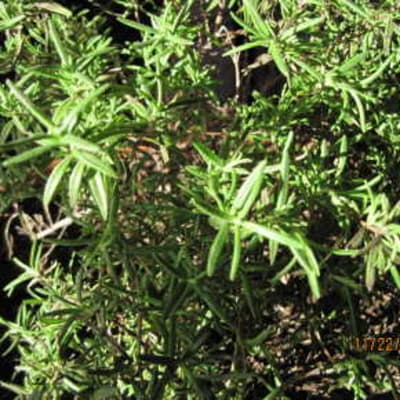
Rosmarinus officinalis Open pollinated. Beloved tender perennial growing to 3-4'. Cannot withstand temperatures below 17°, may be overwintered indoors if kept cool and moist.
Spilanthes oleracea Open pollinated. Used as a ground cover in the south, it adds unusual beauty with its low growth habit and its cute yellow flowers with rayless red-orange centers.
Spilanthes oleracea Open pollinated. Used as a ground cover in the south, it adds unusual beauty with its low growth habit and its cute yellow flowers with rayless red-orange centers.
Stevia rebaudiana (100-120 days) Open pollinated. Stevia is several hundred times sweeter than sugar, and is used fresh, dried, powdered or in a liquid as a sugar substitute.
Origanum majorana (80-95 days) Open pollinated. Grown as an annual in the North. 1' plant with grey-green rounded leaves of enchanting sweet fragrance.
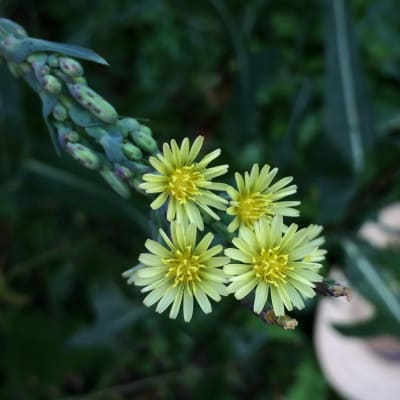
Lactuca serriola (60 days) Open pollinated. Readily grows as a spring-sown annual.Young leaves are edible, and the plant can be milked for its medicinal latex.
Sinapis alba (70-85 days) Open pollinated. As easy to grow as the leafy mustards. The variety of mustard most familiar to American palates, but pallid without the addition of turmeric.
Gaylussacia baccata 1-3' x 2-4'. Cousin of the blueberry. Less acidic, more mildly sweet flavor. Flowers in June, fruits in August. Full sun to part shade but fruits best in sun. Native to eastern U.S. and Canada. Z3/4.
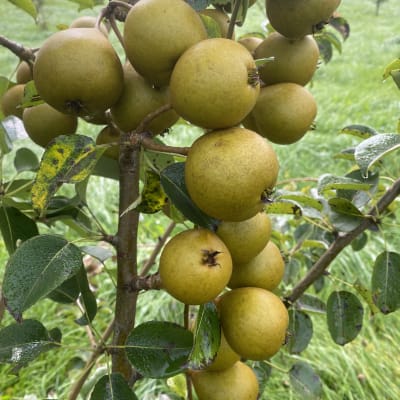
Pyrus communis Fall, russeted greenish yellow skin. Mild-bittersweet perry pear. Fruits easily shaken from tree when ripe. Low in acid and tannin and a great sweet addition to perry blends. Not for fresh eating. Z4.
Solanum tuberosum Late season, red skin, white flesh. Large round potatoes with attractive red skin and succulent white flesh that keeps moist all winter long.
Solanum tuberosum Mid-season, yellow skin, yellow flesh. Low maintenance potato with heavy yields for luscious potato salads in the summer. Good storability for hearty soups all winter long. Tolerates low fertility.
Satureja hortensis (70 days) Open pollinated. Annual grows to 1½' with narrow dark green leaves and lavender flowers. Cut often during growing season, before blossoms appear.
Scutellaria lateriflora Open pollinated. Native spreading 1–2' perennial with numerous small blue flowers. Also known as Virginia Skullcap. Herbalists use it for headaches and insomnia.
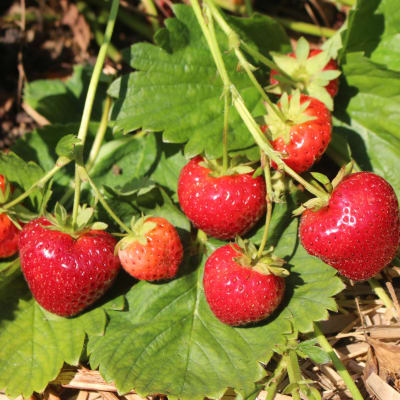
Fragaria × ananassa Productive and easy to grow. Glossy red berries are full of flavor, and maintain good size. Less sensitive to warmer temps than other day neutrals. Z4.
Fragaria × ananassa Medium-small glossy red highly fragrant everbearing strawberry. Often referred to as “gourmet.” Commercially grown in France where they are sold at a premium. Z4.
Cucurbita moschata (60 days summer squash, 90 days winter squash) Open pollinated. Italian specialty. Harvest at 8-12" for summer squash. Harvest at 90 days for winter squash use. Excellent flavor.
Solanum lycopersicum Red skin. (90 days) Open pollinated. A good Roma type for cold climates. Makes a richly textured sweet sauce that’s just brimming with flavor. Also good for fresh eating.
Verbena hastata Open pollinated. Perennial. 5-6' plant grows naturally in moist thickets and meadows does well in similar garden conditions, sending up many terminal spikes of bristly blue-violet flower clusters the entire season.
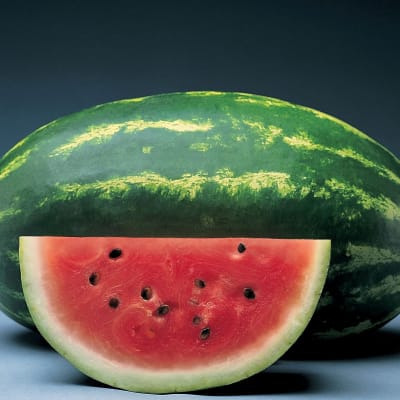
Citrullus lanatus Red flesh. (85 days) Open pollinated. Glorious red sweet juicy flesh. Though it loves warm locales, Sunsweet is adapted almost anywhere.
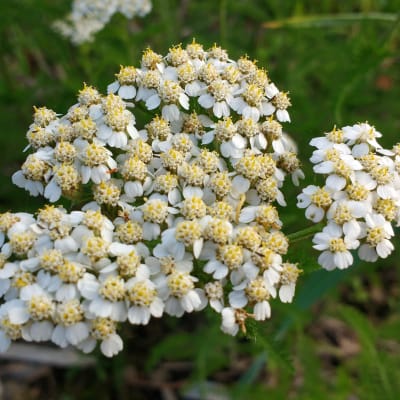
Achillea millefolium Open pollinated. Perennial grows 1-2', spreads slowly, preferring lean soil. Rich garden soil may produce lush 3' plants that need staking. Zone 2.
NPK: 2.3-6.6-7. Our exclusive mix will help you grow mighty spears of asparagus. Formulated to meet Penn State Extension’s recommendations for the annual fertilization of asparagus beds.
NPK: 2.5-6-3. Show your flowers you appreciate them by treating them to dinner now and then. This mix is formulated to feed both soil and plant to encourage healthy foliage and lush, colorful blooms.
NPK: 3.4-2.2-3.5. An excellent all-purpose fertilizer for those who prefer to avoid animal products. Great for flower bulbs because it won’t attract critters.
Malus spp. Late summer-early fall, purplish red skin, red-stained white flesh. Summer-Fall. Very hardy high-quality cooking apple. Large and glossy purplish-red roundish fruit. Firm juicy flesh. Good for fresh cider. Stores 2 months. Z3.
Malus spp.This is a twig for grafting. Late summer-early fall, purplish red skin. Summer-Fall. Very hardy high-quality cooking apple. Large and glossy purplish-red roundish fruit. Firm juicy flesh. Good for fresh cider. Stores 2 months. Z3.