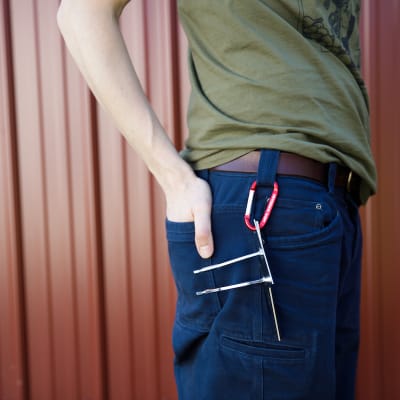
This long-handled weeder is plenty strong but light as a feather, and makes quick work of small weeds, slicing the stem from the root just below the soil surface. Made in Vermont by Two Bad Cats.
read more
Sharp thin collinear blades ride flat and parallel with the top layer of soil, slicing through weeds without tossing soil onto the crop. Especially useful around low-lying leafy crops.
read more
Curcuma longa (120 days) Vibrantly orange tuber is a potent spice and medicine fetching top dollar at markets. Suitable for high tunnel cultivation, even in Maine!
read more
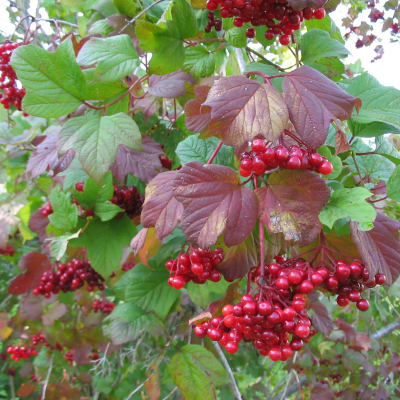
Viburnum opulus var. americanum 8–12' × same. Also known as Crampbark. Medicinal multi-stemmed native shrub. Add to the biological diversity of your garden. No two seedlings are exactly alike. Z2.
read more
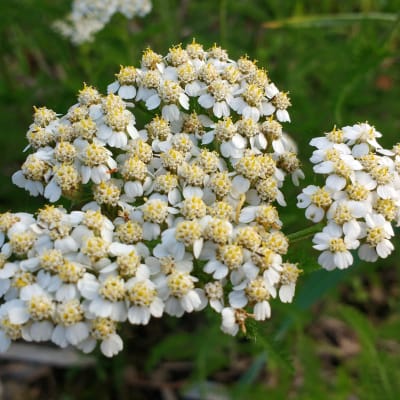
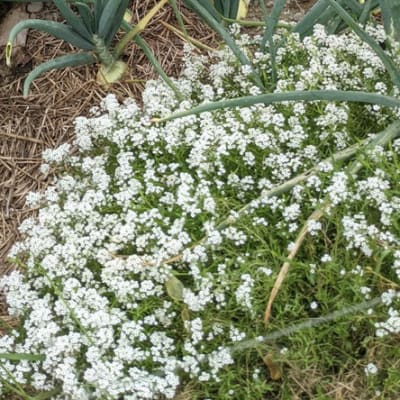
Achillea millefolium 18-30" tall. Excellent orchard companion and beautiful addition to the perennial border, meadow, herb or moon garden. Z3.
read more
Amaranthus cruentus (65-75 days) Open pollinated. Flaunts glorious 2' chestnut-bronze to copper-colored well-branched seedheads atop its majestic 4' stalks at maturity.
read more
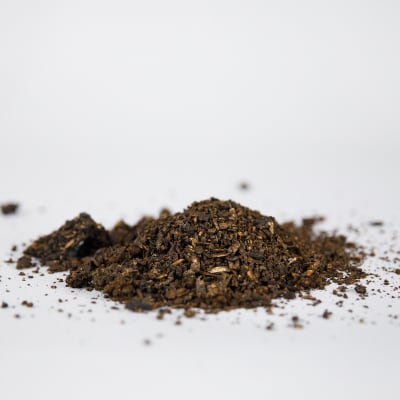
This top-quality compost has strong nitrogen levels and sky-high organic matter. Use as a top-dressing, mix into garden soil, or apply around the trees. Made in Sidney, Maine.
read more
A great boost for transplants, potted plants and garden soils. Improves soil structure, provides a generous dose of slowly released nutrients and enhances microbial activity.
read more
NPK: 3-3.5-3.5 avg. plus sulfur. With 3G Greener Garlic Grower, you can expect better spring emergence, more vigorous plants, bigger bulbs and richer flavor. Blended in-house.
read more
A blend of granite meal, sulfur, Tennessee brown rock phosphate, compost and Azomite. Reduces soil pH and provides the nutrients necessary for healthy blueberry plants and good fruit.
read more
For a deluxe tree planting spot, choose this mix! Contains a broad spectrum of macro and micronutrients and soil conditioners that fruit trees thrive on. Follow our directions for use in the fall.
read more
A balanced fertilizer to keep your bearing fruit trees healthy and productive. If your tree put on 4" or less of terminal growth last year, our Fruition Mix will put new spring in its step!
read more
NPK: 2.3-6.6-7. Our exclusive mix will help you grow mighty spears of asparagus. Formulated to meet Penn State Extension’s recommendations for the annual fertilization of asparagus beds.
read more
Spread this blend of granite, zeolites, gypsum, micronutrients and humates in that fall, and it will improve soil structure, remineralize, and enhance nutrient availability for the next spring!
read more
NPK: 3-4-6.1 By popular demand! A Fedco Blend formulated to meet the needs of field-grown (outdoor) fruiting Solanaceous crops: tomatoes, peppers, eggplants and tomatillos.
read more
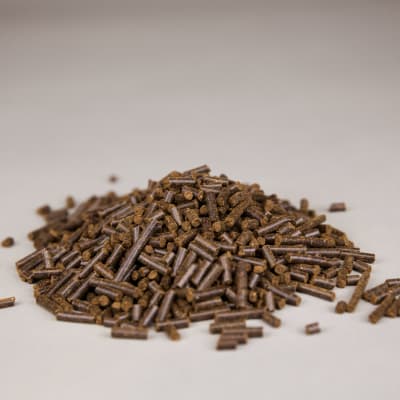
NPK: 3.4-2.2-3.5. An excellent all-purpose fertilizer for those who prefer to avoid animal products. Great for flower bulbs because it won’t attract critters.
read more
NPK: 2-5-0.2. Fish heads, bones, skin and guts finely ground and then enzymatically digested. Can be used as foliar feed. Made from wild fish scraps from the fishing industry along the Great Lakes.
read more
NPK: 2-5-0.2. All the NPK of fish, along with the micronutrients and growth hormones of kelp. Encourages vigorous rooting. Improves plant vigor and stress resistance, increases storage life of produce
read more
Iron is essential for chlorophyll development and function, and is also involved in nitrogen fixation by legumes. Contains 5% chelated iron derived from ferrous sulfate.
read more
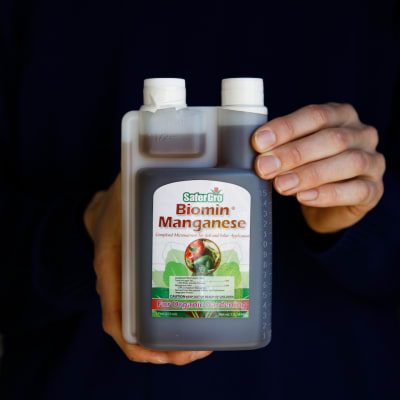
Manganese helps plants to synthesize chlorophyll and is used in electron transport during photosynthesis. Contains 1% nitrogen from vegetable protein and 5% chelated manganese.
read more
Zinc is a component of auxin, an essential growth hormone, and is also necessary for proper root development. Improves cold tolerance. Contains 7% zinc derived from zinc sulfate.
read more
Soluble borate for fluid fertilizers and nutrient sprays. Boron is essential for all stages of tree growth and fruit set. Powder mixes easily in any spray solution.
read more
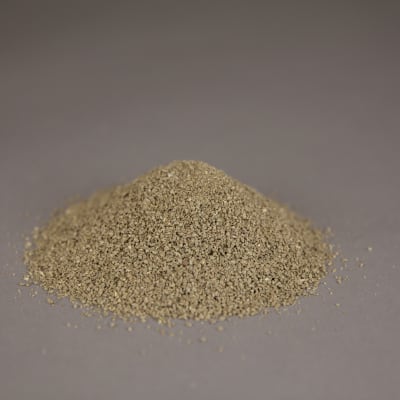
Contains about 5% potassium in very slow-release form. Can be added to the soil in large amounts without altering the pH. Greatly enhances soil structure and promotes healthier plants.
read more
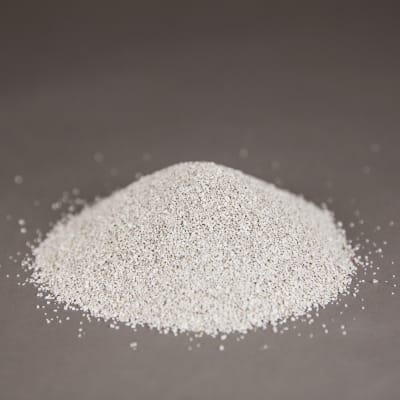
Zeolites can improve the productivity of any texture of soil, improving water and mineral retention in sandy soils and improving aeration and minimizing compaction in heavier soils.
read more
NPK: 6-1-3 avg. Rich in the basic nutrients, nitrogen, phosphorus and potassium, it makes an excellent fertilizer and soil additive. Can help suppress fusarium infestations.
read more
NPK: 2.5-0.4-3.3 avg. Gives plants a noticeable boost and feeds soil organisms. Excellent vegan alternative to blood meal as a nitrogen source. Hands-down the best-smelling fertilizer out there.
read more
NPK: 13-0-0. One of the fastest release times of all organic nitrogen sources. Highly recommended for corn. The smell (understandably) freaks out deer. Use as a side-dressing or till into soil.
read more
NPK: 13-0-0(apx). Provides a strong and quick release of nitrogen. Apply in the row at planting time for sweet corn, melons, brassicas and other heavy feeders. Not water-soluble.
read more
NPK: 5-4-3 (with 9% Ca). Composted and processed poultry litter provides a good balance of major plant nutrients and other essential elements. Pasteurized to neutralize weed seeds and pathogens.
read more
NPK: 7-1.5-1 avg. Effective and economical nitrogen fertilizer for Northeast soils. High levels of nitrogen and potassium are released as soybean meal breaks down, providing fertility over time.
read more
NPK: 6.9-11.9-0.8 avg. Excellent source of nitrogen and phosphorus. Use as a sidedressing or mix into compost to provide added nitrogen and a bacterial boost. A byproduct of wild-caught fish.
read more
NPK: 2-2-2. 16% Chitin. Nourishes chitin-feeding bacteria and fungi, which in turn devour gnat eggs and root-feeding nematodes. Also fortifies plants’ cell walls, and fosters healthy blooms.
read more
Malus spp. Also called Bud 118 or B118. Semi-dwarf apple rootstock, similar in size to M111 (about 85-90% of standard). Space trees 20-25' apart. Z3.
read more