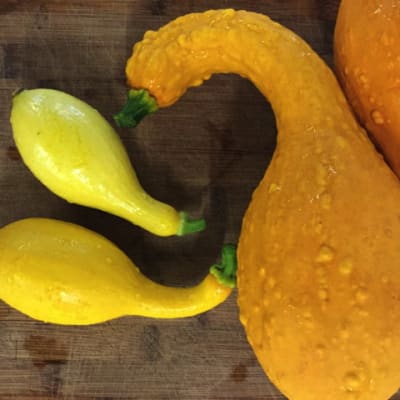
Cucurbita pepo (58 days) Open pollinated. Classic heirloom. Deep yellow warted fruit with bulbous blossom end and narrow curved neck. Excellent flavor.
Cucurbita pepo (44 days) F-1 hybrid. Flawless long medium-dark green fruits. Open and upright plant habit with reduced spines. Early and continuous yields.
Helianthus annuus (70-90 days) Open pollinated. Lovely mix of earthen shades: bright yellow to bronze and purples. Blossoms 4-6" across. 6-8' multibranching stalks. A top seller.
Helianthus annuus F-1 hybrid. A formula blend with colors ranging from white to darkest red, with double and semi-double flowers. 4-5' stalks bearing 4-8" pollen-free flowers.
Helianthus annuus (90-100 days) Open pollinated. Rare indigenous heirloom used as a natural dye source for coloring baskets purplish charcoal. Also edible. 8' stalks.
Helianthus annuus (65 days) F-1 hybrid. Also known as Rouge Royale. Gorgeous 5-7" dark red pollen-free blossoms on 5-6' multi-branching stems. Favorite among commercial growers for its color.
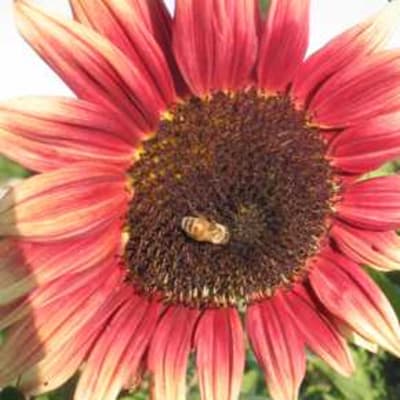
Helianthus annuus (55 days) F-1 hybrid. Ruby-red petals with lemon tips. Dark centers sometimes shade into pink. Gorgeous pollen-free 4-5" flowers on 6' branching plants.
Helianthus annuus Open pollinated. Handsome single-headed 5' sunflower. Double ring surrounded by deep yellow petals makes a striking display. 8-10" blooms. A superb cutflower.
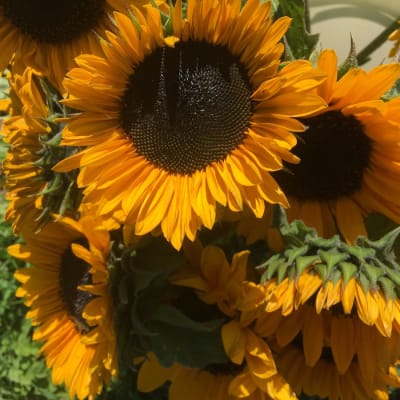
Helianthus annuus (80 days) Open pollinated. Deep orange petals, dark centers, and sturdy branching habit. Up to 25 4-6" blooms per plant, Perfect for cutting. 6' plant spreads 2-3'.
Lathyrus odoratus (75 days) Open pollinated. Mixture of crimson, scarlet, white, lavender, deep rose, medium blue and pink. Long stems make ideal cutflowers. 4-6' staking variety.
Lathyrus latifolius Open pollinated. The traditional English cottage sweet pea. Shades of rose, white and pink in big clusters. Good cutflowers. Climbs 6'.
Lathyrus odoratus (60 days) Open pollinated. Mix of blue, lavender, pink, purple, chocolate, orange and scarlet, streaked with white. Huge blossoms and great as a cutflower. Over 5' tall.
Tithonia rotundifolia (120 days) Open pollinated. Stately 6' plants with velvety leaves bear scarlet-orange 4-5" blooms that attract hummingbirds and monarch butterflies. Popular variety.
Solanum lycopersicum Red skin. (65 days) Open pollinated. Prolific clusters of 10–12 1½" very shiny red fruits hold on the vine and can be picked all at once. Excellent fresh, stewed or added to sauce.
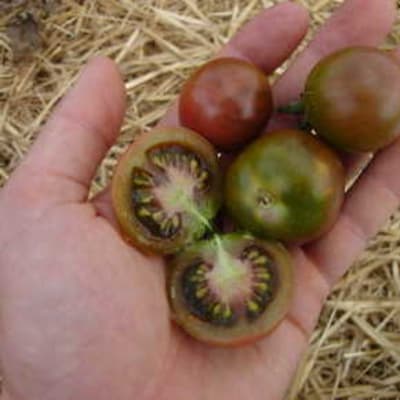
Solanum lycopersicum Dark red-purple skin. (75 days) Open pollinated. Gorgeous two-bite dusky black cherry. Juicy, delicious, complex flavor of black tomatoes. Resists disease; cracks in wet weather.
Solanum lycopersicum Light orange skin. (62 days) Open pollinated. Light orange sweet juicy treats, much less prone to cracking in wet weather than Sungold.
Solanum lycopersicum Red skin. (78 days) Open pollinated. Red 1" cherry. Similar to Sweet 100, bearing gazillions of clusters of sweet fruits. Dependable and prolific.
Solanum lycopersicum Green skin. (74 days) Open pollinated. Green with little flecks of gold; produces an abundance of 1" round fruits. Begins to show a slight golden yellow at the base when ready for harvest.
Solanum lycopersicum Apricot yellow skin. (57 days) F-1 hybrid. Apricot-yellow small round cherry. Deep sweetness with citrusy, winey tartness. Early and extremely prolific, producing until frost. A modern classic.
Solanum lycopersicum Red skin. (70 days) Open pollinated. Bright red ⅞" Aperitif is sized like a huge currant or very small cherry. Sweet little jewels.
Solanum lycopersicum Red skin. (70 days) Open pollinated. Bright red ⅞" Aperitif is sized like a huge currant or very small cherry. Sweet little jewels.
Solanum lycopersicum Red skin. (70 days) F-1 hybrid. Plants flower continuously and set fruit throughout the season for abundant harvests of delicious 15–22g shiny red grape tomatoes. Great in the field and a good choice for containers.
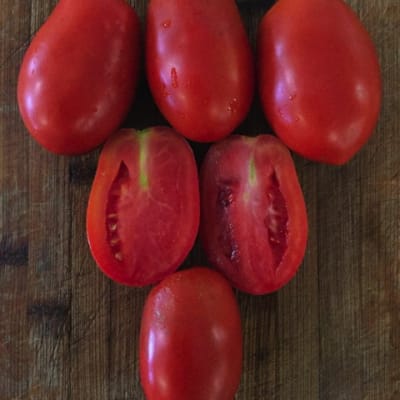
Solanum lycopersicum Red skin. (74 days) Open pollinated. Red 4 oz round paste. Delicious flavor, also good in salads. Ripens over a long season. Determinate.
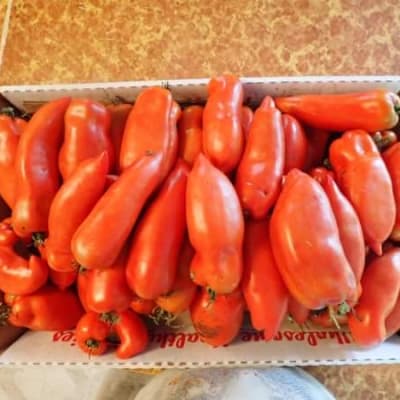
Solanum lycopersicum Deep red skin. (86 days) Open pollinated. Deep red dry meaty paste; 6-8 oz tomatoes shaped like banana peppers. Noted for its sparse seed cavity and excellent flavor fresh, canned or frozen.
Solanum lycopersicum Red skin. (82 days) Open pollinated. 3x5" massive solid bull’s horn–shaped red fruits with dry texture, few seeds, and round mellow flavor. Dries well.
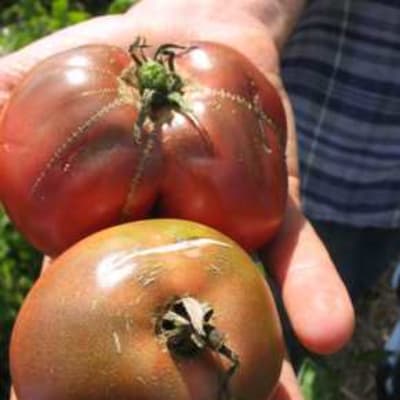
Solanum lycopersicum Iridescent purplish red skin. (80 days) Open pollinated. Iridescent purple with dark green shoulders, 12-18 oz, oblate with catfacing. Ripe when half green and firm. Dark juicy meaty interiors smoky, exquisite.
Solanum lycopersicum Red skin. (56 days) Open pollinated. Red 1-2" fruit with no cosmetic defects besides yellow shoulders. Superior to other sub-arctics. Potato-leaf foliage. Determinate.
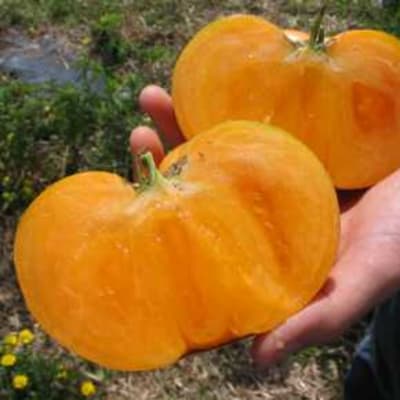
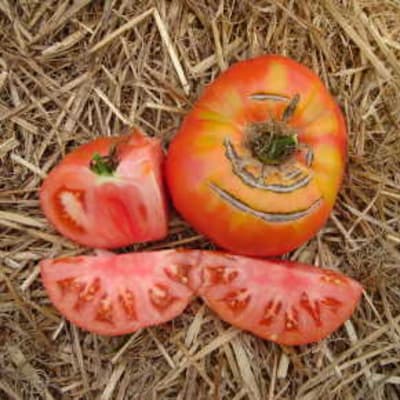
Solanum lycopersicum Deep orange skin. (75 days) Open pollinated. Deep orange beefsteak-type, 16-20 oz, often bi-lobed. Rich flavor, velvety texture. Harvest when it gets a rosy blush on the blossom end.
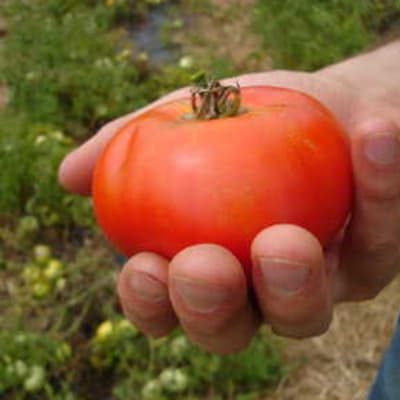
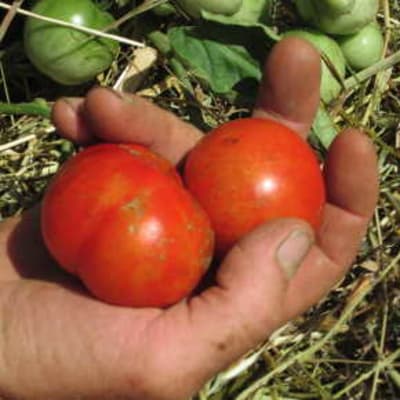
Solanum lycopersicum Red skin. (75 days) Open pollinated. Productive 5' plants produce a plethora of 9 oz. red round fruit with good rich tomatoey flavor.
Solanum lycopersicum Yellow skin. (88 days) Open pollinated. Late yellow slicing tomato with amazing rich taste, sweet and citrusy. Prone to catfacing under stressful weather conditions.
Solanum lycopersicum Red skin. (58 days) Open pollinated. Red, variable in size but up to 4". Unusually tasty for such an early variety. Performs best in cool summers. Determinate.
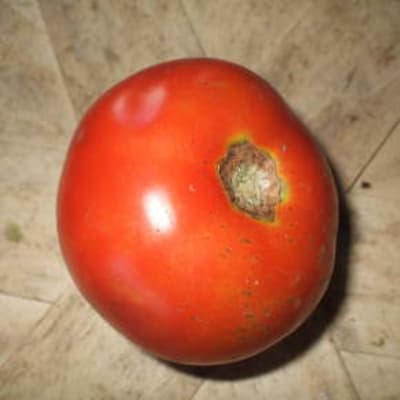
Solanum lycopersicum Brick red skin. (78 days) Open pollinated. Maroon-brick with dark green shoulders, 6-12 oz, oblate often bi-lobed. A distinctive sweet smoky flavor.
Solanum lycopersicum Red skin. (70 days) Open pollinated. Outstanding cooking and canning tomato with old-time flavor. Medium-sized 4–6 oz deep oblate fruits.
The best garden cart on the market today. Weighs only 35 lbs and has a central balance point so that even when fully loaded it is easy to push or pull, and the heavy plastic withstands a lot of abuse!
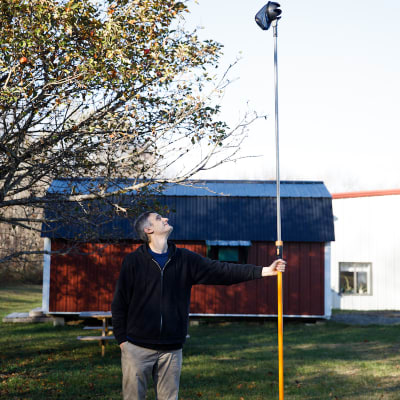
This sturdy yet lightweight tool won't puncture or damage fruit. Suitable for practically all shapes and sizes of fruit, from crabapples to papayas. Extends from 6'8" to 11'8"
Cordura® nylon bag with a strong steel frame and a sewn-in padded layer for extra fruit protection. Comfortable straps disburse the weight of your harvest across your back and shoulders.
Forged stainless-steel V-shaped blade is nearly indestructible and will not bend, even in hard soil, has a sharp point for piercing sod or soil, and an etched depth guide. Non-slip easy-grip handle.
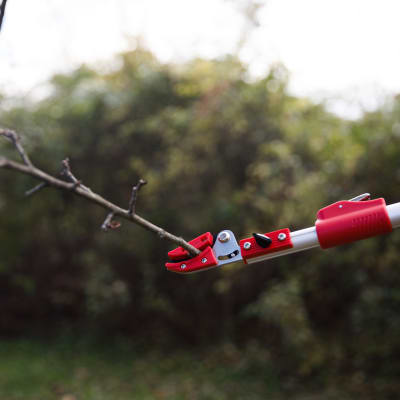
The distinctive cut-and-hold makes this a useful tool for removing browntail caterpillar nests from the orchard. Removable holding piece also allows for use in more conventional pruning work.
Requires less effort than conventional pruners. The handle shape allows fingers to move naturally, reducing the fatigue and blistering brought on by a hard day’s pruning. Left-handed.
The handle shape allows fingers to move naturally, reducing the fatigue and blistering brought on by a hard day’s pruning. Requires less effort than conventional pruners. Right-handed.