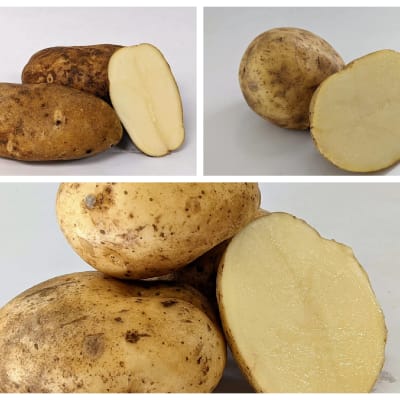
Solanum tuberosum Mid to late season, purple skin, purple flesh. Dig them as sweet little fingerlings early or hold out for larger potatoes later in the season. Distinctively earthy flavor and pleasantly waxy texture.
Malus spp. Winter, deep purple skin, greenish white flesh. Uniquely dark fruit with well-balanced flavor. Excellent pies and cider. Maine heirloom. Best eating late Dec. to March. Great keeper. Z4.
Malus spp. Fall-winter, bright red skin, yellowish flesh. All purpose, great flavor. Slightly tart, crisp and juicy. Thomas Jefferson’s favorite. Good keeper. Z4.
Malus spp. Early fall, ruby red skin, white flesh. Also called Snow. Ruby-red fruit with tender white flesh. Excellent fresh eating, sauce and fresh cider. Keeps until late December. Z3.
Malus spp. Early fall, red-striped skin. Very high-quality and highly disease-resistant all-purpose apple. Juicy, firm and spicy. Stores a few months. Z4.
Malus spp. Fall-winter, purple-striped red skin, apricot flesh. The most distinctive, complex, unusually flavored apple you'll ever try! Hardy, productive, reliable. A staff favorite. Z3.
Malus spp. Fall-early winter. Once popular Massachusetts heirloom. Crisp tender juicy flesh glistens like snow. Keeps into January. Produces large crops. Z4.
Malus spp. Winter, red-striped skin. Famous heirloom apple. Very large, juicy, tender. Makes a great single-variety pie! All-purpose. Good keeper. Scab-resistant. Z4.
Malus spp. Summer, dark red skin, white flesh. The standard Maine summer cooking apple, especially pies. Medium-sized dark red fruit. Juicy subacid white flesh tinged with red. Z3.
Malus spp.This is a twig for grafting. Summer, dark red skin, white flesh. The standard Maine summer cooking apple, especially pies. Medium-sized dark red fruit. Juicy subacid white flesh tinged with red. Z3.
Malus spp. Summer, deep purplish red skin, red-stained cream flesh. Nice balance of tart and sweet. Crisp and juicy fresh eating; fine cooking. Disease resistant; scab immune. Z4.
Malus spp. Fall, red skin, creamy white flesh. Famous old-time apple. Huge fruit with firm but tender flesh. Aromatic tart flavor. Excellent cooking and drying. Scab-resistant. Z3.
Malus spp. Orange-red skin. One of our favorite “rose” crabs. Small white cup-shaped semi-double flowers with yellow stamens look like miniature roses. Orange-red persistent fruit lasts till spring. Z3.
Actinidia arguta Rusty red-blushed skin, green flesh. Female. Also called Ananasnaya. Tangy and sweet pineapple-like taste. Heavy yields are late to ripen. Requires Meader male for pollination. Z4.
Viola sororia 6-10" tall. North American native with cheery blue-purple flowers and attractive heart-shaped leaves, all edible. Larval host plant for multiple species of butterflies. Z3.
Pyrus communis Late summer, green skin. Large dessert pear with melting juicy flesh, smooth creamy texture and thin skin. Wonderful dessert pear. Great for canning. Z3.
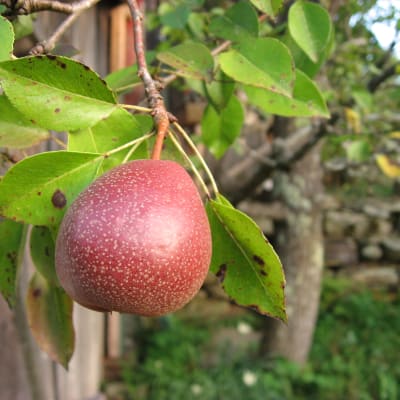
Pyrus communis Midsummer, red-blushed green skin. Sweet dessert and canning pear. Eat them fresh, can them in quarters, and juice the rest. Fireblight resistant. Z3.
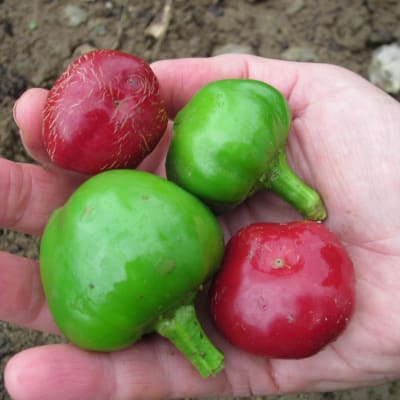
Capsicum annuum Red skin. (75 days) F-1 hybrid. Shiny green ripens to blazing red in a small strawberry-shaped cherry-type. Sweet and spicy, 2,500-5,000 Scovilles.
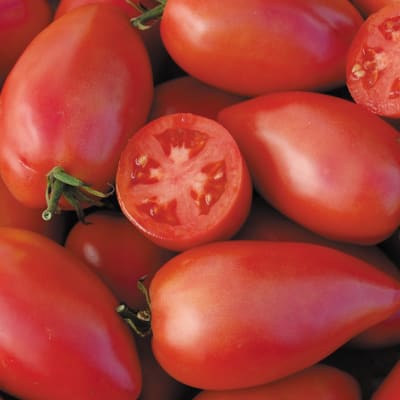
Solanum lycopersicum Pinkish red skin. (80 days) Open pollinated. Lithuanian heirloom; productive pink 6-oz paste, subtly tapered to a rounded tip. Smooth full flavor.
Solanum lycopersicum Yellow-striped scarlet skin. (85 days) Open pollinated. Red paste with psychedelic orange-yellow striations, distinctive nipple, 4-5 oz. Makes rich sweet tomatoey sauce.
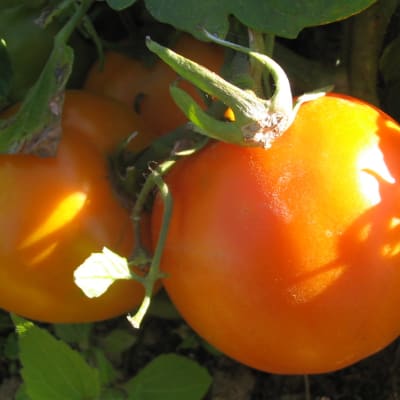
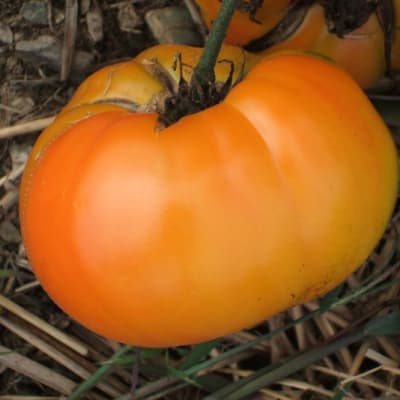
Solanum lycopersicum Orange skin. (80 days) Open pollinated. This orange slicer produces 8 oz globes that are smooth-textured, sweet, mild, and meaty. Smaller than Goldie and less prone to blemish.
Solanum lycopersicum Red-streaked yellow skin. (90 days) Open pollinated. Gigantic 1–3 lb red-streaked yellow fruits have marbled interior flesh, meaty smooth melting texture, and superb mild sweet flavor with nary a hint of acidity.
Malus spp. Late summer, red-striped skin, white flesh. Discovered in an old logging camp near Jackman, ME. Tart and sweet, with crisp but tender flesh. Resembles Duchess. Z3.
Malus spp. Fall, red skin. The most important apple in the Northeast. Delicious and aromatic. All-purpose. Annual bearer. Very susceptible to scab. Z4.
Malus spp.This is a twig for grafting. Fall, red skin. The most important apple in the Northeast. Delicious and aromatic. All-purpose. Annual bearer. Very susceptible to scab. Z4.
Malus spp. Fall, red-striped skin. High-quality bittersweet variety recommended for blending with other fall varieties. Soft astringent tannins. Narrow upright tree form. Becoming popular commercially in New England. Z4.
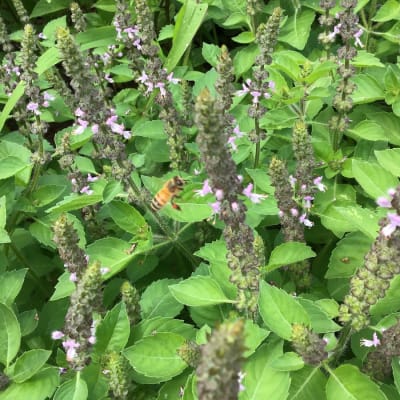
Ocimum africanum (100 days) Open pollinated. A superior strain of Tulsi or Sacred basil, with a more compact growth habit and more pungent sweet flavor.
Vaccinium corymbosum Mid to late season. 5-6'. Dense clusters of large fruit with exquisite balanced sweet and tart flavor. Stores well in refrigeration. Large vigorous upright shrub. Z4.
Lorimer profiles 235 native plants, describing their growing needs and habits, wildlife value and native habitat, with gorgeous color photos to emphasize the unique beauty of each species.
Full of inspiration and practical advice for gardeners and professional growers. Contains lunar and astronomical charts correlated with planting data, along with interesting articles and essays.
Metasequoia glyptostroboides 100'. A spectacular ornamental tree! Wide trunk with iridescent golden-orange bark and bright green deciduous needles turn orange in the fall. Highly adaptable. Z4.
Solanum melongena White-streaked purple skin. (64 days in unheated tunnel, 72 days open field) F-1 hybrid. Slightly curved 8" extended-teardrop shape covered with purple and lavender streaks with emanations of ivory and light pink.
Brassica napus (pabularia group) (55 days) Open pollinated. Cold hardy 18-28" purple and red-veined kale leaves grow frilly while remaining very tender. Good for bunches and mesclun mixes.
Brassica napus (pabularia group) (55 days) Open pollinated. Cold hardy 18-28" purple and red-veined kale leaves grow frilly while remaining very tender. Good for bunches and mesclun mixes.
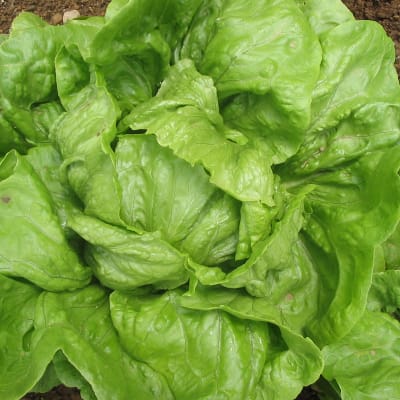
Lactuca sativa (72 days) Open pollinated. Slow-growing compact dark green Batavian with crisp outer leaves surrounding a round tightly-packed heart. Excellent heat tolerance.