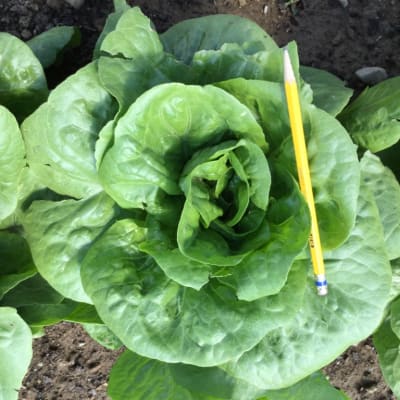
Lactuca sativa (49 days) Open pollinated. Unique Butterhead/Romaine combination with ruffled savoyed leaves dappled red and green. Very crisp and buttery.
read more
Lactuca sativa (51 days) Open pollinated. Best of the speckled types. Dark green ruffled leaves mottled with maroon-red spots. Sweet juicy veins, blushed pink heart. Poor heat tolerance.
read more
Lactuca sativa (44 days baby, 63 days mature) Open pollinated. From England. Compact Winter Density-type mini-romaine with very deep purple-red leaves. Very cold tolerant, decent heat tolerance.
read more
Oregano oil formulation for control of internal parasites, especially coccidia. Bonus side effect: reduces methane emissions and improves feed efficiency in ruminants.
read more
Lobelia cardinalis Open pollinated. This gorgeous wetland native wildflower and hummingbird magnet can be grown in moist garden soils or meadows. 2–4' tall
read more
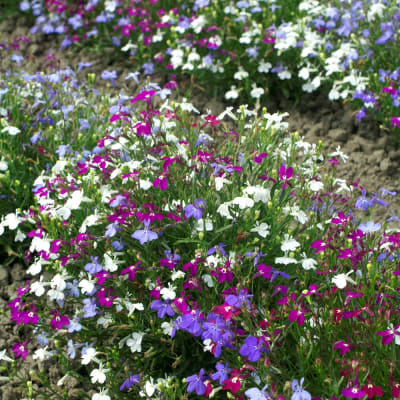
Lobelia pendula (60 days) Open pollinated. Very uniform tiny lush flowers bloom continuously from early summer to early fall to grace your garden, window boxes and hanging baskets. Annual.
read more
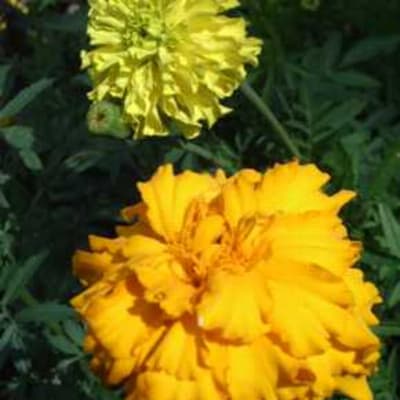
Tagetes erecta (60 days) F-1 hybrid. Fully double 4" pompon blooms in gold, orange and yellow. Perfect for stringing into garlands. Early to bloom, 18" tall.
read more
Tagetes patula Open pollinated. Single-petaled flowers set early, bloom strong until frost. Variegated petals of dark and light orange. 8" tall.
read more
Tagetes patula (100 days) Open pollinated. Small single striped flowers with bright stripes of burgundy and yellow. Good for bouquets. 20" tall.
read more
Tagetes patula (60 days) Open pollinated. Anemone-flowered dwarf. Bicolored double blooms are deep rusty orange, petals edged with gold. 10-12" tall.
read more
Ipomoea purpurea Open pollinated. Cheery masses of white flowers with blue or pink accents in a festive array of patterns. Vigorous 6' climbers.
read more
Ipomoea purpurea (50 days) Open pollinated. Rich deep purple flowers vibrate against lush green foliage. Starts blooming while it is only 2' tall and still vining.
read more
Convolvulus tricolor (50 days) Open pollinated. Each trumpet appears hand painted, with royal blue exteriors and iridescent white-to-gold centers. Eye-catching in beds, borders and pots. 18" tall bushes are covered in blooms all summer.
read more
Morus hybrid 30x20' Cold hardy northern selection similar to Illinois Everbearing with larger fruit that ripens 2 weeks earlier. Very productive trees are great when you need a lot of fruit at once. Z4.
read more
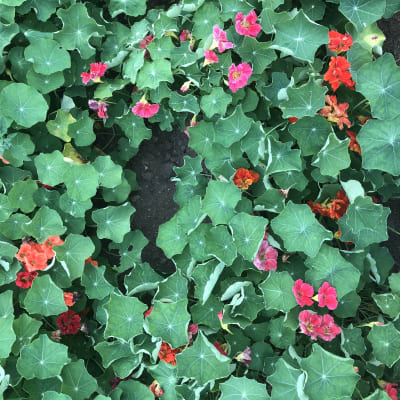
Tropaeolum majus (60 days) Open pollinated. Striking variegated green and white foliage and tangy yellow and orange blossoms. Great plant for hanging baskets. 16" plants.
read more
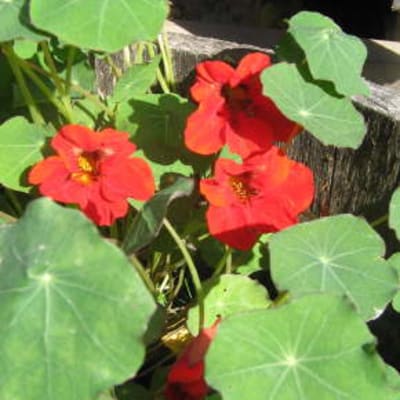
Tropaeolum majus (60 days) Open pollinated. Dark purplish-green leaves with brilliant crimson-scarlet flowers contrast well with other varieties. 16" plants.
read more
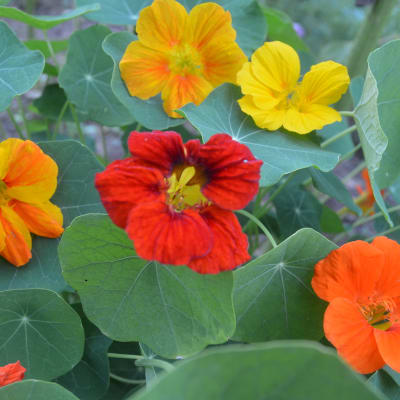
Tropaeolum majus (42 days) Open pollinated. Bushy variety holds its blooms above the foliage. Early free-flowering blend of orange, yellow, red and gold. 16".
read more
Tropaeolum majus (42 days) Open pollinated. Bushy variety holds its blooms above the foliage. Early free-flowering blend of orange, yellow, red and gold. 16".
read more
Tropaeolum minus (60 days) Open pollinated. Named for the dessert. Primrose-cream blossoms with pearly red centers. Sets abundant blooms above compact lily-pad foliage.
read more
Tropaeolum majus (65 days) Open pollinated. Red, orange, gold and bicolor shades. Red blossoms spicier than lighter colors. Prolific blossom set. 4-6' tall.
read more
Urtica dioica 3-6' tall. Young shoots are high in minerals and leaves are delicious steamed as early spring greens. Cooking removes the sting. Spreads readily; choose your site carefully. Z2.
read more
Juglans cinerea 40-60' x same. Very large impressive shade tree with broad open crown. Produces oblong edible nuts. Nice cabinet wood. Native. Z3.
read more
Corylus spp. 8-12' × same. Hybrid crosses of mixed parentage, including European hazelnut. Nuts will likely be larger than those from other seedlings. Highly resistant or immune to filbert blight. Z3.
read more
Allium cepa (116 days) F-1 hybrid. Long day. Large solid glossy globes—the best red storage onion for northern growers. Very high yield potential.
read more
Allium cepa (104 days) F-1 hybrid. (104 days) Long day. Large white globes lack the sharpness of other varieties. Delicious raw in sandwiches, salads and guacamole
read more
Allium cepa (104 days) F-1 hybrid. Long-day. Blocky-globes with rusty-bronze-skinned and large, uniform size. Thin necks for easy curing, and excellent storage potential.
read more
Allium cepa (125 days) Open pollinated. Long day. These large onions are renowned for their mild flavor, and have been in commerce since around 1900.
read more
Allium cepa (125 days) F-1 hybrid. Short day. This is the variety that growers in Vidalia, GA, use to grow their world-famous sweet onions. Not suitable for northern growers.
read more
Allium cepa (100 days) Open pollinated. Long to intermediate day. A wonderful variety that makes large globe-shaped uniformly sweet bulbs. Great fresh, but will store up to 4 months with proper curing.
read more
Very stretchy 1" tape holds graft union firmly together. Unlike PVC, Parafilm, a low-molecular-weight polyethylene product, is relatively benign in the environment.
read more
24" high spiral plastic guards protect tree trunks from mice and voles in the winter. Can be cut with scissors to customize height on very small trees, or use more than one to wrap wider trees.
read more
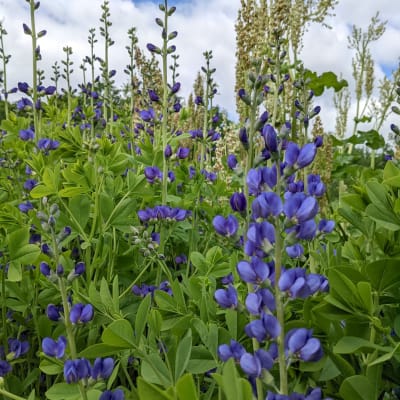
Baptisia australis 3-4' x same. Vibrant blue lupine-like flowers in early summer. Bushy habit and shrub-like structure once mature. Good for erosion control. Z3.
read more