-
ships year-round
-
ships year-round
-
ships year-round

-
ships year-round
-
ships year-round
-
ships year-round
-
ships year-round
-
ships year-round
-
ships year-round
-
ships year-round
-
ships year-round
-
ships year-round
-
ships year-round
-
ships year-round
-
ships year-round


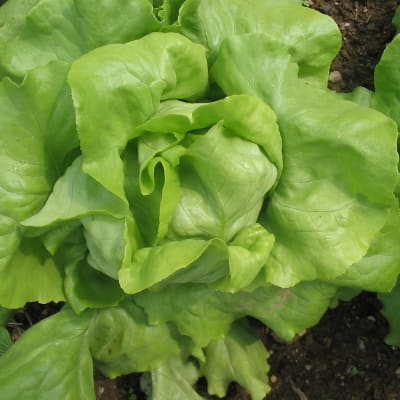


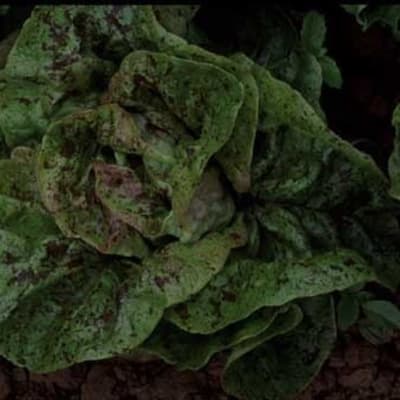


Lettuce
- 700–1100 seeds/g.
- Days to maturity are from emergence after direct sowing; for transplants, subtract 20 days.
Culture: Direct seed outdoors as soon as ground can be worked and repeat every 2 weeks for continuous supply. Or start indoors in March and at regular intervals thereafter for early transplanted successions. Optimal germination temperature range 40–70° though many varieties won’t germinate in soil temps above 75° and most shut down above 80°. Thin sowings frequently and ruthlessly to a final distance of 1' for full heads. Heavy nitrogen feeders.
Hardy. All save icebergs tolerate heavy frost. Fall and overwintered harvests are becoming standard practice. For summer harvest, select varieties carefully: bolting, bottom rot and tipburn are problems if a variety can’t take the heat! Using shade cloth can keep lettuce tender and sweet longer into summer. Sesquiterpene lactones produced in the latex render lettuce bitter when it bolts.
Saving Seed: Saving lettuce seed is easy! Leave spring-planted lettuce heads to bolt. Flowers will become white tufted seeds. Once dry on stalk, rub seeds off the plant into a paper bag. To ensure true-to-type seed, separate lettuce varieties by 10 feet.
Diseases:
- BOR: Bottom Rot
- DM: Downy Mildew
- LMV: Lettuce Mosaic Virus
- PM: Powdery Mildew
- SC: Sclerotinia
- TB: Tipburn
- X: Xanthemonas
Pest: Aster Leafhopper (vector for Aster Yellows disease)
Cultural controls: control perennial broadleaf weeds near lettuce plantings, plow lettuce fields immediately after harvest.
Pest: Slug
Cultural controls: avoid mulch or nearby grassy areas.
Material: Sluggo
Disease: Bottom Rot
Cultural controls: rotate with grass-family green manures, plant in well-drained soil or on raised beds, more upright varieties escape infection.
Major Diseases: Downy Mildew, Grey Mold, White Mold
Cultural controls: rotation, reduce duration of leaf wetness, plant parallel to prevailing winds, use wide spacing, control weeds, use well-drained fields in spring and fall.
Material controls: MilStop