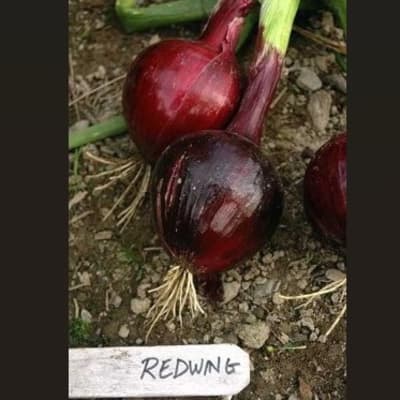
Allium cepa Red skin. (114 days) Open pollinated. Red storage onion. Flat square-shouldered top tapering like a barrel to a narrower flat bottom. Tops slow to go down.
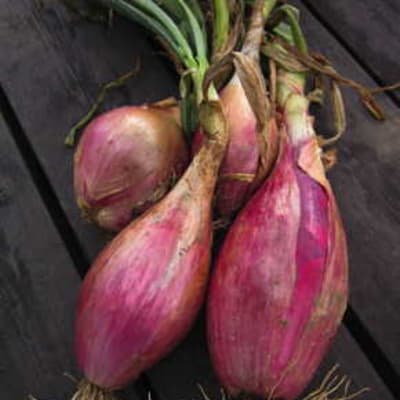
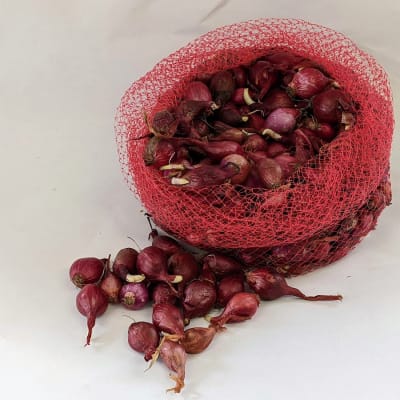
Allium cepa Maroon skin. (110 days) Open pollinated. Italian heirloom. Torpedo-shaped glossy red thin-skinned onion. Sweet, mild. Fair to good storage.
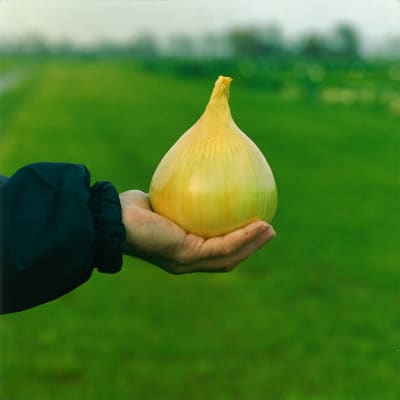
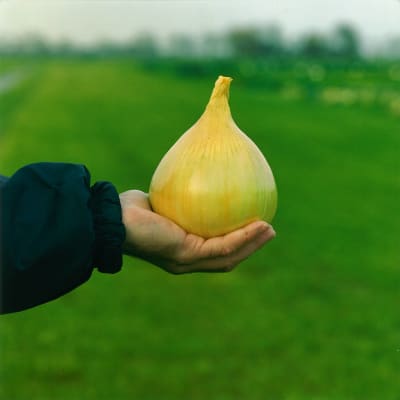
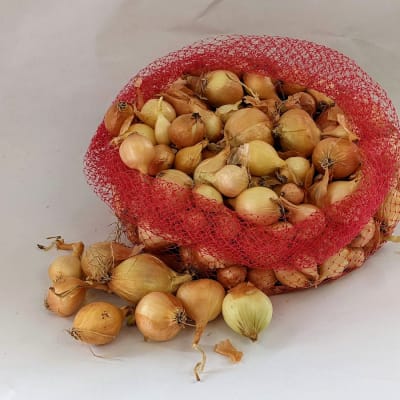
Allium cepa Yellow skin. (110 days) F-1 hybrid. Uniform blocky globes, 2 lbs each, with tall tops. Best for storage; keeps until mid-May. Flavor a balance of sweet and tang. Long-day northern type.
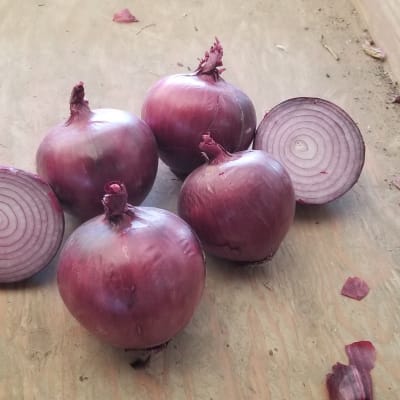
Allium cepa Deep red skin. (107 days) F-1 hybrid. 16-18 oz glossy deep red globes similar to Redwing, but it sizes more consistently regardless of dry or wet conditions.
Allium cepa Purple-red skin. (110 days) Open pollinated. 19th century heirloom. Large medium-firm deep purple-red flattened globes with pinkish-white fine-grained flesh. Long-day. Keeps till late winter.
Multi-colored skin. 50 plants each of differently colored onion plants. If you want an assortment of long-day varieties but don’t have space for a hundred of each, try this package deal.
Allium cepa Yellow skin. (125 days) Open pollinated. Long day. These large onions are renowned for their mild flavor, and have been in commerce since around 1900.
Allium cepa Maroon skin. Open pollinated. Long day. Red Baron yields bulbs in the 3" range that store decently and show off a stunning maroon skin. Our best fresh-eating onion for sandwiches and salads.
Yellow skin. Open pollinated. These firm semi-flat bulbs will store until June if cured properly. Try them in creamy onion dip, sliced or as onion rings.
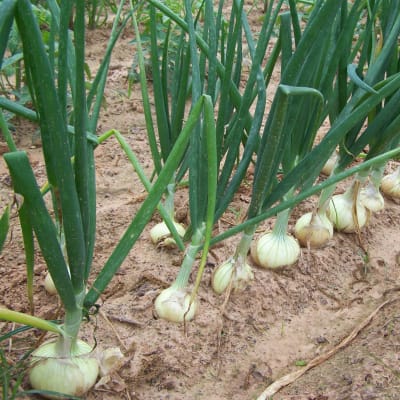
Allium cepa White skin. Open pollinated. Long day. Bright crystal white orbs. Good for bunching onions, or uniform round slicers. Very sweet, great for fresh eating.
Allium cepa Yellow skin. (125 days) F-1 hybrid. Short day. This is the variety that growers in Vidalia, GA, use to grow their world-famous sweet onions. Not suitable for northern growers.
Allium tricoccum Open pollinated. Also called Wild Leeks. Bulb-forming perennial is a spring ephemeral. Delectable pungent flavor, a mix of garlic and onion, is true wildwood fare—worth the long wait.
Allium cepa Red skin. (116 days) F-1 hybrid. Long day. Large solid glossy globes—the best red storage onion for northern growers. Very high yield potential.
Allium cepa White skin. (104 days) F-1 hybrid. (104 days) Long day. Large white globes lack the sharpness of other varieties. Delicious raw in sandwiches, salads and guacamole
Allium cepa Yellow skin. (100 days) Open pollinated. Long to intermediate day. A wonderful variety that makes large globe-shaped uniformly sweet bulbs. Great fresh, but will store up to 4 months with proper curing.