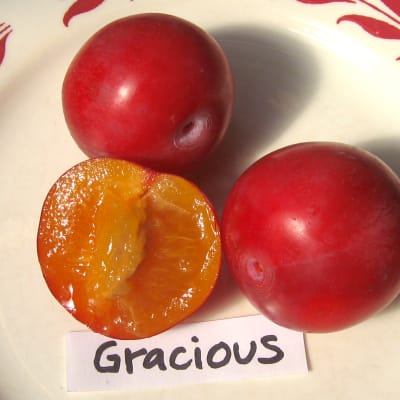
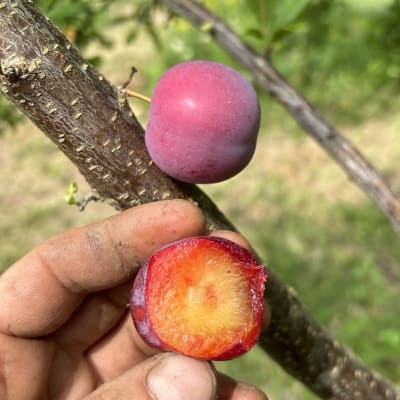
Prunus spp. Midsummer, red-orange skin, dark pinkish red flesh. Delicious medium-sized fruit with soft sweet flesh. Glossy ornamental red foliage all summer long. May be self-pollinating. Z4.
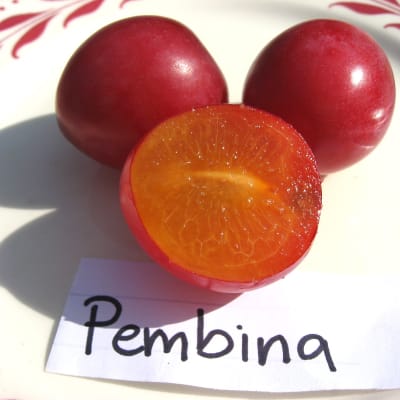
Prunus spp. Late summer, red skin, yellow flesh. Rich juicy sweet flesh is very firm and meaty but tender. Tastes like an apricot. Recommended for cooking and fresh eating. Rare in the trade. Z3.
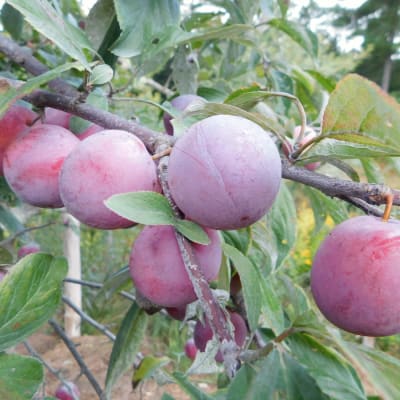
Prunus spp. Mid-late summer, red-purple skin, yellow-orange flesh. Large plums with translucent tart flesh. Clingstone. Good fresh eating or canning. Bears reliably. Z3.
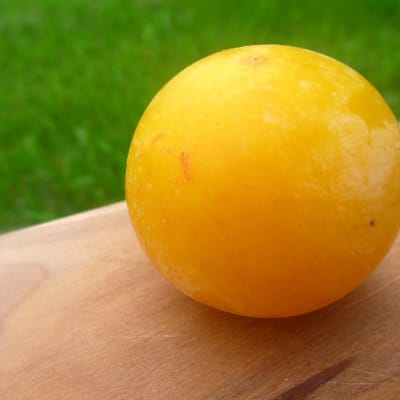
Prunus spp. Late summer, yellow skin, yellow flesh. Roundish tender thin-skinned plum sometimes blushed with a little pink. Tender juicy flesh. Freestone. Z3/4.
Prunus spp. Early summer, bright red skin, dark golden orange flesh. Firm and apricot-flavored flesh. Partially freestone. One of the first hybrids to ripen in summer. Z3/4.
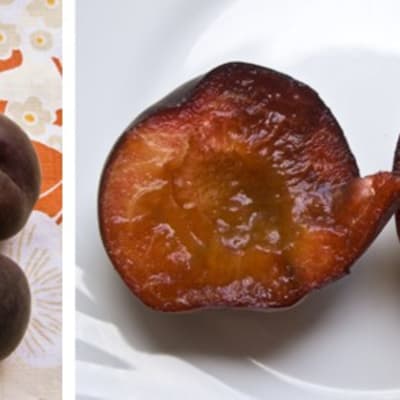
Prunus spp. Late summer, red-purple skin, red-purple flesh. Meaty, mild and rich with no astringency. Clingstone. One of the most delicious plums! Z4/5.
Prunus spp. Midsummer, light yellow skin, light yellow flesh. Sweet chin-dribbling translucent flesh is so juicy it might soak your shirt. Broadly spreading picturesque tree tops off at only 10 or 12'. Z5.
Prunus spp. Late summer, rosy purplish red skin, yellow flesh. Sweet, meaty and flavorful. Somewhat freestone. Extremely vigorous tree. A great pollinator for other hybrids. Z3.
Prunus spp. Midsummer, dull red skin, golden yellow flesh. Firm sweet juicy semi-freestone flesh, very good for eating and cooking. Long ripening and picking season. Z3.
Extremely hardy crosses between various Asian and American species; may fruit even after severe winters.
Hybrid plum fruiting can be inconsistent but it’s worth the trouble! Warmer areas will see longer bloom times. Cold late springs may force blooming all at once. Both of these conditions can be optimal for plum crops. At other times, it can be a little hit or miss. Bloom times are similar for all the varieties we offer.
Hybrid plums are less susceptible to black knot than European plums and have few issues other than Japanese beetle and plum curculio attraction.
At maturity, hybrid plums are roughly 15–20' tall.
Growing Hybrid Plums
Soil: Prefers well-drained fertile soil.
Sun: Full.
Pollination: Requires a second variety. We recommend planting at least 4 different varieties close together. Including an American Plum Seedling in your grove can help ensure pollination.