Our web site works best with JavaScript. It looks like your browser
doesn't support it or it is turned off, so you might find that some
things don't work correctly. In particular, online ordering will not
work. We're sorry for any inconvenience.
Search results for ‘perennial ’
Quick View
Open pollinated. Alternative lawn mix includes 13 species of short and creeping plants, many of which feed pollinators.
Quick View
Monarda fistulosa Open pollinated. 3-4' plants bear aromatic lavender blossoms highly attractive to pollinators.
Quick View
Nepeta mussinii Open pollinated. Soft grey-green leaves with clusters of bluish-lavender tubular flowers. 1' tall.
Quick View
Allium tuberosum Open pollinated. Grows like chives, 1' tall, but has flat strap-like leaves that taste like garlic and can be used as a garlic.
new!
Quick View
Aquilegia vulgaris var. stellata Open pollinated. Perennial to Zone 3. Double spurless blossoms nod high above the foliage on long strong stems. A
...
read more
Quick View
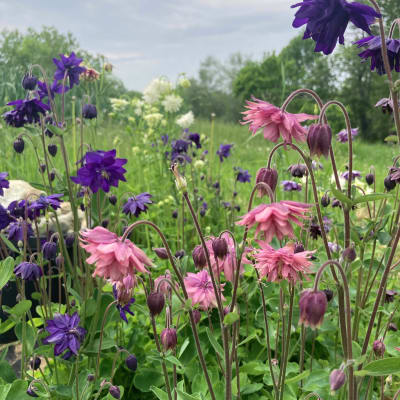
Aquilegia vulgaris Open pollinated. Spurless blossoms are mostly pink, with a few purples and whites. 2½' tall.
Quick View
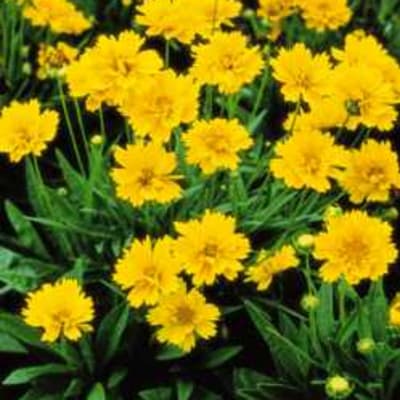
Coreopsis grandiflora Open pollinated. Dense 18" plants loaded with 2" semi-double vivid golden-yellow blooms.
Quick View
Leucanthemum × superbum Open pollinated. Quilled petals of creamy white blossoms are fully double. 24-28" tall.
Quick View
Echinacea purpurea Open pollinated. Easy to grow, 2–4' tall, native to a wide range of habitats, from Appalachian woods to Midwest prairies.
Quick View
Linum perenne subs. lewisii Open pollinated. Single light-blue flowers and finely cut foliage for borders or rock gardens. 9-12" tall.
Quick View
Eutrochium purpureum Open pollinated. Dusty pinkish-purple flowers. Stately and beautiful. 4–6' tall.
Quick View
Lavandula angustifolia Open pollinated. Also known as English Lavender. Not a named variety; perhaps a less-refined habit than Vincenza Blue.
Quick View
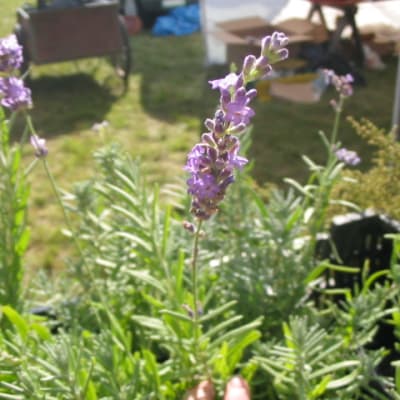
Lavandula angustifolia Open pollinated. More compact habit than common Lavender with deeper green leaves and a more powerful, less sweet, aroma. 1' plants have bold clustered flower spikes with deep color from mid-July to early September.
Quick View
Lupinus polyphyllus Open pollinated. Genetics determine that blues will dominate in lupine mixes. Revitalize your patch with a new burst of red.
new!
Quick View
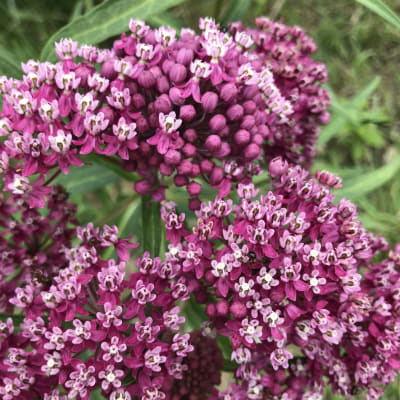
Asclepias incarnata Open pollinated. Perennial to Zone 3. Forms unique fragrant flat-topped clusters of upturned rosy red flowers on 3–5' tall
...
read more
Quick View
Alkekengi officinarum Open pollinated. Grown for deep orange “lanterns,” the calyxes, for dried arrangements.
Quick View
Ratibida columnifera Open pollinated. Yellow petals around protruding chocolate-brown center disk.
new!
Quick View
Eryngium planum Open pollinated. Perennial to Zone 4. Also called Blue Sea Holly and Eryngo. Shimmery silver-blue multi-branched stems hold
...
read more
Quick View
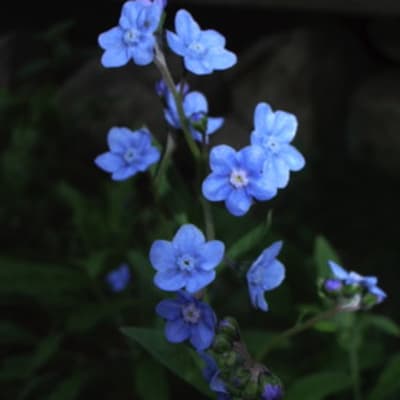
Myosotis sylvatica Open pollinated. Clusters of tiny sky-blue flowers. Self-seeds. 6" tall.
Quick View
Polemonium caeruleum (90 days) Open pollinated. Sky blue blooms with gold stamens. Prefers shade. 1' tall.
Quick View
Coix lacryma-jobi (100 days) Open pollinated. Sets pendulous sprays of globular pearly purple-grey seeds, which may be strung as beads for necklaces. Spiky 2–3' stalks good for planters or as filler in dried fall arrangements.
Quick View
Viola tricolor Open pollinated. Cute tricolor blooms in violet, lavender and canary yellow. 4-6" tall.
new!
Quick View
Scrophularia marilandica Open pollinated. Perennial to Zone 4. One of the best and most underrated native nectar plants for pollinators. Dainty
...
read more
Quick View
Rubia tinctorum Open pollinated. Ancient and excellent source of red dye. Harvest roots after three years and grind to yield a wash- and light-fast red dye par excellence. 4' plants.
clearance!
Quick View
Lychnis chalcedonica Open pollinated. Brilliant scarlet, cross-shaped florets. Attractive to pollinators, excellent for cutflowers. 3' tall.
Quick View
Ageratina altissima Open pollinated. Flat-topped fuzzy clusters of small pure white disk flowers bloom August through October, attracting multiple species of bees, moths and butterflies.
Quick View
Nepeta cataria Open pollinated. Grows to 3' tall and wide. Lavender blooms in late summer are a favorite of honeybees.
Quick View
Nepeta cataria Open pollinated. Grows to 3' tall and wide. Lavender blooms in late summer are a favorite of honeybees.
Quick View
Inula helenium Open pollinated. Large dramatic 5–8' plant with bright yellow rayed 2–3" flowers. An excellent lung tonic.
Quick View
Tanacetum parthenium Open pollinated. Strongly scented bushy 18" plant with small daisy-like white blooms, merry in bouquets.
Quick View
Pycnanthemum incanum Open pollinated. A culinary herb, excellent cutflower and pollinator fave! “Mintier than mint” and less likely to spread.
Quick View
Marrubium vulgare Open pollinated. Forms a 2' bushy stand of grey-green wooly leaves. Hardy to Zone 3.
Quick View
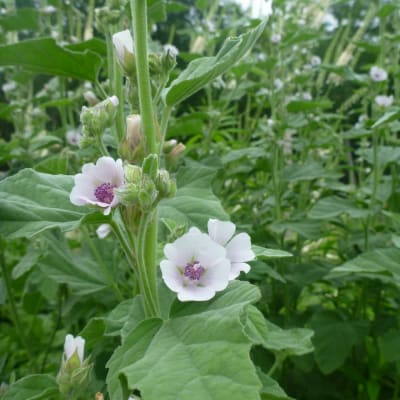
Althaea officinalis Open pollinated. Cousin to the hollyhock, this showy 4–6' plant is used to soothe and soften irritated skin and membranes.
Quick View
Kniphofia uvaria Open pollinated. A riot of yellow, orange and fiery red tubular flowers. Blooms July-September. An unusual accent in arrangements.
Quick View
Rudbeckia fulgida Open pollinated. Golden-yellow flowers with dark central cones. Much larger flowers—up to 5" across—than the common wildflower. Ideal for cutting. 2' tall.
Quick View
Salvia farinacea Open pollinated. True blue flower spikes are abundant for weeks on bushy 3' plants. Grey-green foliage.
Quick View
Thymus serpyllum Open pollinated. Creeping sweet-scented ground cover with purple flowers good in rock gardens, between stepping stones or on dry slopes.
Quick View
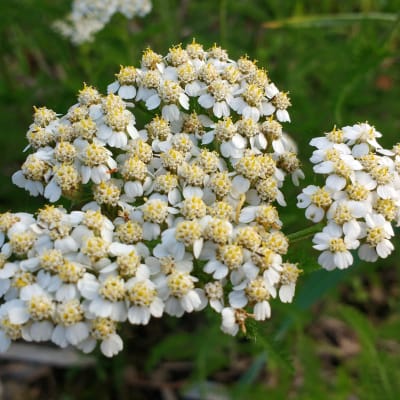
Achillea millefolium Open pollinated. Full range of soft pastel colors on flat flower heads. Easy to grow. 18-24".
Quick View
Hemerocallis 30-40" tall. Intensely fragrant trumpet-shaped lemon-yellow flowers with long bloom time. Widely planted on old farmsteads in Maine. Z2.
Quick View
Liatris spicata 20-30" tall. Magenta-purple flower spikes above fine grass-like foliage. Blooms from July to September. Great for cutflowers. Z3.
Quick View
Asparagus officinalis High-yielding good-quality tender green spears are long-lived and very cold hardy. On the rise as an excellent replacement for Jersey, even outproducing Jersey in northern Minnesota trials! Z3.
Quick View
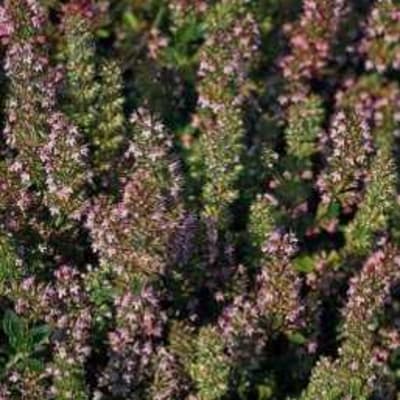
Gaillardia pulchella Open pollinated. Daisy-type flowers in reds, yellow, rust and orange with a prominent colored center. Free flowering, low maintenance and easy to grow. Attracts butterflies. Good cutflower.
Quick View
Great for filling their raised beds or large containers Coarser than potting mixes, and formulated as a complete soil for organic cultivation of woody plants, shrubs, herbs, vegetables and flowers.
Quick View
Allium 12–15" tall. Adds rugged charm and vertical structure to herb and rock gardens. Attracts beneficial insects. Z4.
Quick View
Asclepias tuberosa 18-30" tall. Native milkweed with vivid tangerine-orange flowers in summer. Full sun. Z4.
Quick View
Nepeta × faassenii 24-36" tall. Aromatic grey-green foliage with long arching stems topped by lavender-blue flowers. Rugged. Attractive to pollinators. Z3.
Quick View
Hemerocallis 30-36" tall. Fragrant large bright glowing orange blossoms remain open at least 16 hours. Excellent landscape variety. Z2.
Quick View
Hemerocallis 18-22" tall. Prolific ruby blooms from early summer until first frost without deadheading. Z2.
Quick View
Dryopteris marginalis 20-30" tall. Strong stems and slightly glossy leathery grey-green fronds make this one of the best ferns for floral arrangements. Evergreen leaves in winter. Z3.
Quick View
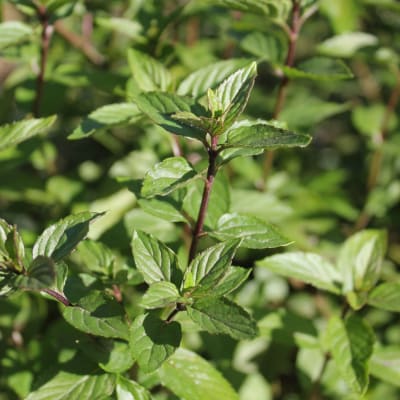
Geranium pratense 20–24" tall. Lush groundcover with sapphire-blue flowers. Attracts beneficial insects. Not the “geranium” you’re thinking of! Z4.