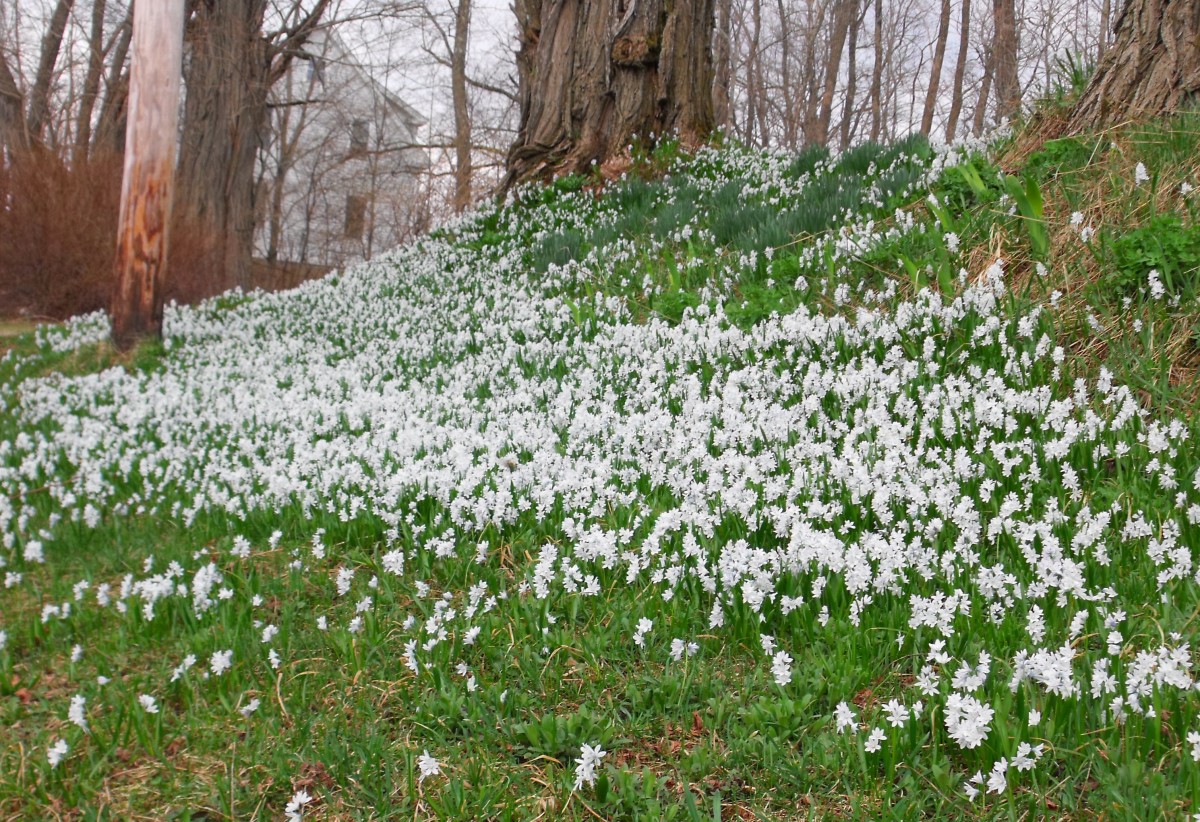
Stinzenplanten
Naturalizing With Bulbs
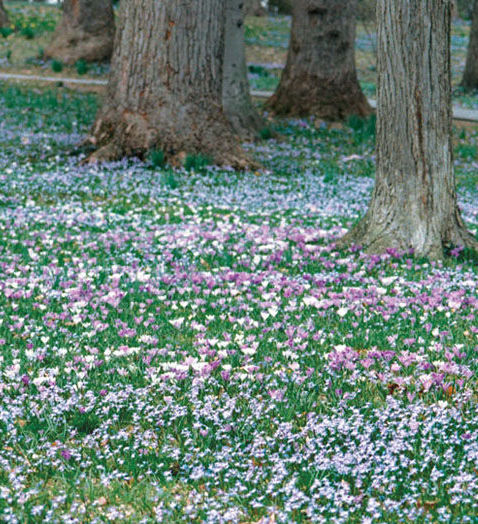
Underplant your lawn with naturalizing flower bulbs for a delightful carpet of early spring blooms! Stinzenplanten, a Dutch tradition, works best in dappled spring light beneath deciduous trees or at the forest’s edge where the grass is sparse from summer shade. In Maine it’s not uncommon to see a stinzenplanten of Snow Crocus, Chionodoxa or Squill. After a long winter, coming upon swaths of wee blooms is utterly enchanting.
The best bulbs for stinzenplanten are those that naturalize and multiply by underground bulblets. Some varieties may also self-seed over time. Once your plants are established, you can divide and replant them to expand your area. Most types of bulbs recommended for stinzenplanten are small and can be planted about 3–4" apart. A long planting auger attached to a drill will save your back when planting lots of bulbs.
For your stinzenplanten to thrive, don’t mow the area until the flowers and foliage have died back naturally, about five weeks after blooming. The bulbs must complete their life cycles and photosynthesize so they can bloom the next year.
| Square footage of area to be planted | Number of bulbs needed with 3" spacing |
|---|---|
| 10 | 160 |
| 25 | 400 |
| 50 | 800 |
| 100 | 1600 |
| 200 | 3200 |
| 300 | 4800 |
Here are some recommended species commonly used in Stinze-style plantings
Very Early Spring:
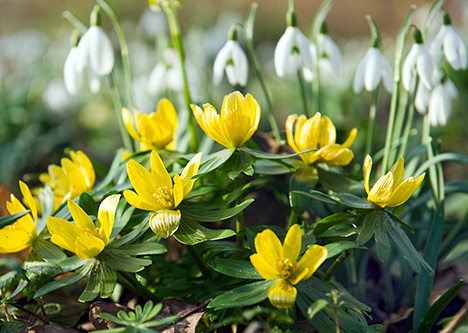
Early Spring:
Mid to Late Spring
Please Note: Both Siberian Squill and White Siberian Squill naturalize aggressively and are now considered invasive in some areas in the Upper Midwest and potentially in the Northeast. Before planting, consult local ecological resources, such as your University Agricultural Extension, to find out if squill is safe to plant in your area. Monitor spread and do not plant close to wetlands or forests.
Troubleshooting
If squirrels, chipmunks or voles are a problem, try chicken wire or sharp gravel placed in the ground above and surrounding the bulbs. Blood meal repels many critters, but it may also repel people and attract dogs, skunks or raccoons. Or plant Narcissus, Allium, Fritillaria or Ipheion, which critters don’t generally bother.
To disrupt squirrels’ ability to “smell out” the bulbs in new plantings, we heavily dust the ground in those areas with black pepper and ground cloves right after planting in the fall and again in the spring when growth first emerges. The odor in the yard, reminiscent of chai, is a nice touch for us.
If after several years your bulbs produce leaves but not flowers, they may be suffering from overcrowding (dig in autumn, separate and replant), insufficient sun (move to new location), under-nourishment (sidedress thoroughly) or marginal zone hardiness (give to a friend farther south).