-
ships in fall
-
ships in fallnew!
-
ships in fallCarlton Large-Cup NarcissusBulbssold out
-
ships in fallnew!
-
ships in fall
-
ships in fallnew!
-
ships in fall
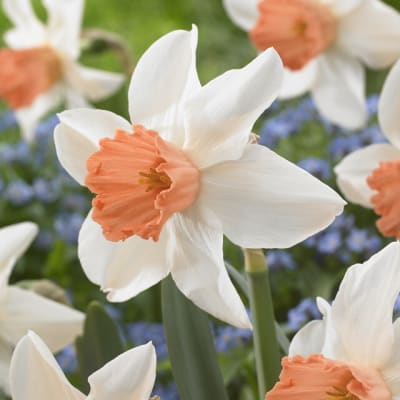


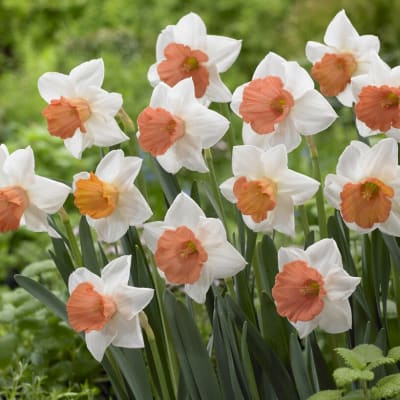


Large Cup Narcissus
Narcissus
Narcissus thrive in full sun and some (where noted in descriptions) do well in dappled shade. Pink, orange and red varieties hold their color longest in dappled shade or during cool wet springs. In a dry season, water late varieties in midspring to ensure bloom. Hardy in Zones 3–8, except where noted. 12–14cm bulb size, unless specified.
Daffodils in Mixed Arrangements
Daffodils make great cutflowers, and last a long time in the vase, but the freshly cut stems exude a sap that clogs the pores of other types of flowers. If you want a mixed arrangement, place the freshly cut daffodil stems in a container of cool water to soak for 10–12 hours before mixing them with others.
Are they Daffodils, Jonquils or Narcissi? Yes!
Confused by the different terms used to describe these familiar flowers? They are all in the genus Narcissus, so calling them that is perfectly fine, just as we say Crocus or Iris.
Narcissus, Narcissuses and Narcissi are all acceptable as the plural, so use the one you like. ‘Daffodil’ was first used in Wales and England to refer to certain wild forms. It is now used to refer either specifically to the Trumpet class, or generally to mean any type of Narcissus. ‘Jonquil’ is also used to refer generally to any type of Narcissus, especially in the South where jonquils thrive. Horticulturists use it to refer to the wild Narcissus jonquilla and its progeny, the Jonquilla class of cultivars. So, really, all of these terms are fine.